
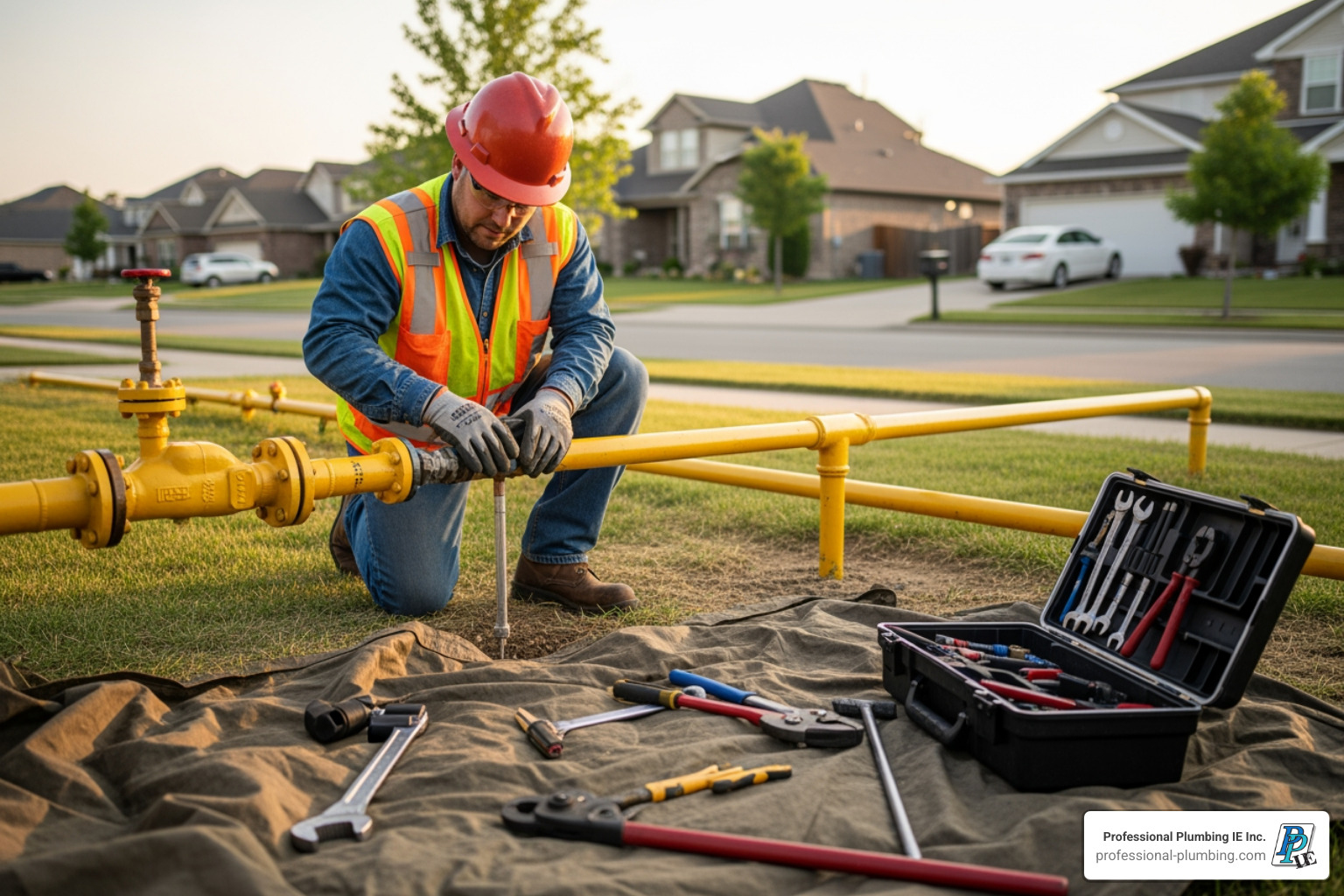
Gas Line Repair Cost 2025: Ultimate Peace.
Why Understanding Gas Line Repair Costs Matters for Your Safety and Budget
Gas line repair cost is an expense no one wants, but understanding the potential costs can prevent panic and overpayment. Whether you smell gas or are planning maintenance, knowing what to expect helps you make informed decisions for your home’s safety.
Quick Answer: What You’ll Pay for Gas Line Repairs
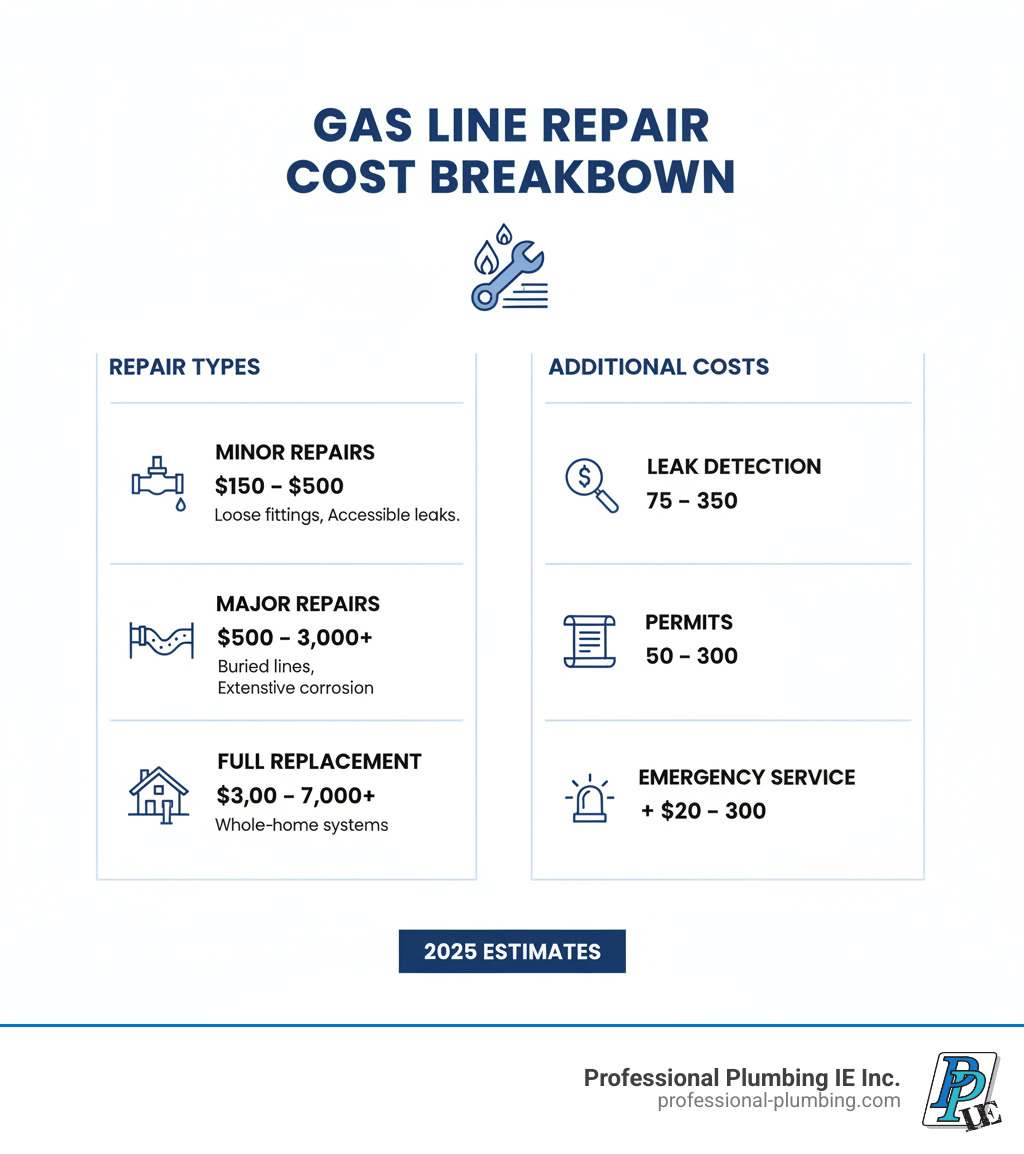
- Minor repairs (loose fittings, accessible leaks): $150 – $500
- Major repairs (buried lines, extensive damage): $500 – $3,000+
- Full system replacement: $3,000 – $7,000+
- Leak detection services: $75 – $350
- Emergency repairs: Add $200 – $300 to standard rates
Gas leaks are dangerous. While the average homeowner pays around $598 for gas line repairs, this figure varies widely. A simple fix near an appliance might cost $150, but an underground line requiring excavation can exceed $1,500. The pipe material—from older galvanized steel to modern CSST tubing—also impacts the cost.
Emergency repairs command premium pricing, but speed is essential for your family’s safety. Understanding these costs helps you budget, ask the right questions, and recognize a fair price. It also highlights why DIY repairs or using unlicensed contractors is never worth the risk.
Key Factors That Determine Your Gas Line Repair Cost
When facing a potential gas leak, safety is the priority, but cost is a close second. The final gas line repair cost depends on several factors, including the leak’s location, the extent of the damage, accessibility, labor rates, and urgency.
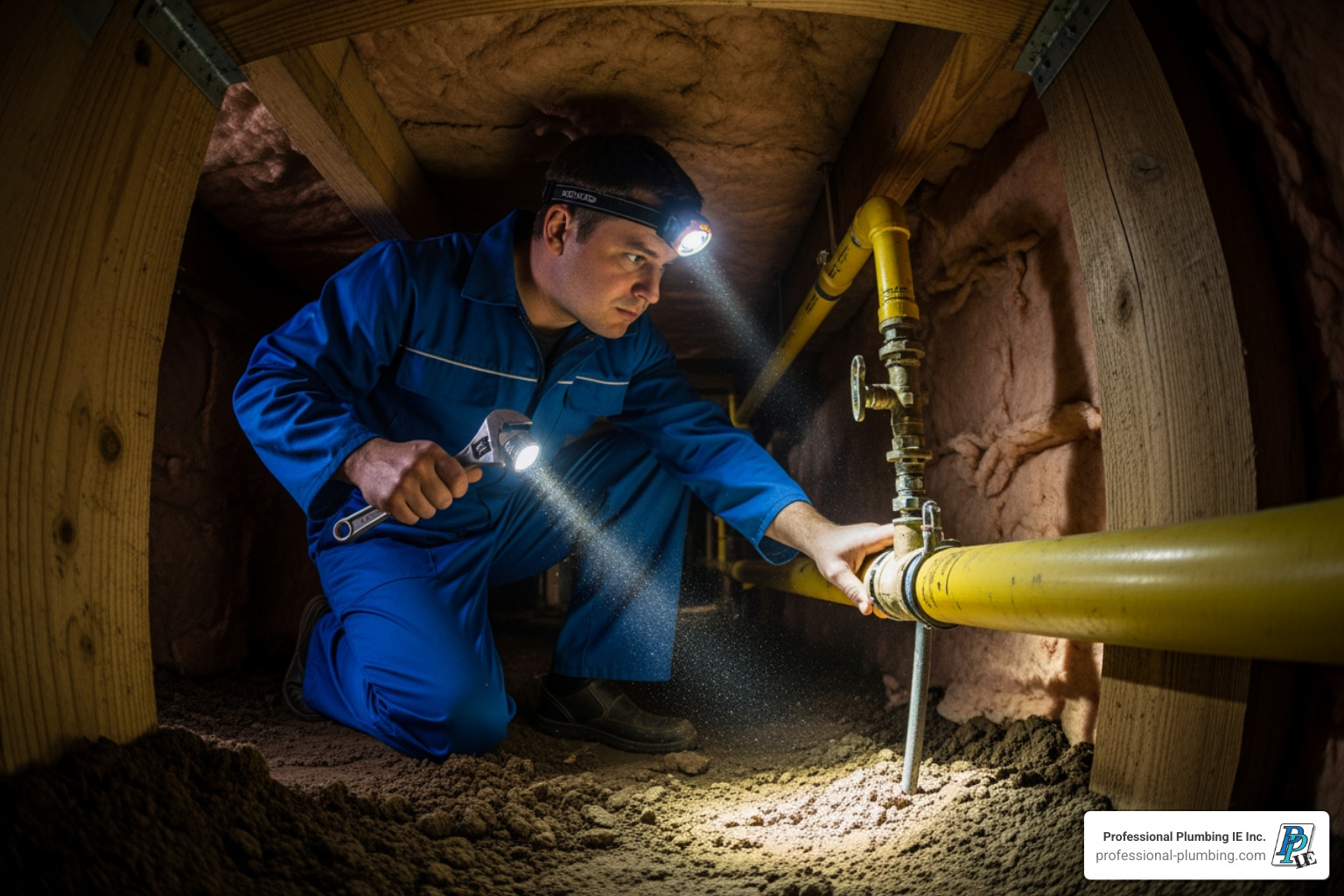
A small, accessible leak near a water heater is a different challenge than a corroded underground line. Let’s break down what drives these costs.
Pipe Material and Age
The type of piping in your home significantly affects repair complexity and cost. Homes over 30 years old often have black iron or galvanized steel pipes. While durable, these materials are prone to corrosion over time, and repairing them requires specialized skills. Replacement costs for these materials are typically:
- Black iron: $25 to $35 per linear foot
- Galvanized steel: $20 to $30 per linear foot
Modern homes often use copper, CSST (Corrugated Stainless Steel Tubing), or HDPE (High-Density Polyethylene). These materials are generally less expensive and easier to work with:
- Copper / CSST: $15 to $25 per linear foot
- HDPE: $15 to $20 per linear foot
CSST’s flexibility allows for faster installation, often reducing labor costs. HDPE is ideal for underground use as it resists corrosion. If you have an older home, be prepared for more involved repairs and consider upgrading to modern materials for long-term reliability.
Location of the Damaged Line
The leak’s location can dramatically impact the project’s scope and cost.
-
Accessible pipes, such as those near an appliance, are the easiest to fix. Repairs like tightening a fitting can cost as little as $120 to $250.
-
Lines inside walls require cutting into drywall. The repair itself may be simple, but the added cost of drywall work can bring the total to $270 to $760 or more.
-
Underground lines are the most expensive to repair. Locating the leak requires special equipment, followed by excavation. These repairs typically range from $1,500 to $5,000, with costs increasing due to depth or obstacles like driveways.
Labor Rates and Urgency
Gas line repair requires licensed, experienced professionals. Standard labor rates in the Riverside area typically range from $75 to $150 per hour, with most companies charging a minimum service call fee of $150 to $200.
Urgency also plays a major role. Gas leaks require immediate attention. Emergency service for after-hours, weekends, or holidays typically adds $200 to $300 to your bill. This premium is essential because waiting to fix a gas leak can lead to fires, explosions, or carbon monoxide poisoning.
If you suspect a gas leak, evacuate your home, call 911 from a safe location, and then contact a licensed professional. For detailed guidance, see our article on what to do if you suspect a gas leak. At Professional Plumbing IE Inc., we are ready to respond to emergencies 24/7, because your family’s safety is our top priority.
Understanding the Numbers: Average Gas Line Repair Costs
Homeowners understandably want to know, “What’s this going to cost?” While the gas line repair cost varies, understanding the typical ranges can reduce stress. Every dollar spent on proper gas line repair is an investment in your family’s safety.
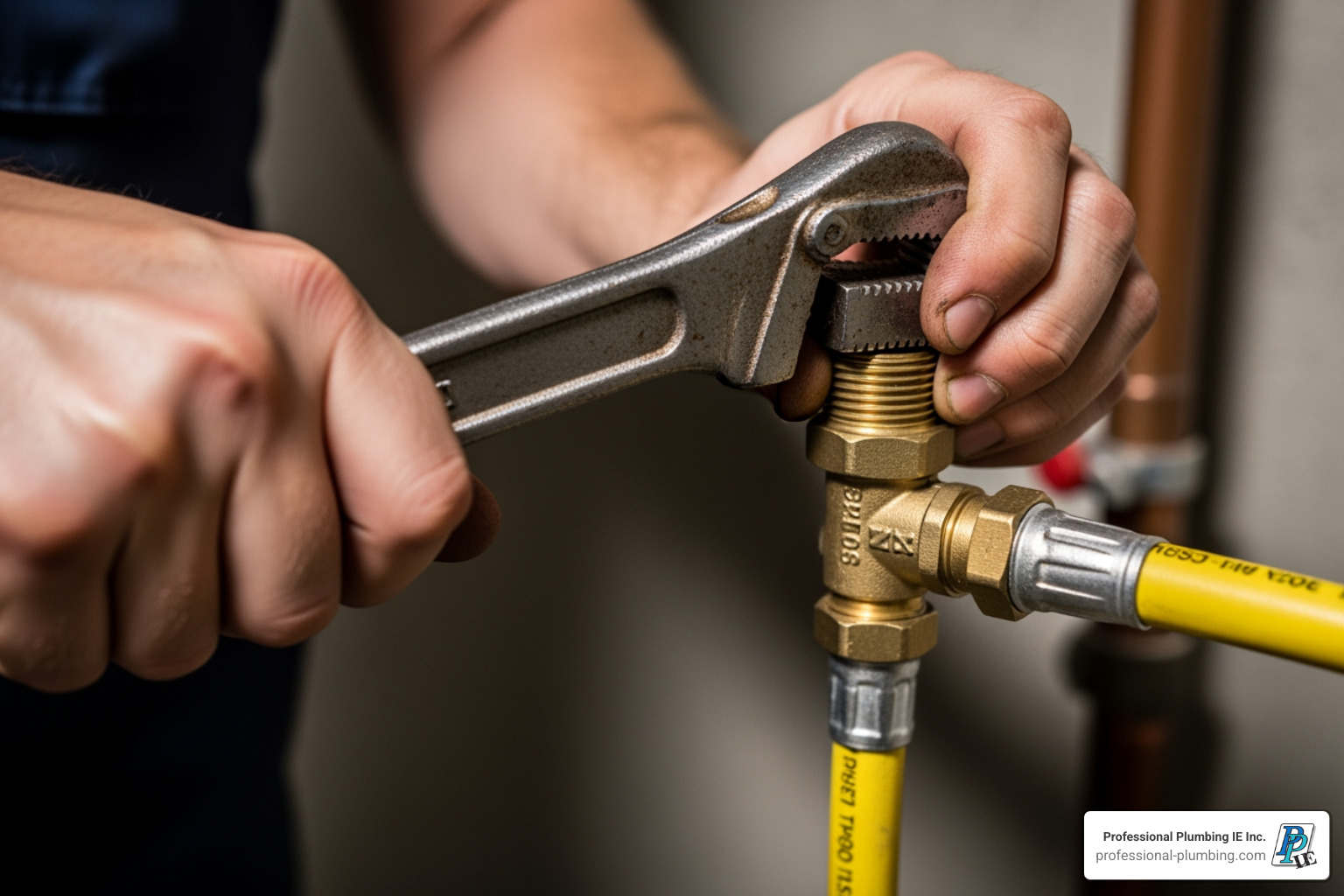
Average gas line repair cost for Minor Issues
Minor gas line problems are straightforward fixes that don’t require major demolition and typically fall in the $150 to $500 range. These include:
- Tightening or resealing loose fittings.
- Fixing accessible leaks behind appliances or under sinks.
- Sealing a small crack or pinhole, which can run from $150 to $600.
- Capping an unused gas line, typically costing $50 to $200.
- Replacing a single faulty shut-off valve, which generally runs $250 to $750.
These repairs are usually quick if the pipes are easy to reach. Addressing these issues early prevents them from becoming larger, more expensive problems.
Average gas line repair cost for Major Repairs
Major repairs involve more time, specialized equipment, and extensive work, with costs ranging from $500 to $3,000 or more.
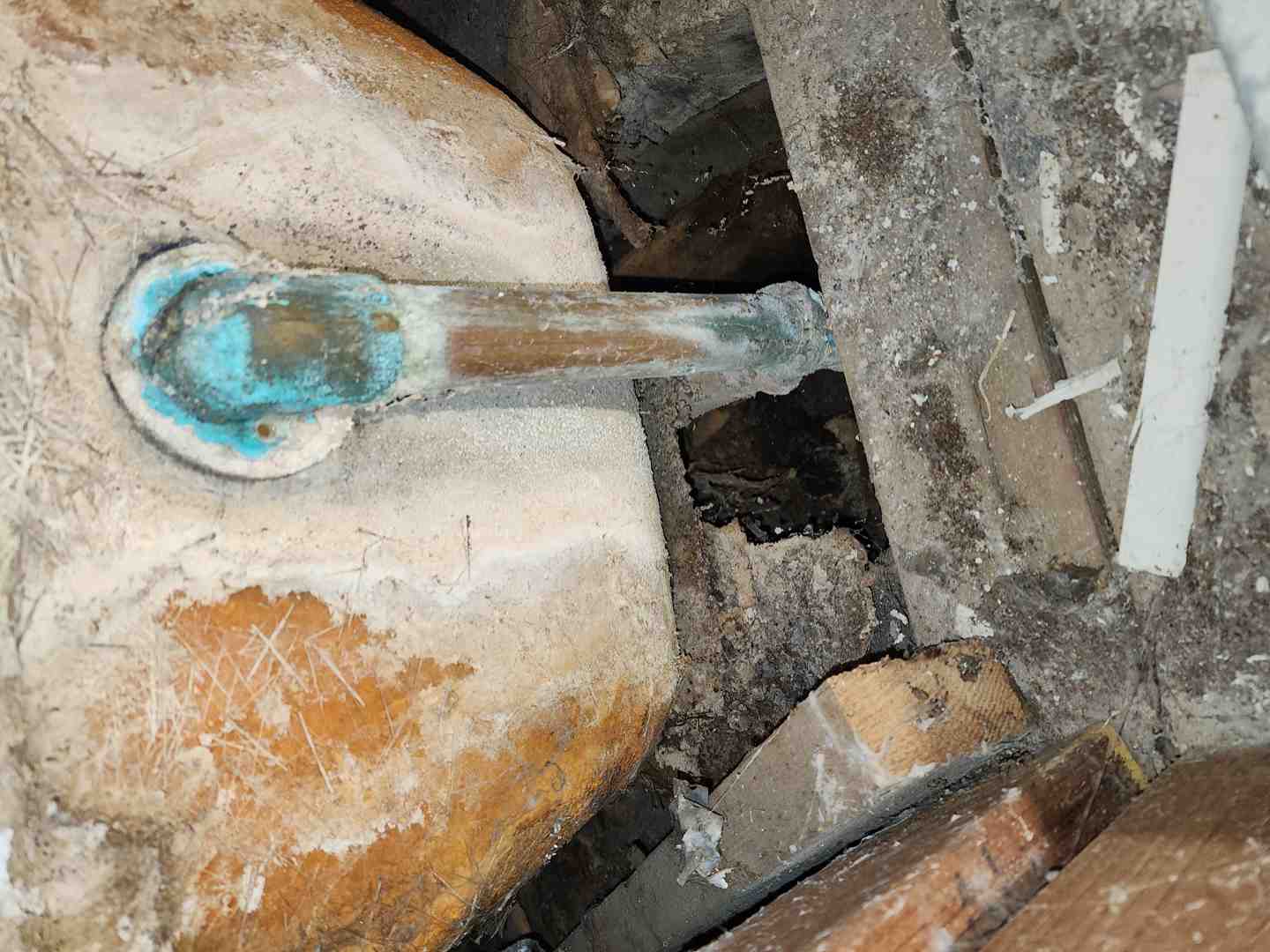
Buried line repairs are the most common major repair. This involves excavating your yard to access and replace a damaged pipe section, with costs often starting at $1,500 to $3,000. Significant corrosion or multiple leaks in an aging system may also require replacing a long section of pipe rather than just patching a single spot.
These repairs are not optional; they are essential for protecting your home and family. For more on installation costs, this resource is helpful: How Much Does Gas Line Installation Cost?.
Repairing vs. Replacing a Gas Line
Deciding whether to repair a leak or replace the line depends on your system’s age, its condition, and your long-term budget.
| Feature | Repair | Replacement |
|---|---|---|
| Cost | $150 – $3,000 (depending on severity) | $1,000 – $4,000 (for sections) to $3,000 – $7,000+ (full home) |
| Long-term Reliability | Good for isolated, minor issues | Excellent, provides peace of mind for decades |
| System Age | Suitable for newer lines or isolated damage | Recommended for lines over 30 years old, or with widespread issues |
| When to Choose | Small, accessible leaks; single appliance line | Multiple leaks; extensive corrosion; outdated material; home renovation |
| Disruption | Minimal, localized | More significant, potentially involving excavation or interior access |
For a newer line with an isolated problem, a repair is logical. However, for systems over 30 years old, replacement is often the smarter choice. Older pipes can develop multiple weak spots, leading to a cycle of repairs and safety risks. Widespread corrosion is another clear sign that replacement is the better long-term solution.
A major home renovation or the addition of new gas appliances also presents a perfect opportunity to upgrade your gas lines. The cost to replace a gas line is typically $15 to $35 per linear foot, with a full home replacement costing $3,000 to $7,000+. While a significant investment, it brings your home up to current safety codes and eliminates the worry of future repairs.
At Professional Plumbing IE Inc., we provide honest recommendations based on your system’s condition and your family’s safety.
The Repair Process: From Detection to Final Fix
Understanding the repair process can ease anxiety when you suspect a gas leak. At Professional Plumbing IE Inc., we follow a methodical process focused on safety and transparency, ensuring you understand the gas line repair cost and why each step is crucial.
Step 1: Professional Leak Detection and Inspection
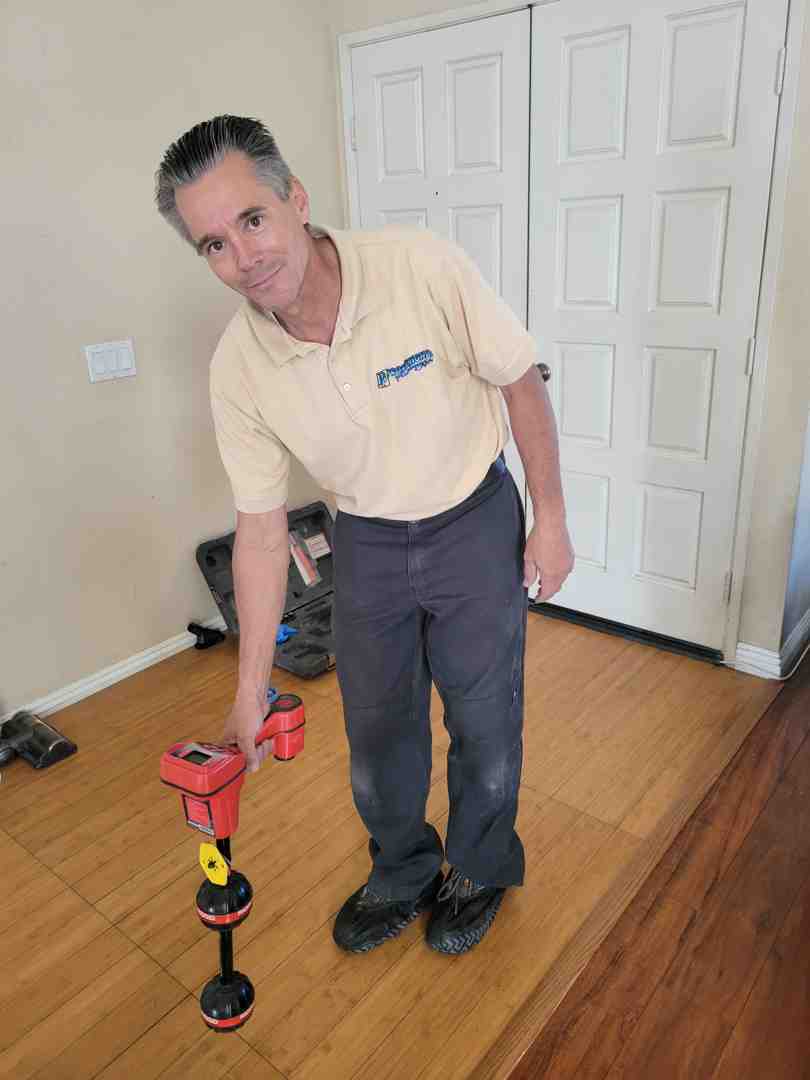
While you might smell the “rotten egg” odor of mercaptan, pinpointing a leak’s exact source requires professional tools. The gas leak detection cost typically ranges from $75 to $350 and is an essential first step.
Our technicians use several methods:
- Pressure testing: We isolate and monitor line sections for pressure drops, which indicate a leak. A standard test costs $75 to $150.
- Visual inspections: A trained eye can spot corrosion, loose fittings, or other warning signs on exposed pipes and connections.
This initial investigation finds the current problem and helps identify potential future issues. Learn more about our process for gas leak detection in Riverside.
Step 2: Permits, Inspections, and Additional Fees
Gas line work requires official permits and inspections to ensure every repair meets strict safety standards. This is not just bureaucracy; it’s a critical safety measure.
Permit costs generally range from $50 to $300, depending on the project’s scope and your municipality (e.g., Eastvale, Corona, Jurupa Valley). We handle all the necessary paperwork for you. After the repair, a city inspector must verify the work meets local codes before the gas is turned back on.
Other fees may include emergency call-out charges ($200 to $300 extra) or rental costs for specialized equipment like trenchers. These fees are investments in safety and peace of mind.
Step 3: Getting an Accurate and Transparent Estimate
After assessing the situation, we provide a clear, itemized estimate with no hidden fees. A quality estimate should include:
- Itemized Costs: A clear separation of labor and materials.
- Labor Details: The estimated hours or a flat rate for the job, including any emergency charges.
- Materials List: All parts needed for the repair, such as pipes, fittings, and valves.
- Additional Services: Any costs for drywall repair, excavation, or restoration.
- Permit Fees: The cost of pulling the required permits.
- Warranty Information: A guarantee on the workmanship and materials.
We recommend getting at least three estimates from licensed plumbers, but the cheapest quote isn’t always the best value. Quality and safety are paramount. Before work begins, it’s also wise to know how to locate and shut off your natural gas line in an emergency.
Proactive Measures: How to Save Money and Prevent Future Repairs
The best way to manage your gas line repair cost is to prevent emergencies. Proactive maintenance can save you money, stress, and keep your home safe. A little awareness and a few simple habits go a long way.
Recognizing the Warning Signs of a Gas Leak
Your home provides clues when something is wrong with your gas system. Be alert for these warning signs:
- Rotten Egg Smell: The distinct sulfur-like odor of mercaptan, an additive in natural gas.
- Hissing Sounds: A whistling or hissing noise near a gas line or appliance indicates escaping gas.
- Dead Vegetation: Unexplained dead or dying plants near underground gas lines can signal a leak poisoning the soil.
- Appliance Issues: A yellow or orange stove flame (instead of blue) or inefficient heating from furnaces or water heaters.
- Physical Symptoms: Unexplained headaches, dizziness, nausea, or fatigue can be signs of carbon monoxide exposure, which can accompany gas leaks.
If you notice any of these signs, evacuate the house immediately, call your gas provider from a safe distance, and then call a professional. Don’t second-guess these warnings.
Tips for Reducing Overall Repair Costs
Avoiding expensive emergency repairs is possible with a proactive approach.
- Address small issues immediately. A minor leak won’t fix itself and can quickly become a major, costly problem. A $200 repair today is better than a $2,000 emergency next month.
- Schedule an annual inspection. For about $150, a licensed plumber can inspect your entire gas system for corrosion, loose fittings, and other weak points. This small investment can prevent major expenses.
- Protect outdoor lines. Avoid planting large trees or shrubs over underground lines, as roots can cause damage. Check exposed pipes for damage from yard work or weather.
- Bundle services. If you’re already having plumbing work done, ask about adding a gas line inspection to save on labor costs.
Never attempt DIY gas line repairs. This work requires specialized training, tools, and licensing for a reason. The risks of explosion, fire, and carbon monoxide poisoning are catastrophic. DIY work is often illegal, can void your homeowner’s insurance, and endangers your family. The money you might save is not worth the risk. For professional help, learn more about our Natural Gas services.
Frequently Asked Questions about Gas Line Repairs
Gas line issues raise many important questions about responsibility, cost, and safety. Here are answers to the most common concerns we hear from homeowners in Riverside, Corona, and Jurupa Valley regarding gas line repair cost.
Who is responsible for repairing the gas line?
Responsibility is determined by the location of your gas meter. Your local utility company is responsible for the main line in the street and the service line leading up to and including the meter.
As the homeowner, you are responsible for everything from the meter onward. This includes all pipes running into and throughout your home, as well as the connections to your furnace, water heater, stove, and other gas appliances. Think of the meter as the property line dividing utility and homeowner responsibility.
Does homeowners insurance cover gas line repair?
Coverage depends on your policy and the cause of the damage. Most standard policies cover damage from a “covered peril,” such as a fire or a vehicle crashing into your home.
However, policies typically exclude damage from:
- Wear and tear: Gradual corrosion or aging of pipes.
- Neglect: Failure to perform routine maintenance.
- Tree roots: Damage caused by roots growing into underground lines.
- Faulty workmanship: Damage resulting from improper installation or previous repairs.
Because these common issues are often excluded, many insurers offer a service line coverage endorsement. This add-on can cover repairs for things like wear and tear or root damage. Given that underground repairs can cost $1,500 to $3,000+, this endorsement is often a worthwhile investment. Review your policy or call your agent to clarify your coverage.
Why shouldn’t I attempt a DIY gas line repair?
While it may be tempting to save money, DIY gas line repair is extremely dangerous and should never be attempted. Here’s why:
- Extreme Danger: A small mistake can lead to a gas leak, creating a risk of explosion, fire, or carbon monoxide poisoning—a silent killer that is odorless and colorless.
- Specialized Knowledge: Professionals use specific calculations, tools, and techniques to ensure pipes are sized, threaded, and sealed correctly according to strict safety codes.
- Illegality and Liability: In most areas, including Riverside and Corona, it is illegal for unlicensed individuals to work on gas lines. Unpermitted work can void your homeowner’s insurance, create liability issues, and cause problems when selling your home.
The professional gas line repair cost is an investment in your family’s safety. The risks associated with a DIY attempt far outweigh any potential savings. Always call a licensed professional for gas line concerns.
Ensure Your Home’s Safety with Professional Repair
Understanding the landscape of gas line repair cost, from minor fixes to major replacements, empowers you to protect your home and budget. More importantly, it underscores the value of safety. These costs aren’t just numbers on an invoice; they represent the integrity of your home and the well-being of your family.
Gas line work is not the place to cut corners or hire the lowest bidder. A licensed professional ensures repairs meet safety codes and are built to last, preventing recurring issues or a dangerous failure. While a major repair or replacement can be a significant expense, it pales in comparison to the potential cost of a fire, explosion, or carbon monoxide exposure.
At Professional Plumbing IE Inc., we have been protecting families in Riverside, Eastvale, Corona, Norco, Jurupa Valley, and Mira Loma for nearly 40 years. As a family-owned business, we treat every home with the seriousness it deserves, combining decades of experience with transparent pricing and guaranteed quality.
Don’t wait for a small concern to become a crisis. Whether you need preventative maintenance or suspect a leak, we are here to help. For expert natural gas line services in the Riverside area, contact our team today. Your safety is our priority.



Pingback: Gas pipeline for house: Conquer 2026 Dealbreaker Fears
[…] When you have a gas line problem in Corona or Eastvale, we provide a thorough diagnosis and a clear estimate before work begins. For more on repair expenses, visit our guide on gas line repair costs. […]