

Gas pipeline for house: Conquer 2026 Dealbreaker Fears
Understanding What You’re Really Buying
A gas pipeline for house can mean two things: the large utility lines near your property or the smaller pipes that feed your home’s appliances. Understanding the difference is key when you’re evaluating a property in Corona or Riverside.
External Gas Pipelines (Near Your Property):
- Transmission lines: High-pressure lines transporting gas across regions.
- Distribution mains: Medium-pressure lines under your neighborhood streets.
- Right-of-Way (ROW): A legal easement restricting what you can build near a pipeline.
Internal Gas Pipeline (For Your House):
- Service line: Runs from the street to your meter (utility’s responsibility).
- House line: All piping from the meter to your appliances (your responsibility).
- Materials: Typically black steel, CSST, or polyethylene for underground sections.
So, you’ve found a great property, but a yellow utility marker in the yard or an easement in the disclosures has you worried. Should you walk away? Not necessarily. The key is knowing which pipeline you’re dealing with.
Gas pipelines are incredibly common and safe, with over 99.999% of gas transported without incident across the vast network that serves the Inland Empire. Still, doing your homework is essential before you buy.
I’m Chris Kirsten of Professional Plumbing IE Inc. With 40 years of experience inspecting and installing gas systems in Riverside County, I’ll show you what to look for so you can buy with confidence.
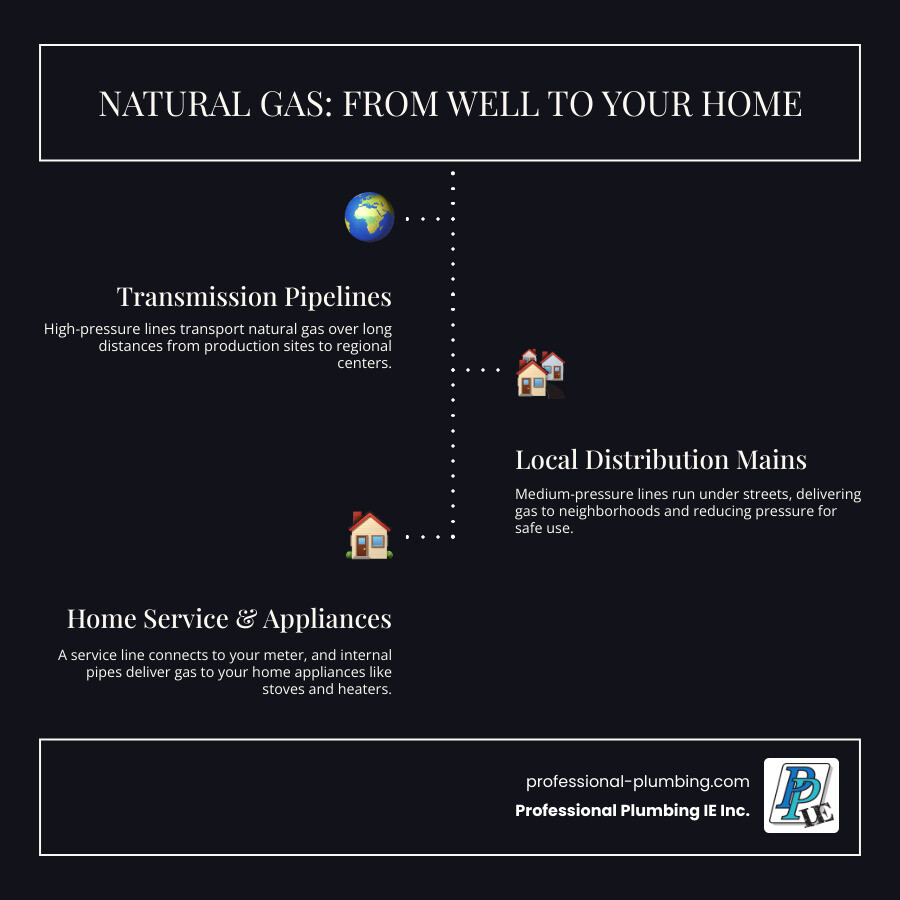
Handy gas pipeline for house terms:
Identifying Gas Pipelines on and Near Your Property
Before you can assess the risk, you need to know what you’re dealing with. Gas pipelines aren’t always obvious, but there are clear ways to determine their location, whether you’re looking at a property in a newer Eastvale development or near the Santa Ana River. Knowing what to look for is your first line of defense.
How to Locate External Gas Lines
External gas lines are the larger utility infrastructure bringing gas to your neighborhood. Though often buried, their presence is usually indicated.
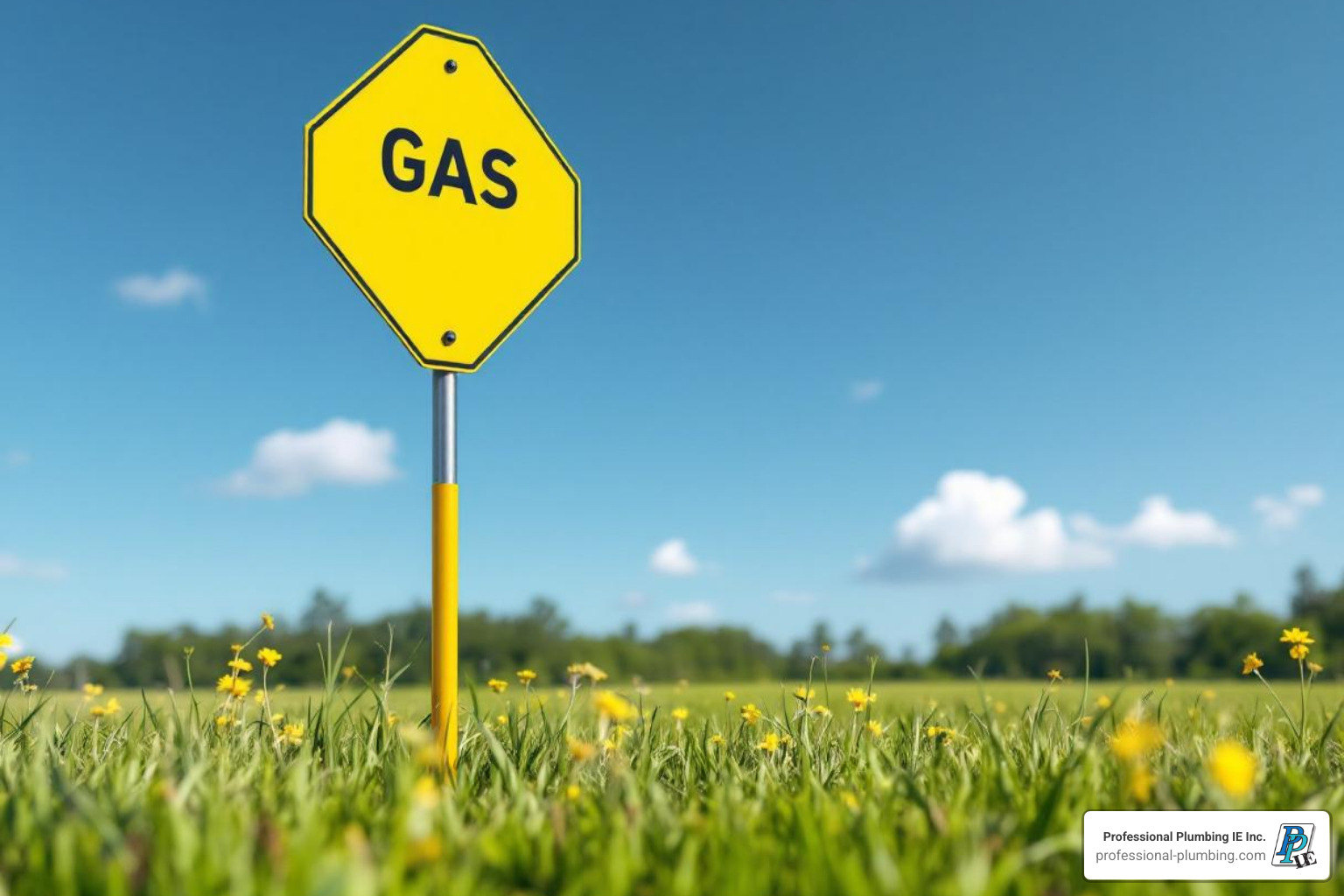
Look for pipeline markers—typically yellow posts or signs with the operator’s name and emergency number. They indicate a pipeline’s general path, so if you see them in Jurupa Valley or Norco, it’s a sign to investigate further.
Another critical aspect is the Right-of-Way (ROW). This is a strip of land, usually an easement, that the pipeline company can use for access and maintenance. Any construction or digging on a ROW requires written consent from the operator. In California, it’s crucial to check property deeds and seller disclosures for these easements, which will be explicitly stated if they cross the property.
If you’re unsure, or before any digging project (even for a fence or mailbox), always use the 811 “Call Before You Dig” service. This free service prompts utilities like Southern California Gas Company (SoCalGas) to mark their underground lines on your property. It’s not just a good idea; it’s the law.
For a deeper dive, you can review Riverside County public records for utility easements. Learn more by visiting our guide on natural gas lines in my area.
Homeowner vs. Utility Company Responsibility
Understanding where the utility’s responsibility ends and yours begins is paramount. It’s a common point of confusion, but the line is quite clear.
Generally, the utility company (like SoCalGas here in Corona and Eastvale) is responsible for the service line from the street main to your property and the gas meter itself. Their responsibility typically ends at the meter’s outlet.
From that point on, the customer-owned piping (or “houseline”) is the homeowner’s responsibility. This includes all pipes running from the meter to your furnace, water heater, stove, and other appliances. Any repairs or maintenance on these internal pipes are up to you. This distinction is crucial for knowing who to call and who pays for repairs. You can find more details on this division of responsibility in this View Original Source.
Understanding the Gas Pipeline for Your House: From Street to Stove
The “gas pipeline for house” is the system carrying natural gas from the utility’s main line throughout your home. Understanding this system is crucial for safety. When we install or service these lines in Riverside or Norco, we ensure every component is up to code.
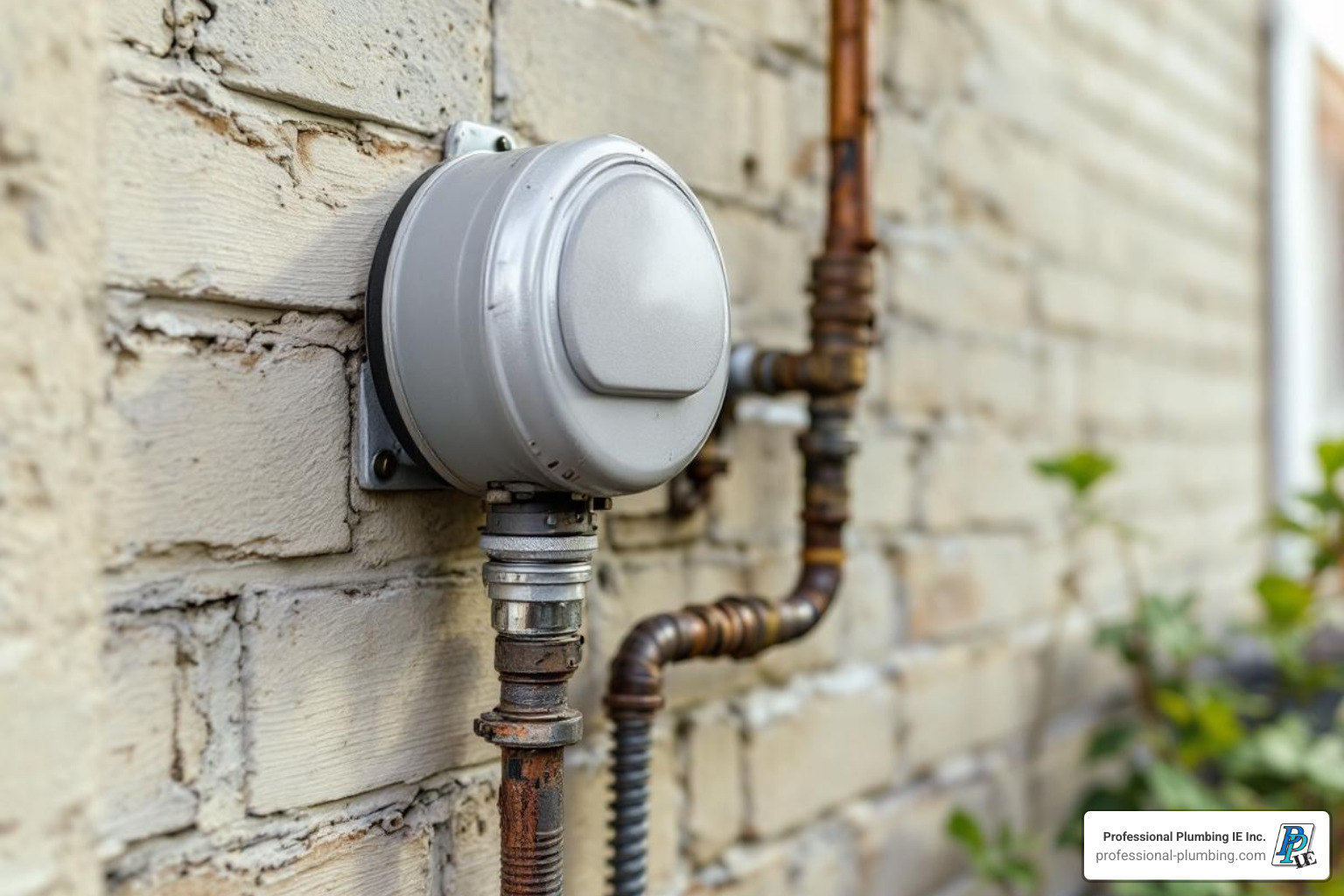
Natural gas flows from higher to lower pressure. A regulator near your meter steps down the pressure before it enters your internal piping, ensuring a safe, consistent flow to your appliances.
Types of Gas Piping Materials
The materials used for your internal gas pipeline for house are critical for safety. Local codes in areas like Corona and Eastvale dictate what’s allowed.
- Black Steel Pipe: The traditional choice. It’s durable but can corrode if exposed to moisture, and installation is labor-intensive.
- Corrugated Stainless Steel Tubing (CSST): A flexible, yellow-jacketed pipe that’s easier to install because it can be snaked through walls, reducing joints. It requires proper bonding and grounding to be safe.
- Galvanized Steel: Less common today. Its zinc coating can flake off and clog appliance valves, so we advise against it for new gas lines.
- Copper Tubing: Flexible and used for over 30 years, copper can reduce the number of joints. However, its use is often restricted by local codes, so always check with a professional for current regulations in Riverside.
- High-Density Polyethylene (HDPE/MDPE): This flexible yellow pipe is for underground use only. It’s rust-proof and ideal for running a line to an outdoor BBQ in your Jurupa Valley backyard, but it can never be used inside a building.
Each material has pros and cons based on the application and budget. For more details, explore our guide on gas distribution pipe.
Indoor vs. Underground Piping
The rules for indoor and underground piping are very different.
For underground applications, like running a line to a detached garage in Norco, MDPE is the standard choice. It’s durable and designed for direct burial. A tracer wire must be buried alongside it so the pipe can be located in the future. Polyethylene pipe must never be used inside a building or under its foundation.
For indoor gas piping, materials like black steel or CSST are required. For safety, many materials are strictly prohibited for internal use, including most plastics, copper (in many cases), galvanized fittings, and certain types of connectors. These rules prevent corrosion and leaks.
Before your gas service is turned on, your internal houseline must pass a pressure test to confirm its integrity. This is a standard procedure we perform to ensure your gas pipeline for house is completely sealed and safe. A guide like this A guide to houseline plumbing requirements offers good general insight, but always defer to local California codes.
Safety, Risks, and Regulations You Can’t Ignore
With natural gas, safety is the top priority. Knowing the signs of a problem and understanding local regulations, especially earthquake safety protocols relevant to Southern California, provides crucial peace of mind. We take gas safety seriously on every job in Eastvale, Corona, and beyond.
Signs of a Gas Leak and What to Do
Natural gas is odorless, so utilities add a chemical called mercaptan to give it a distinct “rotten egg” smell. Detecting a leak quickly is vital.
Signs of a Leak:
- Smell: A “rotten egg” or sulfur-like odor.
- Sound: A hissing or whistling sound near a gas line or appliance.
- Sight: Bubbles in standing water or patches of dead vegetation near a buried gas line.
- Feeling: Physical symptoms like dizziness, nausea, or headaches.
If You Suspect a Gas Leak:
- Evacuate Immediately: Get everyone out of the house. Open windows on your way out if possible.
- Don’t Touch Electronics: Do not use phones, turn lights on or off, or use any appliance. A spark could ignite the gas.
- Shut Off Gas (If Safe): If you can safely access your main gas shutoff valve outside, use a wrench to give it a quarter turn so it’s perpendicular to the pipe.
- Call for Help: Once you are a safe distance away, call 911 and your gas company (SoCalGas).
Prioritize safety above all else. For more details, see our guide on what to do if you suspect a gas leak.
Common Problems with a Gas Pipeline for a House
Over time, even a well-installed gas pipeline for house can develop issues.
- Corrosion: Older steel pipes can rust and weaken, leading to leaks.
- Failing Seals: Gaskets and seals at pipe joints can dry out and crack.
- Appliance Issues: Inefficient appliances or a yellow flame (instead of blue) can indicate a gas supply problem.
- Seismic Damage: Earthquakes in Southern California can stress and damage gas lines, especially older, rigid systems.
- External Damage: Digging without calling 811 is a common cause of damage to buried lines.
If you notice these issues in Riverside or Norco, contact us for a professional inspection. Learn more about gas leak issues in Riverside.
Local Regulations and Professional Compliance
Gas piping is highly regulated for safety. In Riverside County, all work must comply with rules from the California Public Utilities Commission (CPUC) and local city building codes. Any new installation or major modification requires a permit and a professional inspection.
This is not a DIY job. A professional, licensed plumber is essential for any gas line work. We understand the complex codes, use advanced leak detection tools, and pressure-test every system to guarantee safety. Don’t risk your home or family; always choose an experienced professional. You can learn more about state oversight at the California Public Utilities Commission (CPUC) website.
The Financials: Installation, Extension, and Repair Costs
Whether you’re connecting a new home, adding an outdoor BBQ in Jurupa Valley, or facing a repair in Mira Loma, understanding the costs is key. We believe in transparent pricing and provide clear estimates for every project.
Typical Cost to Install or Extend a Gas Pipeline for a House
The cost to run a gas line averages around $20 per linear foot, with most projects falling between $265 and $850. However, the final price depends on several factors.
Factors affecting price:
- Complexity & Length: A simple, short run for a stove is cheaper than a long, complex run under a driveway to an outdoor kitchen in Eastvale, which could exceed $1,000.
- Materials: The cost of black steel, CSST, or polyethylene piping will affect the total.
- Accessibility: Running pipes through finished walls or ceilings increases labor costs.
- Permits: Local permits and inspections in Riverside, Corona, and Norco are part of the project budget.
- Trenching: Underground lines may require trenching, which adds to the cost.
We provide detailed estimates so you know what to expect. For more on pricing factors, see our page on the cost of adding a gas line.
Budgeting for Gas Line Repairs
Gas line repairs are often unexpected. Most repairs take 2 to 6 hours, depending on the issue’s complexity.
Key components of repair costs:
- Leak Detection: If a leak’s location isn’t obvious, we use specialized equipment to find it, which has an associated diagnostic cost.
- Pipe Replacement: The cost depends on the material, length, and accessibility of the damaged pipe section.
- Emergency Fees: We offer 24/7 emergency gas line repairs in Riverside and surrounding areas, which may include an emergency service fee for after-hours calls.
When you have a gas line problem in Corona or Eastvale, we provide a thorough diagnosis and a clear estimate before work begins. For more on repair expenses, visit our guide on gas line repair costs.
Frequently Asked Questions about Home Gas Lines
What are the advantages of using natural gas in my home?
Natural gas is a popular choice for homeowners because it’s efficient, reliable, and often more cost-effective than electricity. It provides powerful, consistent heat for furnaces, instant temperature control for cooking, and quick recovery times for water heaters. It’s also a relatively clean-burning fuel.
How do I connect a new home to natural gas service?
Connecting a new home involves you, a qualified plumber, and your local utility. Here’s a general overview:
- Apply for Service: Contact your local utility, like SoCalGas, to apply for service and determine connection feasibility.
- Install Internal Piping (Houseline): Hire a licensed plumber like us to install the internal gas pipes from the future meter location to your appliances, following all local codes in Riverside or Corona.
- Pressure Test and Inspection: We pressure test the new system to ensure it’s leak-free. It must then be approved by a local building inspector.
- Meter Installation: After the inspection passes, the utility company will install the gas meter and activate your service.
- Final Connections: We make the final connections to your appliances and ensure everything is working safely.
The process takes time, so it’s best to start early. This overview of The Connection Process gives a good general idea, though steps are specific to California.
How do I shut off the gas to my house in an emergency?
Knowing how to shut off your gas is a critical safety skill. The main shutoff valve is located on the pipe leading to your gas meter.
To shut off the gas:
- Locate the Valve: Find the valve on the pipe just before the meter. It has a small tang (lever). When gas is on, the tang is parallel to the pipe.
- Use a Wrench: You’ll need a 12-to-15-inch adjustable wrench.
- Turn the Valve: Turn the valve a quarter turn (90 degrees) so the tang is perpendicular (crosswise) to the pipe. This stops the gas flow.
Important: Only shut off the gas if you suspect a leak or are instructed to by emergency personnel. Never turn the gas back on yourself. Only the utility company or a qualified plumber can safely restore service. We recommend you learn how to locate and shut off your natural gas line before an emergency happens.
Is the Property Right for You? A Final Assessment
A gas pipeline on or near a property isn’t an automatic dealbreaker. By understanding the type of pipeline, its maintenance record, and the condition of the home’s internal gas system, you can make a confident choice. Whether you’re looking at a charming bungalow in Riverside or a sprawling estate in Norco, due diligence is key.
Our experience at Professional Plumbing Inc. has taught us that every property is unique. A thorough inspection by a qualified professional is the best way to ensure the safety and integrity of any gas pipeline for house. We can assess the condition of existing lines, identify potential issues, and advise you on compliance with local regulations in areas like Eastvale, Corona, and Mira Loma. This isn’t just about avoiding problems; it’s about ensuring your peace of mind and the long-term safety of your home.
For expert advice and comprehensive gas line inspections in the Riverside area, the team at Professional Plumbing Inc. has the experience to give you the answers you need. We’re here to help you make an informed decision, ensuring that your dream home is safe and sound for years to come.
For any and all of your natural gas plumbing needs, from inspections to installations, contact us for professional natural gas services.


