Clogged toilet fix: Panic Solved 2026!
Don’t Panic! Your Guide to Fixing a Clogged Toilet in the Inland Empire
A clogged toilet fix is one of the most common plumbing problems homeowners face. That moment when you flush and the water starts rising is universally dreaded, whether you’re in a historic Riverside neighborhood near Mount Rubidoux or a new development in Eastvale.
Quick Fix Options:
- Use a flange plunger – Clears 95-99% of toilet clogs
- Try a toilet auger (snake) – For stubborn blockages
- Hot water + dish soap – A gentle DIY method for minor clogs
- Baking soda + vinegar – Natural alternative for soft clogs
- Call a professional – For recurring clogs or sewage odors
The good news is that most toilet clogs are simple to fix yourself with the right tools and technique. You just need to know what to do and what not to do.
Here’s what causes most toilet clogs:
- Too much toilet paper
- Flushing non-flushable items (wipes, paper towels, feminine products)
- Hard water mineral buildup (common in the Inland Empire)
- Foreign objects
- Issues with the toilet’s trap or sewer line
This guide distills four decades of experience from Professional Plumbing Inc. into practical steps any homeowner can follow. I’m Chris Kirsten, and I’ve seen—and fixed—thousands of clogged toilet fix scenarios across the Inland Empire. We’ll cover everything from immediate damage control to advanced DIY fixes.
First Response: What to Do When Your Toilet Clogs
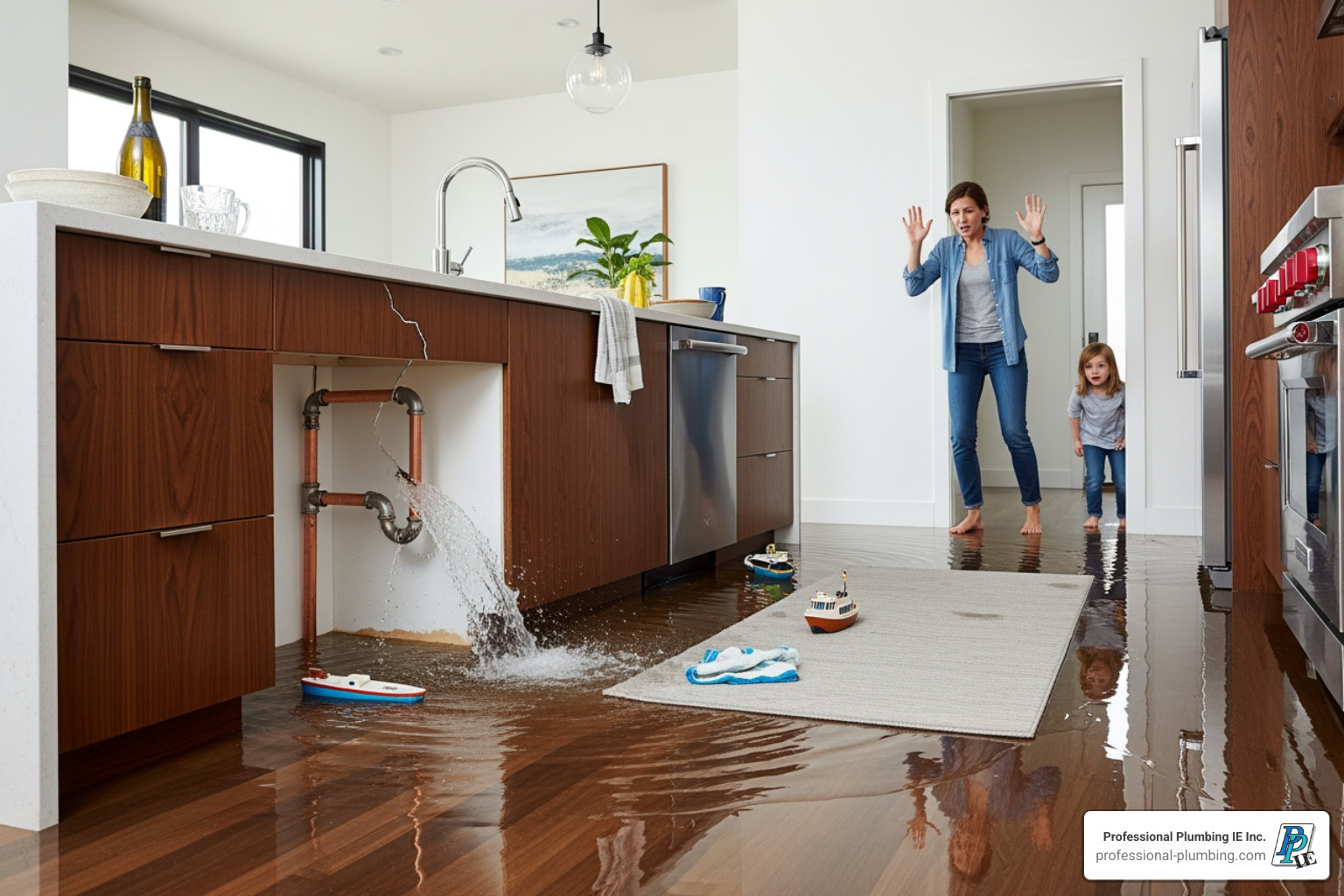
An overflowing toilet can cause panic, but taking immediate steps prevents costly water damage and makes the clogged toilet fix easier.
-
Stop the Water Immediately: This is your first priority if the bowl is close to overflowing.
- Lift the Tank Lid: Quickly remove the lid from the toilet tank.
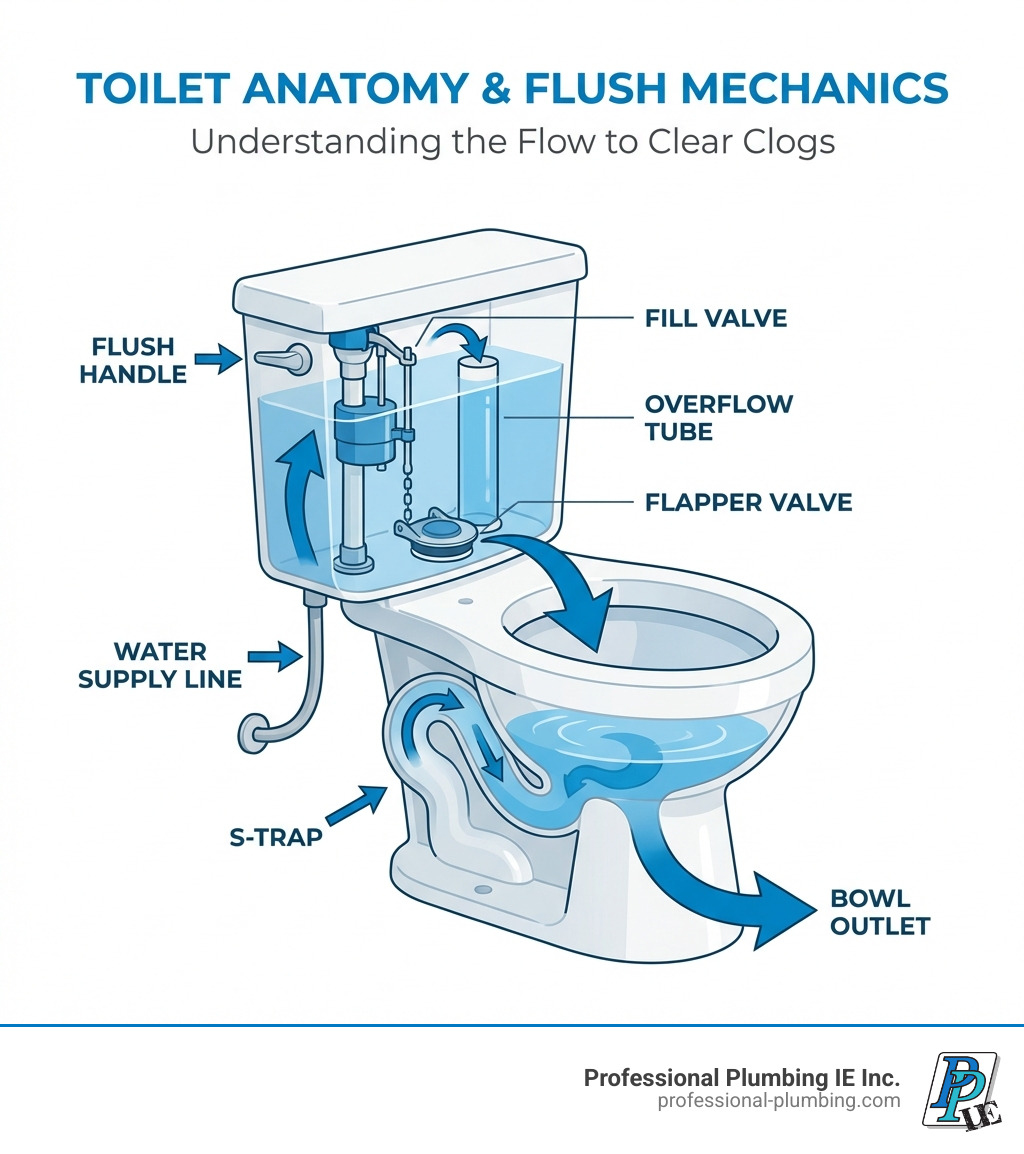
- Close the Flapper: Push the rubber flapper valve at the bottom of the tank closed to stop water from entering the bowl.
- Turn Off the Water Supply Valve: Find the small shut-off valve on the wall or floor behind the toilet. Turn it clockwise to cut off the water supply.
-
Protect Your Floor: Place old towels or rags around the base of the toilet to absorb any spills and prevent water damage.
-
Assess the Situation:
- Visible Obstruction? If you can see the clog (like a toy), put on rubber gloves and try to remove it by hand.
- Water Level: If the bowl is very full, use a small cup to bail some water into a bucket before plunging to prevent splashing.
These actions can save you stress and mess. If your toilet is gurgling or showing other unusual signs, it could be a symptom of a larger issue. For more on warning signs, check out our guide on Signs That Your Plumbing Is Failing.
The Plunger Power-Play: Your Go-To Clogged Toilet Fix
A plunger is your best friend for a clogged toilet fix, clearing up to 99% of clogs. However, using the right type and technique is key.
The Difference Between a Sink Plunger and a Toilet Plunger
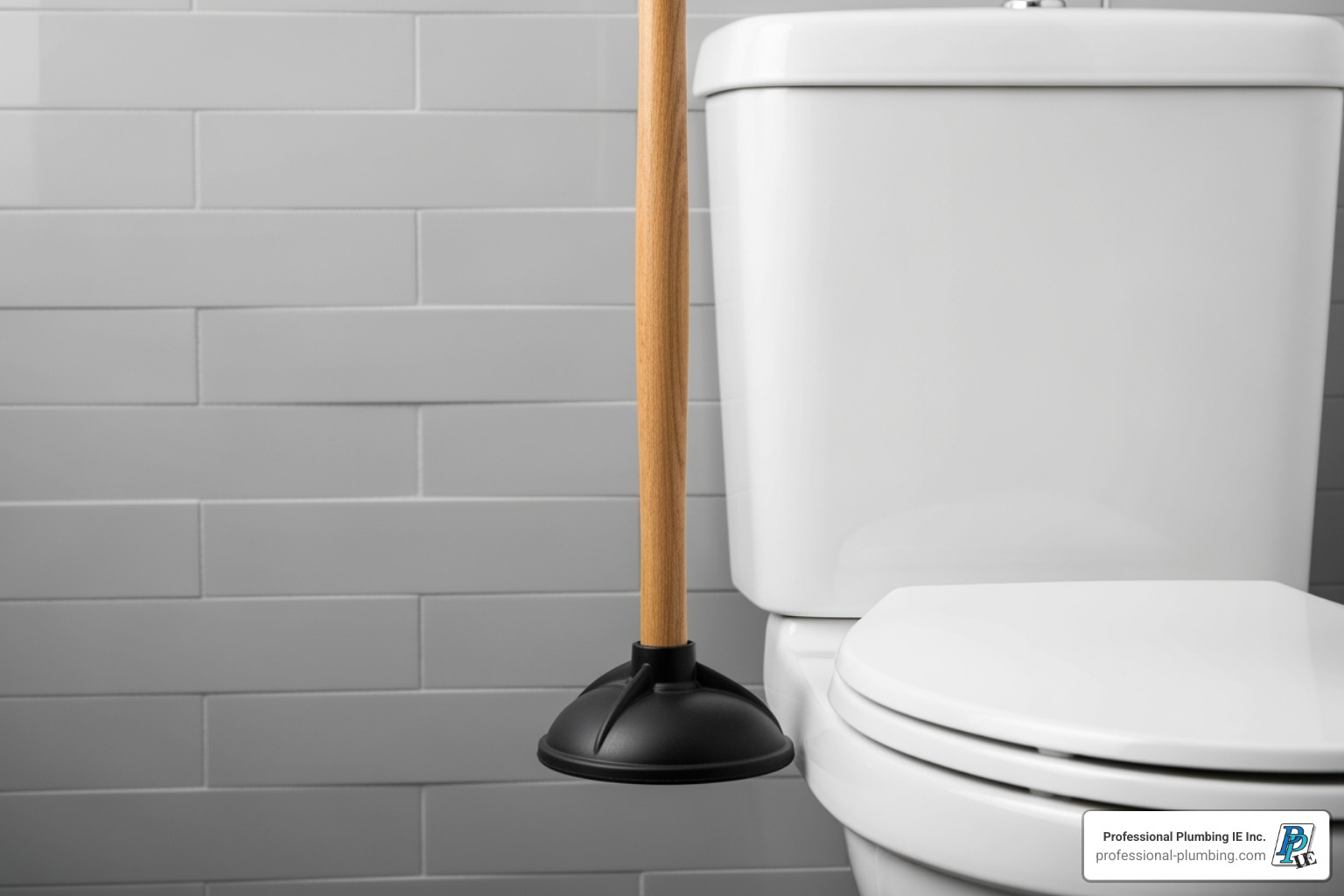
Many homeowners mistakenly use a standard cup plunger, which is ineffective on toilets. Understanding the difference is crucial.
| Type | Best For | How it Works |
|---|---|---|
| Cup Plunger | Flat drains (sinks, bathtubs, shower drains) | Creates suction over a flat surface. Its simple cup shape doesn’t form a tight seal on a toilet’s curved drain opening. |
| Flange Plunger | Toilets (specifically designed for toilet drains) | Features an extended, narrower rubber flap (the “flange”) that fits snugly into the toilet’s drain opening, creating a powerful seal. |
A flange plunger has an extra rubber flap that fits into the toilet’s waste outlet. This creates a much stronger seal and directs pressure more effectively than a flat-bottomed cup plunger.
How to Plunge a Toilet Correctly
Using the right tool properly is essential.
- Prepare the Area: Lay down towels and put on rubber gloves.
- Ensure Enough Water: The plunger head must be fully submerged. If the water level is low, add water from a bucket.
- Create a Tight Seal: Place the flange plunger over the drain hole, inserting the flange into the opening to form a tight seal.
- Gentle First Plunge: Start with a slow push to release trapped air and prevent splashing.
- Vigorous Plunging: Once sealed, plunge vigorously up and down for 20-30 seconds. The upward pull is just as important for creating a vacuum to dislodge the clog.
- Check the Drain: Remove the plunger to see if the water drains. If so, turn the water supply back on and flush. If not, repeat the process. Patience is key.
If plunging fails after several attempts, the clog is more stubborn. It’s time to try another method or call the professionals. Our team offers comprehensive drain services for residents in Riverside, Corona, and Eastvale.
DIY Fixes Without a Plunger
If you don’t have a plunger or it isn’t working, there are other DIY methods for a clogged toilet fix.
-
The Hot Water and Dish Soap Method: This gentle approach works well for organic clogs.
- Pour about half a cup of liquid dish soap into the toilet bowl to act as a lubricant.
- After 10-15 minutes, slowly pour in a gallon of hot (not boiling) water. Boiling water can crack porcelain.
- Let it sit for at least 30 minutes. If the water level drops, the clog is loosening.
- Flush to see if the clog has cleared.
-
Baking Soda and Vinegar: This classic remedy can also work.
- Pour one cup of baking soda into the bowl, followed by two cups of white vinegar.
- Let the fizzing mixture sit for at least 30 minutes (or overnight for best results).
- Flush with hot water.
-
Enzyme-Based Cleaners: A safer alternative to harsh chemicals, these cleaners use bacteria to digest organic matter. They are safe for pipes and septic systems but often require several hours to work, making them better for maintenance than severe clogs.
Risks of Chemical Drain Cleaners
We strongly advise against using chemical drain cleaners for a clogged toilet fix. Here’s why:
- Ineffectiveness: They often fail to reach or dissolve dense toilet clogs.
- Pipe Damage: Harsh chemicals can corrode PVC pipes, seals, and older metal pipes, especially if left sitting.
- Health Hazards: These caustic chemicals can cause severe burns and produce harmful fumes. Splashing is a major risk.
- Environmental Impact: They are harmful to the environment and septic systems.
For your safety and your plumbing’s integrity, avoid these products in toilets. Learn more about the dangers of caustic cleaners.
Advanced DIY: Using a Toilet Auger (Snake)
When plunging fails, a toilet auger (or closet auger) is the next step. This tool reaches deeper into the toilet’s trapway to break up or retrieve stubborn clogs without damaging the porcelain.
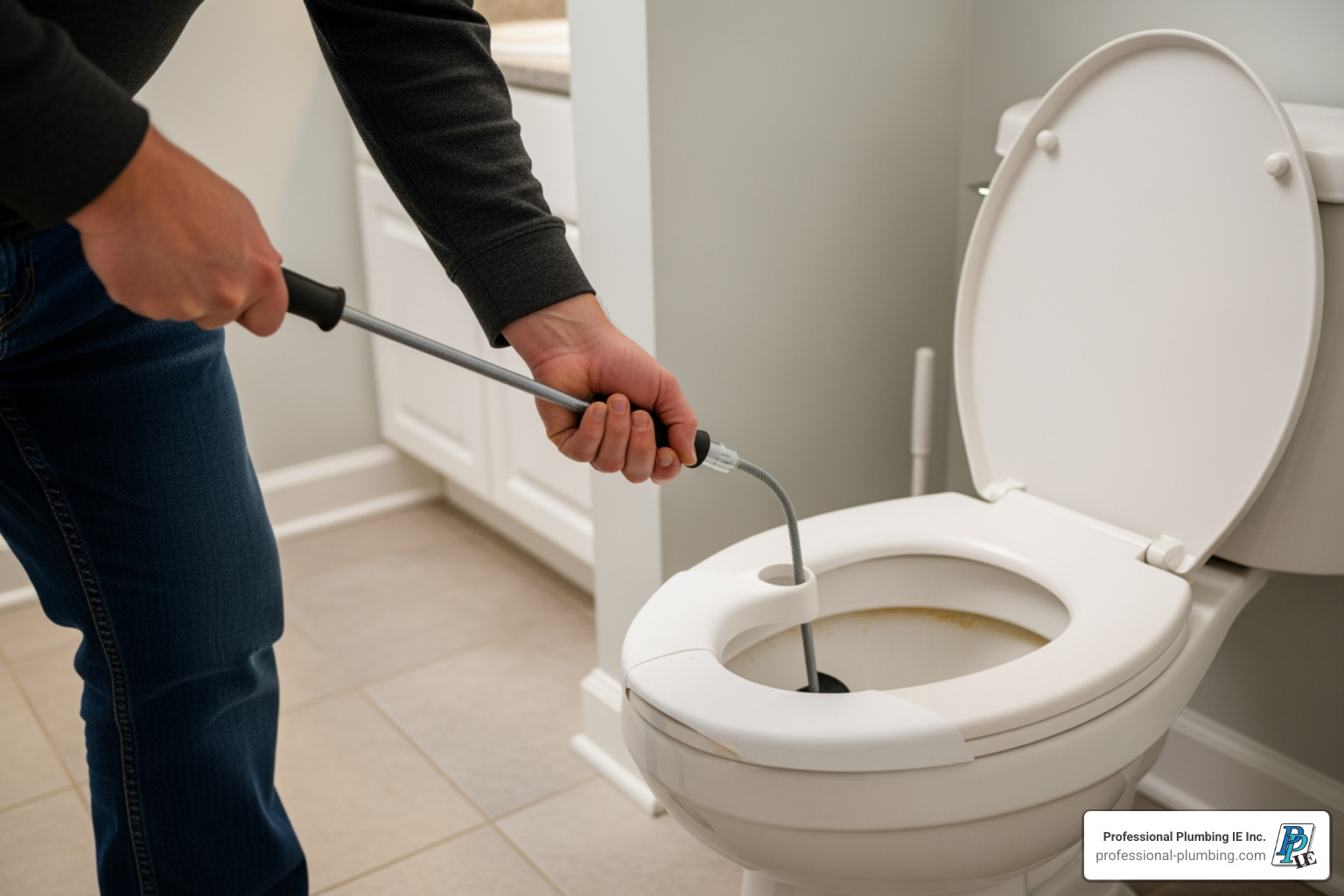
A toilet auger has a flexible cable with a corkscrew tip and a crank handle. A protective sleeve prevents the metal cable from scratching the porcelain bowl. The tip either snags obstructions for retrieval or breaks them apart so they can be flushed. It’s much safer for toilets than a standard drain snake. You can learn more about how a plumber’s snake is explained in general.
A Step-by-Step Guide to Using a Toilet Auger
Using an auger is a straightforward process for a stubborn clogged toilet fix.
- Prepare the Area: Wear rubber gloves and lay down towels.
- Insert the Auger: Gently place the auger’s curved end into the drain opening, with the protective sleeve resting against the porcelain.
- Feed the Cable: Push the cable forward until you feel resistance from the clog.
- Crank the Handle: Crank the handle clockwise to bore through or snag the obstruction.
- Break Up or Retrieve: Continue cranking and pushing to break the clog apart. If you’ve snagged something solid, gently pull the auger back to retrieve it.
- Retract Carefully: Slowly retract the auger and clean any debris from its tip.
- Flush to Test: Turn the water supply back on and flush. The water should drain freely. If not, repeat the process.
If an auger doesn’t work, or you’re uncomfortable using one, our team can help with emergency plumbing repair services in Riverside, Corona, and Norco.
Troubleshooting Deeper Plumbing Problems
Sometimes, a clogged toilet fix requires looking beyond the toilet itself. The problem could be deeper in your plumbing system.
Is the Clog in the Toilet or Sewer Line?
- Toilet-Specific Clog: If only one toilet is clogged and all other drains work fine, the clog is localized to that toilet’s trap.
- Main Sewer Line Clog: If multiple drains are slow or backing up (especially on the lowest floor), it’s likely a main sewer line clog. Other signs include water backing up in the shower when you flush the toilet or gurgling sounds from drains. These issues point to a main line blockage. For more on those noises, see our article on Why Is My Toilet Gurgling?.
What is the role of the toilet’s ‘S-trap’ in clogs?
The ‘S-trap’ is the curved pipe beneath the bowl that holds water to block sewer gases. This curve is also the most common spot for clogs to form as waste gets lodged there.
How Does Hard Water Affect Toilet Flushing and Clogs?
The Inland Empire’s hard water contains minerals that build up in your toilet and pipes over time.
- Clogged Rim Jets: Mineral deposits can block the small jets under the toilet rim, leading to a weak flush.
- Flapper and Fill Valve Issues: Buildup can cause internal tank parts to malfunction, affecting flush efficiency.
- Pipe Narrowing: Minerals can narrow drain pipes, making them more prone to clogs.
How Can I Fix a Weak Toilet Flush?
A weak flush often leads to clogs. Here’s how to fix it:
- Clean the Rim Jets: Use a small mirror and a piece of a coat hanger to clear mineral deposits from the holes under the rim. Pouring vinegar down the overflow tube in the tank can also help dissolve buildup.
- Check the Water Level in the Tank: The water should be about an inch below the overflow tube. Adjust the fill valve if it’s too low.
- Inspect the Flapper Valve: A worn or faulty flapper can cause a weak flush or a running toilet. Replace it if it’s damaged.
- Check for Partial Clogs: A weak flush can be caused by a partial clog. Try plunging or using an auger.
- Consider a Low-Flow Toilet: Modern low-flow toilets are powerful and efficient. If you’re looking to upgrade, you might consider installing a low-flow toilet.
Prevention is Key: How to Avoid Future Clogs
The best clogged toilet fix is prevention. Simple habits and regular maintenance can significantly reduce your chances of a backup.
Proper Flushing Habits
What you flush (and how much) makes all the difference.
- Only Flush the 3 P’s: Our golden rule is to only flush Pee, Poo, and (toilet) Paper. Everything else belongs in the trash.
- Mind Your Toilet Paper: Using too much toilet paper at once can overwhelm the flush. Use less or flush multiple times for larger amounts.
- Teach Children: Educate kids that toilets aren’t for toys or other foreign objects.
Toilet Maintenance Tips
Regular maintenance keeps your toilet flushing smoothly.
- Clean Rim Jets Regularly: Clean these every few months to prevent hard water buildup.
- Check for Leaks: A running toilet indicates a faulty part that can affect flushing. Address leaks promptly.
- Consider a Water Softener: For hard water areas like Eastvale and Norco, a water softener prevents mineral buildup throughout your plumbing.
What Should Never Be Flushed Down a Toilet?
This list is crucial for preventing clogs. Even if an item goes down, it can get caught later and cause a major blockage.
- ‘Flushable’ Wipes: They don’t break down like toilet paper and are a primary cause of clogs.
- Paper Towels & Tissues: They are too thick and durable to dissolve properly.
- Feminine Hygiene Products: Tampons and pads expand in water.
- Cotton Swabs & Cotton Balls: These clump together and don’t dissolve.
- Dental Floss & Hair: They can form net-like masses that trap other waste.
- Grease & Oil: These solidify in pipes, coating them and attracting debris.
- Food Leftovers: Food scraps can swell and don’t break down easily.
- Cat Litter: Even ‘flushable’ types can harden and cause severe clogs.
- Medications: Flushing meds contaminates the water supply.
Keep a small trash can in your bathroom for these items!
When to Call for a Professional Clogged Toilet Fix in Riverside
While many clogged toilet fix scenarios are manageable, some problems require a professional. Trying to fix an issue beyond your skill level can cause more expensive damage.
It’s time to contact Professional Plumbing Inc. if you encounter any of the following:
- Recurring Clogs: If the same toilet keeps clogging, it points to a deeper issue that needs an expert diagnosis.
- Multiple Fixtures Backing Up: If your toilet, shower, and sinks are all draining slowly, it’s a strong sign of a main sewer line clog.
- Sewage Smell: Foul odors from drains can indicate a significant blockage or a venting problem.
- DIY Methods Fail: If plunging, augering, and other remedies don’t work, the clog is too stubborn for DIY tools.
- Foreign Object Flushed: A professional can safely retrieve a solid object (like a toy or phone) without damaging your pipes.
- You Suspect a Main Sewer Line Issue: These complex problems require professional tools like cameras and hydro-jetting.
- You’re Not Comfortable with DIY: If you’re unsure or uncomfortable, don’t hesitate to call us. We’re here to help.
At Professional Plumbing Inc., we pride ourselves on providing guaranteed quality service. If you’re looking for a plumber who stands by their work, check out The Ultimate Guide to Finding a Plumber Who Guarantees Their Work.
Frequently Asked Questions About Clogged Toilets
Here are answers to common questions we hear from homeowners in Riverside and Corona about a clogged toilet fix.
Will a clogged toilet eventually unclog itself?
Sometimes, if the clog is only organic waste and toilet paper, it may break down over several hours. However, this isn’t guaranteed. If the clog contains foreign materials, it won’t clear on its own and could worsen. It’s always best to address a clog proactively.
How do I know if the clog is in the toilet or the main sewer line?
This is a critical distinction.
- Clog in the toilet: Only the affected toilet will have drainage issues. Other drains in your home will work normally.
- Clog in the main sewer line: You’ll notice problems in multiple fixtures, especially on the lowest floor. Flushing a toilet might cause water to back up in a nearby shower. If you suspect a main line issue, consult our guide on a main line leak or clog.
Can I use a chemical drain cleaner in my toilet?
We strongly advise against it. These products are often ineffective on dense toilet clogs and can be dangerous. They can damage porcelain, corrode pipes, and pose serious health risks if they splash. If the clog remains, the stagnant chemicals make it hazardous for anyone to attempt a manual fix. Stick to plungers, augers, or natural remedies for your safety.
Your Local Riverside Plumbing Experts Are Here to Help
Dealing with a clogged toilet fix is a headache, but many clogs can be resolved with the right tools and techniques. This guide has armed you with steps for everything from plunging to prevention. Remember to only flush the “3 P’s” to avoid future issues.
However, not every clog is a simple DIY fix. For stubborn or recurring clogs, or if you prefer to leave it to the experts, our team at Professional Plumbing Inc. is ready to help.
As a family-owned company, we’ve served Riverside, Corona, Eastvale, Norco, Jurupa Valley, and Mira Loma for nearly 40 years. We are committed to providing professional, guaranteed quality service at affordable rates.
If you’ve tried these fixes and still have trouble, don’t hesitate to contact our team for expert plumbing services. We’re ready to solve your plumbing problems!