Best instantaneous hot water system 2025: Ultimate
Why Choosing the Best Instantaneous Hot Water System Matters for Your Home
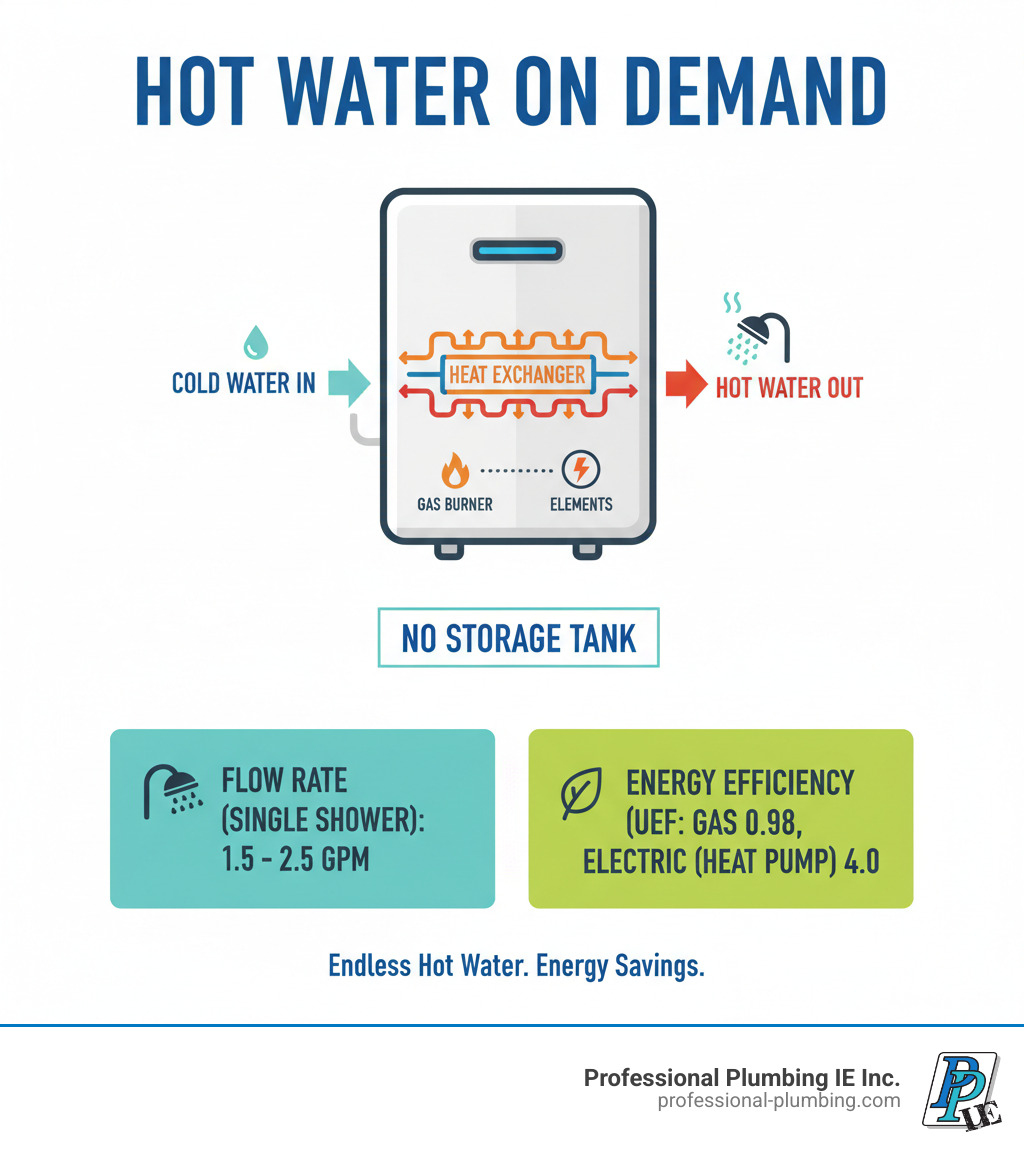
The best instantaneous hot water system delivers endless hot water on demand while helping you save on energy bills. Unlike traditional tank heaters that waste energy keeping water hot 24/7, these compact units heat water only when you need it, lasting nearly twice as long.
But with so many models, how do you choose? Two brands lead the market: Rheem and Rinnai.
Top Instantaneous Hot Water Systems:
- Rinnai SENSEI RX Series: Best for maximum energy savings with industry-leading 0.98 UEF efficiency.
- Rheem IKONIC Series: Best overall value with a high flow rate and smart WiFi controls.
- Rinnai REHP Series: Best for electric applications, featuring an unsurpassed 4.0 UEF rating.
- Rheem RTEX-13: Best budget-friendly electric option with 99.8% efficiency.
Rinnai is known for its specialization in high-efficiency gas systems, while Rheem offers versatile and user-friendly options in both gas and electric. The right choice depends on your home’s size, hot water usage, fuel type, and budget.
Why Go Tankless? The Instantaneous Advantage
For homeowners in Eastvale, Riverside, Corona, and surrounding areas, switching to the best instantaneous hot water system is a quality-of-life upgrade that pays dividends in comfort and savings. Here are the key advantages:
- Endless Hot Water: Tankless systems heat water on demand, so you never run out. Unlike a 40 or 50-gallon tank that needs time to recover, an instantaneous heater can handle back-to-back showers, laundry, and dishwashing simultaneously.
- Energy Savings: By eliminating standby heat loss—the energy wasted constantly reheating stored water—you can save money on your utility bills. The U.S. Department of Energy notes that this efficiency translates into real savings, potentially up to $100 per year.
- Space-Saving Design: These compact, wall-mounted units are about the size of a carry-on suitcase. This frees up valuable floor space in your garage or utility closet, a significant benefit in California homes where space is at a premium.
- Longer Lifespan: Instantaneous systems last for 20 years or more, roughly twice as long as traditional tank heaters (10-15 years). This means fewer replacements and less hassle over the life of your home.
- Increased Home Value: An energy-efficient, long-lasting instantaneous hot water system is an attractive feature for potential buyers, making it a smart investment in your property.
To learn more about these benefits, check out our full article on The Benefits of Tankless Water Heaters.
Understanding Your Options: Gas vs. Electric & Key Specs
Choosing the best instantaneous hot water system means matching the unit’s specs to your home’s needs. The first major decision is the fuel type.
Fuel Types: Gas vs. Electric
Gas tankless heaters (natural gas or propane) offer higher flow rates, making them ideal for whole-house applications with multiple bathrooms. They heat water faster but require a gas line and proper ventilation for exhaust.
Electric tankless heaters are more compact and don’t need venting, simplifying installation. However, they require significant electrical capacity (240V circuits) and may necessitate an electrical panel upgrade for whole-house use. They excel in point-of-use applications, like a single sink or shower.
Condensing vs. Non-Condensing
For gas units, you have two options:
- Condensing units are the most efficient, capturing extra heat from exhaust gases to preheat incoming water. This technology allows models like Rinnai’s SENSEI RX Series to reach up to 0.98 UEF. They require a drain for condensation.
- Non-condensing units are simpler and cost less upfront but are slightly less efficient as they don’t recover exhaust heat.
Key Performance Specifications
- Flow Rate (GPM – Gallons Per Minute): This measures how much hot water the unit can produce at once. A standard shower needs about 1.5–2.5 GPM. To run two showers simultaneously, you’ll need a unit that can handle at least 3–5 GPM.
- Temperature Rise: This is how many degrees the heater can raise the water temperature at a given flow rate. It’s crucial in winter when groundwater is colder.
- BTU Rating (for Gas): British Thermal Units measure heating power. Higher BTUs mean more heating capacity for more hot water.
- Wattage (kW) (for Electric): This is the electric equivalent of BTUs. A single shower typically requires at least an 18 kW unit to perform well, especially in cooler months.
Sizing for Your Home
Proper sizing is critical. You must calculate your peak hot water demand—the maximum GPM you’ll need at one time. This depends on your family size, number of fixtures, and local groundwater temperature. Professional guidance is highly recommended to ensure your system meets your needs. For more details, see our Water Heating Project page.
| Feature | Gas Tankless Heaters | Electric Tankless Heaters |
|---|---|---|
| Cost | Higher upfront cost for unit plus installation of gas lines and venting, but lower operating costs thanks to cheaper fuel prices. | Lower unit cost for point-of-use models, though whole-home electric units can match gas prices. Higher operating costs due to electricity prices, but often cheaper installation if your electrical service is already sufficient. |
| Efficiency | Very high, especially condensing models (up to 0.98 UEF). Heat water faster and in larger volumes. | Good for point-of-use applications (up to 98% thermal efficiency). Whole-home models can be less efficient than gas, but electric heat pump models offer exceptional efficiency (up to 4.0 UEF). |
| Installation | Requires gas line connection, proper ventilation (exhaust flue), and a drain for condensation in condensing models. Can be installed indoors or outdoors. More complex, often requiring both plumbing and gas fitting expertise. | Requires significant electrical capacity (240V, dedicated circuits, heavy-gauge wiring). No venting needed. Can be installed indoors. Simpler plumbing, but potentially complex electrical upgrades. |
| Maintenance | Regular descaling is crucial, especially in hard water areas. Annual professional checks recommended for gas lines and venting. | Descaling still important. Fewer mechanical parts mean potentially less complex maintenance, but electrical connections must remain secure. |
| Flow Rate (GPM) | Typically higher, making them suitable for whole-house applications with multiple simultaneous hot water demands (e.g., 9.8 GPM). | Generally lower, often better suited for point-of-use or single-fixture applications (e.g., 1.5-2.5 GPM for a single shower, 4-6 GPM for larger electric models). |
| Key Specs | BTU rating (e.g., 199,000 BTU), Uniform Energy Factor (UEF). | Wattage (kW, e.g., 18 kW), Voltage (V, e.g., 240V), Uniform Energy Factor (UEF). |
| Climate Impact | More consistent performance in colder climates due to higher heating capacity. | Performance varies more with colder incoming water temperatures; higher wattage needed to achieve desired temperature rise in colder regions. |
| Best Use | Whole-house applications, multiple bathrooms, high hot water demand, homes with existing natural gas lines. | Point-of-use (sinks, laundry), single bathrooms, cabins, RVs, homes without natural gas access, or where electrical upgrades are manageable. |
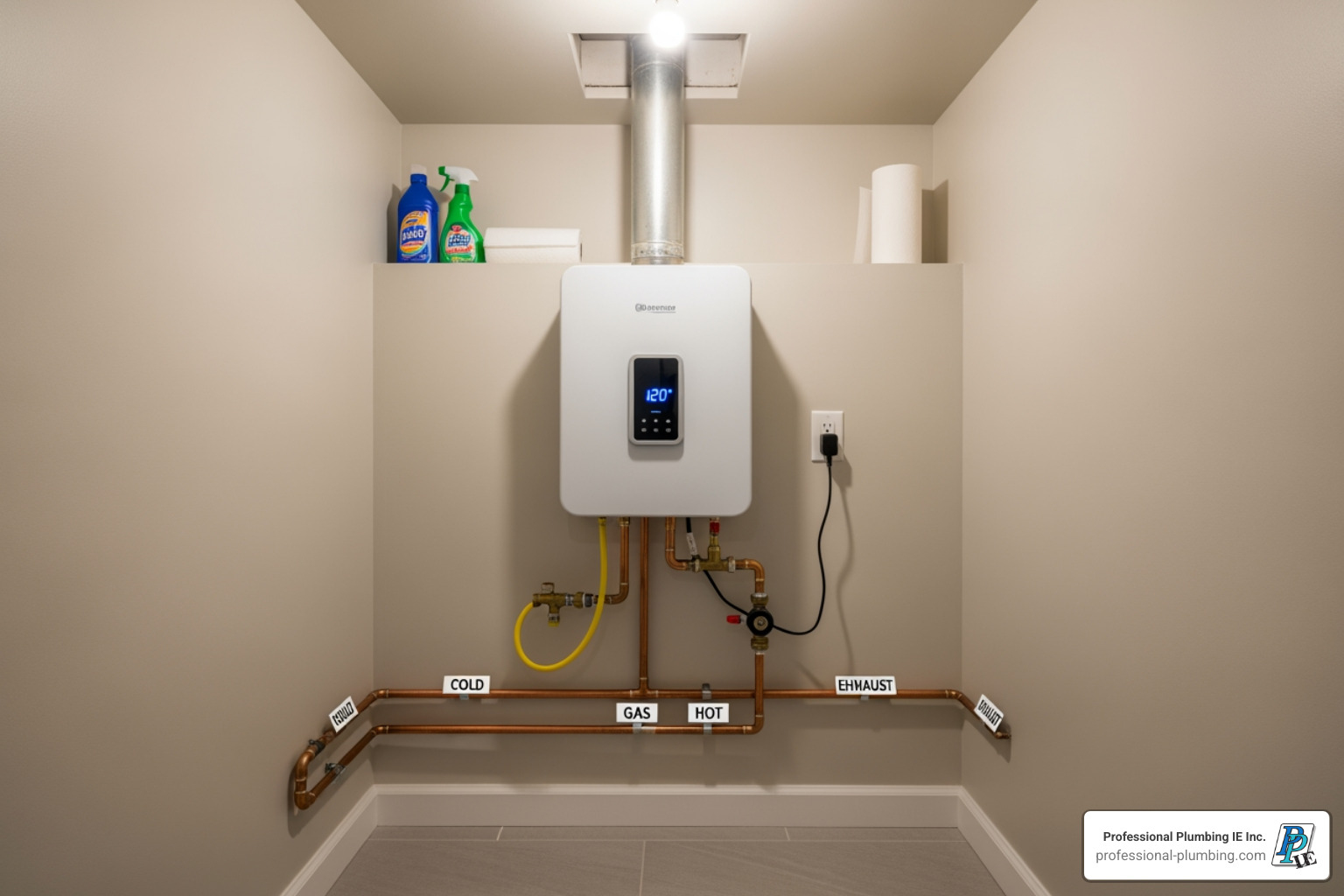
Head-to-Head: Rheem vs. Rinnai for the Best Instantaneous Hot Water System
When choosing the best instantaneous hot water system, Rheem and Rinnai are the top contenders. Rinnai is the market leader, specializing in high-efficiency gas systems. Rheem is known for its versatile and affordable range of both gas and electric models. Both offer strong warranties, typically around 12 years for the heat exchanger.
The key differences lie in their approach to technology. Rinnai pushes the boundaries of efficiency, while Rheem focuses on user-friendly smart features and value. Many modern units from both brands offer WiFi connectivity for app-based control and built-in recirculation pumps that deliver hot water faster, reducing wait times. Rinnai’s Smart-Circ technology even learns your household’s patterns to anticipate demand.
Rheem: Value and Versatility for Your Home
Rheem delivers reliable performance at a competitive price, making it a practical choice for homeowners in Eastvale, Riverside, and Corona. Their strength lies in versatility, with quality options for both gas and electric setups.
- The Rheem RTEX-13 Electric Tankless Water Heater is a popular budget-friendly choice, offering a 4-6 GPM flow rate and 99.8% energy efficiency, perfect for a single shower or a couple of low-flow fixtures.
- For larger homes, Rheem’s gas-powered IKONIC series is a super high-efficiency line with flow rates up to 11.2 GPM. These units come standard with built-in recirculation pumps and WiFi smart controls, providing excellent performance and convenience, especially on liquid propane.
Rheem’s commitment to affordability makes the switch to instantaneous hot water more accessible for many families.
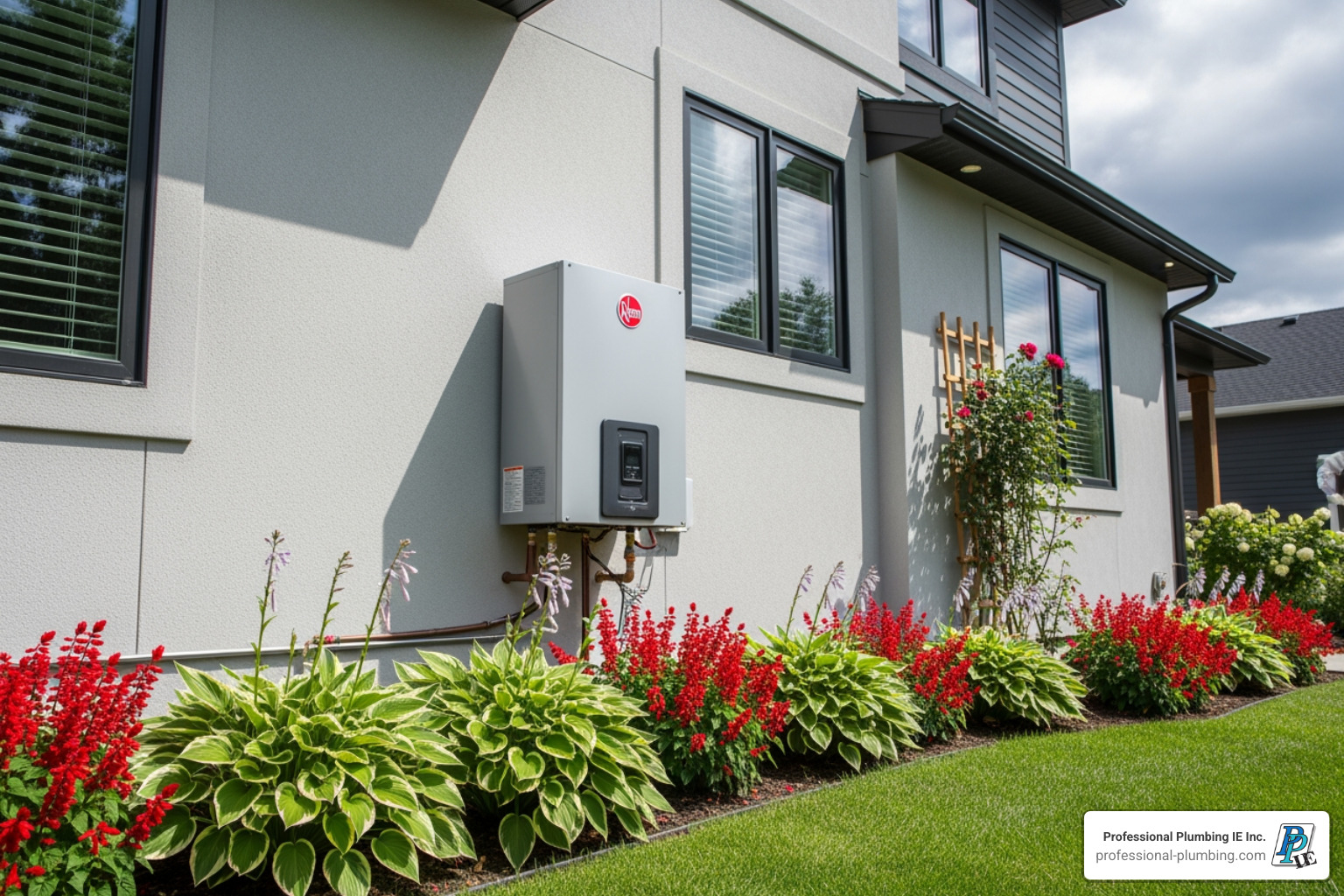
Rinnai: The Best Instantaneous Hot Water System for Peak Efficiency
Rinnai is synonymous with peak efficiency and performance, making it the top choice for homeowners who want the best technology available. As the market leader and the first major tankless brand assembled in the U.S.A., their reputation is built on decades of engineering excellence.
- The SENSEI RX Series is their flagship gas line, achieving an industry-leading 0.98 UEF (Uniform Energy Factor). This means 98% of the fuel is converted directly into hot water, maximizing energy savings.
- For electric applications, the REHP Series (Electric Heat Pump) is revolutionary, delivering an unsurpassed 4.0 UEF by using heat pump technology to transfer ambient heat to the water.
Rinnai systems are also known for their longevity, often lasting 15-20 years with proper maintenance. This durability, combined with energy savings, makes the initial investment a smart long-term decision. Learn more about upgrading with our water heater replacement services in Riverside.
Installation, Cost, and Maintenance: What to Expect
Understanding the full scope of installing the best instantaneous hot water system helps you plan your budget and protect your investment.
Professional Installation Requirements
Installing a tankless water heater is a job for licensed professionals, not a DIY project. Proper installation is required for safety, optimal performance, and to keep your manufacturer’s warranty valid.
- Gas units require precise gas line connections and code-compliant venting to safely exhaust combustion gases. High-efficiency condensing models also need a drain line.
- Electric units have substantial power needs, often requiring dedicated 240V circuits and potential upgrades to your home’s electrical panel.
Typical Price Ranges and Installation Costs
The cost varies by model and installation complexity.
- Unit Price: Electric models can range from $200 for point-of-use units to over $1,000 for whole-home systems. Gas units typically start around $800 and can exceed $2,000 for high-capacity models.
- Installation Cost: Professional installation generally ranges from $1,300 to $3,900. Complex jobs involving new gas lines, electrical upgrades, or extensive venting can be higher. While more than a tank installation, this cost is offset by long-term energy savings and a longer lifespan.
Energy Efficiency Ratings and UEF Explained
The Uniform Energy Factor (UEF) measures a water heater’s efficiency. A higher UEF means lower operating costs. Top-tier gas models reach 0.98 UEF, while electric heat pump systems can achieve a remarkable 4.0 UEF. Standard electric units also offer high thermal efficiency (around 98%).
Safety Features and Maintenance
Modern systems are equipped with multiple safety features, including overheat protection, dry heating protection, and auto shut-off functions. To ensure a long lifespan of 20+ years, regular maintenance is crucial. The most important task is annual descaling, which involves flushing the unit to remove mineral buildup, especially in areas with hard water like Riverside County. Skipping this can lead to reduced efficiency and costly damage. If you notice issues, our guide on Signs that your water heater needs repair pt 1 can help.
For nearly 40 years, Professional Plumbing IE Inc. has provided expert water heater services to ensure your system runs safely and efficiently for decades.
Frequently Asked Questions about Instantaneous Hot Water Systems
Here are answers to common questions from homeowners in Eastvale, Riverside, and Corona about choosing the best instantaneous hot water system.
How long does an instantaneous hot water system last?
With proper annual maintenance, an instantaneous hot water system can last 15 to 20 years or more. This is roughly twice the lifespan of a traditional tank heater, which typically fails after 10-15 years. The key to longevity is regular descaling to prevent mineral buildup.
Can a tankless system handle my whole house?
Yes, a single, properly sized tankless system can supply hot water for an entire home. Sizing is based on your peak hot water demand, which is the maximum number of gallons per minute (GPM) your household uses at one time (e.g., running a shower and a dishwasher simultaneously). A professional can calculate your exact needs to ensure you never run out of hot water. For more complex needs, our Water Heating Project page has more info.
Is it worth switching to a tankless water heater?
For most homeowners, yes. While the upfront installation cost is higher than a traditional tank, the investment pays off over time. You benefit from:
- Long-term savings: Lower monthly energy bills can save you up to $100 per year, according to the U.S. Department of Energy.
- Endless hot water: The convenience of on-demand hot water is a major lifestyle improvement.
- Longer lifespan: You’ll replace the unit half as often as a tank heater.
- Increased home value: It’s an attractive, modern upgrade.
When you combine the savings, convenience, and longevity, switching is a smart investment. Learn more on our Water Heater Services page.
Upgrade Your Home’s Hot Water Today
Choosing the best instantaneous hot water system is an investment in your home’s comfort, efficiency, and value. You get endless hot water, lower energy bills, and a system that lasts for 20 years or more.
We’ve covered the key differences between the top brands. Rheem offers excellent value and versatility with smart, affordable models for both gas and electric homes. Rinnai leads the market with peak efficiency, offering industry-best UEF ratings and U.S.A.-assembled units for those who want the ultimate in performance.
The right choice depends on your home, family size, and budget. However, the most critical step is professional installation. This ensures your system operates safely, efficiently, and that your warranty remains valid. A DIY installation can lead to safety hazards and costly mistakes.
As a family-owned business serving Riverside, Corona, and Jurupa Valley for nearly 40 years, Professional Plumbing IE Inc. has the expertise to guide you. We’ll help you select the perfect system for your needs and provide a professional installation you can trust.
Ready to enjoy the comfort of endless, efficient hot water? Contact us for expert water heater services and let our team deliver the quality service our community has relied on for decades.