What causes slab leaks: Top 5 Hidden Threats
Why Your Foundation Deserves Your Attention
What causes slab leaks is a question many Inland Empire homeowners face when they find mysterious wet spots, skyrocketing water bills, or the sound of running water when nothing’s turned on. The answer is simpler than you might think—and understanding it can save your home from serious damage.
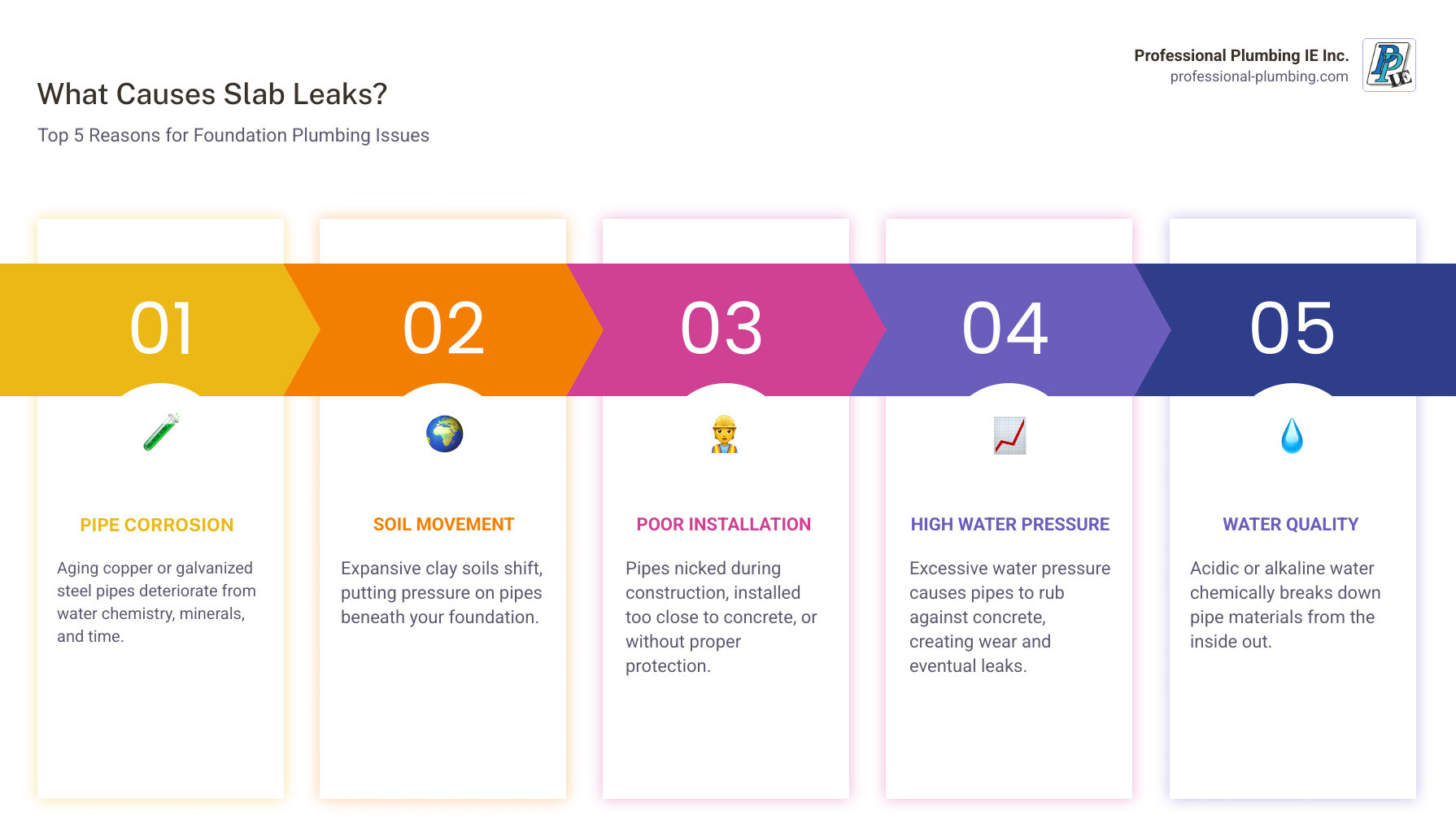
The main causes of slab leaks are:
- Pipe corrosion – Aging copper or galvanized steel pipes deteriorate from water chemistry, minerals, and time
- Soil movement – Expansive clay soils (common in Riverside County) shift and put pressure on pipes beneath your foundation
- Poor installation – Pipes installed too close to concrete, nicked during construction, or without proper protection
- High water pressure – Excessive pressure causes pipes to rub against concrete, creating wear and eventual leaks
- Water quality – Acidic or alkaline water chemically breaks down pipe materials from the inside out
A slab leak happens when water or sewer pipes running beneath your concrete foundation spring a leak. These pipes sit directly under the 4-6 inch concrete slab your home rests on, making them invisible until problems emerge. According to the American Society of Civil Engineers, approximately 25% of homes experience damage due to expansive soils—and the Inland Empire’s clay-rich ground makes this a particularly common issue in Riverside, Corona, and surrounding areas.
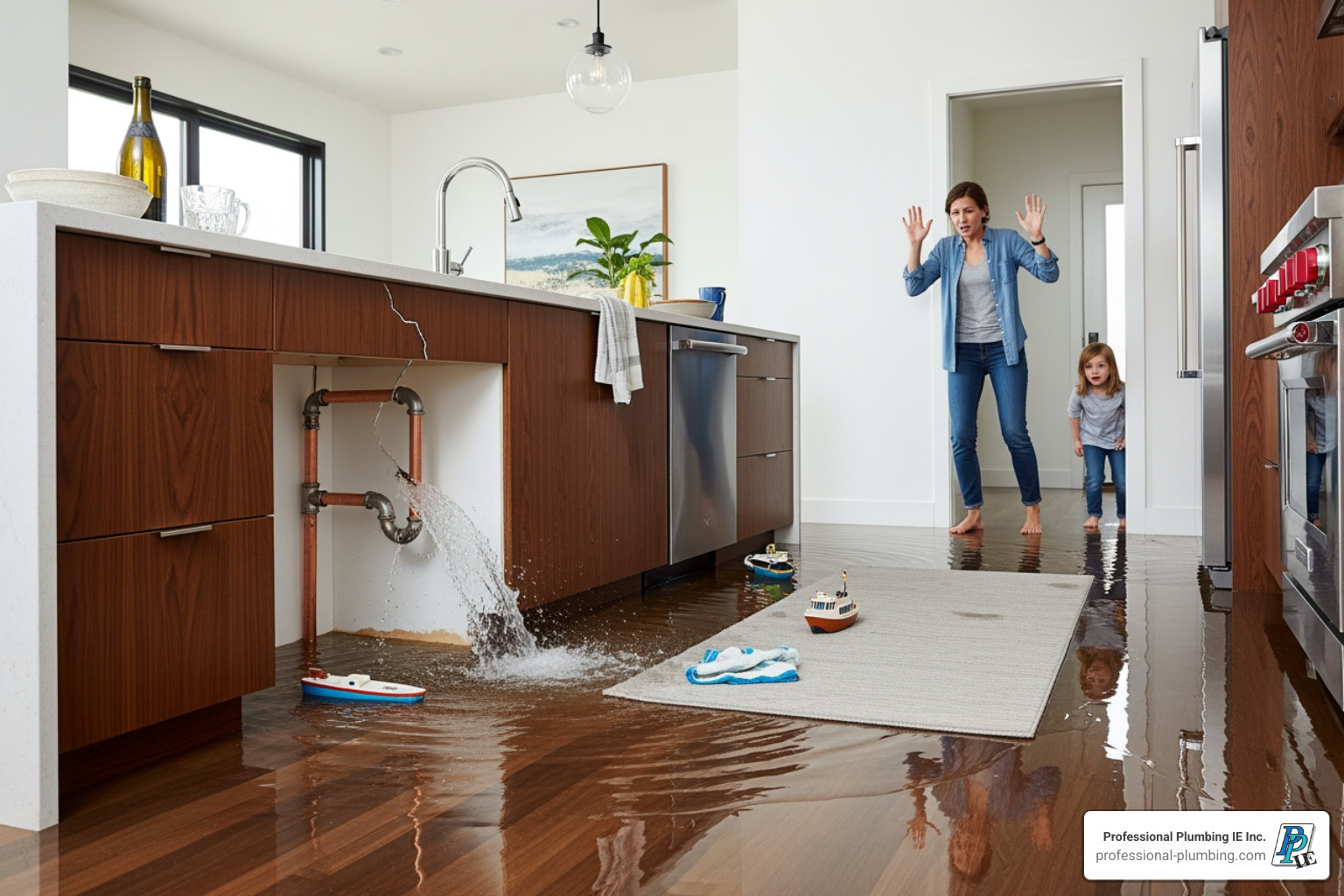
Imagine walking into your living room and finding a mysterious wet spot, or noticing your water bill has doubled for no apparent reason. These are the first whispers of what can become a major structural problem if ignored. The longer a slab leak goes undetected, the more damage it causes—from foundation erosion and mold growth to compromised structural integrity.
I’m Chris Kirsten, and after four decades with Professional Plumbing IE Inc., I’ve helped countless Inland Empire homeowners understand what causes slab leaks and how to address them before they threaten their homes. From Riverside’s older neighborhoods to newer developments in Eastvale, I’ve seen how soil conditions, aging infrastructure, and water quality create the perfect storm for foundation plumbing problems.
Quick look at What causes slab leaks:
First, What Exactly is a Slab Leak?
When we talk about a “slab leak,” we’re referring to any leak that occurs in the water or sewer lines embedded within or directly beneath your home’s concrete slab foundation. Many homes in Southern California, including those in Riverside, Corona, Eastvale, and Jurupa Valley, are built on what’s called a “slab-on-grade” foundation. This means the concrete foundation is poured directly onto the ground, with the plumbing pipes laid out before the concrete is set.
These leaks can happen in both your hot and cold freshwater lines, or in your sewer lines. Because these pipes are hidden from view, nestled deep within the concrete or the soil below, slab leaks are notoriously difficult to spot until they’ve already caused significant damage. It’s like a secret saboteur working beneath your feet, slowly undermining your home’s stability.
For more information on general home leaks, check out our guide on House Leak Repair.
How is a Slab Leak Different from Other Plumbing Leaks?
The key difference between a slab leak and other common plumbing issues lies in its location and accessibility. When you have an under-sink leak, a dripping faucet, or even a wall leak, the problem is usually visible and relatively easy to access and repair. You can see the water, hear the drip, or notice the stained drywall.
However, a slab leak is a different beast entirely. It occurs where the pipes are completely encased by concrete or buried underground. This hidden nature makes detection challenging and repairs more complex. Unlike a Ceiling Water Leak Repair where water stains give away the location, a slab leak’s symptoms can be subtle and widespread, affecting various parts of your home’s structure before the source is pinpointed. The involvement of your home’s very foundation means that neglecting a slab leak can lead to much more severe and costly consequences than a typical household leak.
What Causes Slab Leaks in Riverside and the Inland Empire?
Understanding what causes slab leaks is the first step toward protecting your home in Riverside, Corona, Eastvale, or anywhere in the Inland Empire. From the aging pipes beneath our feet to the very ground our homes rest on, several factors contribute to these elusive and damaging leaks. We’ve seen it all in our nearly 40 years serving this community, and often, it’s a combination of these elements that leads to trouble.

Let’s explore the primary culprits we encounter in our service areas.
What Causes Slab Leaks: Plumbing Materials and Age
Just like us, pipes don’t last forever. The materials used in your home’s plumbing system, along with their age, play a significant role in their susceptibility to leaks. Plumbing pipes, whether metal or plastic, have an expected lifetime of no more than 50 years. As pipes age, they naturally become more prone to issues like corrosion and abrasion.
- Galvanized Steel: Common in older homes, especially those built through the 1950s, galvanized steel pipes are particularly vulnerable to corrosion from water chemistry. Over time, the zinc coating on these pipes degrades, exposing the steel to rust and mineral buildup, leading to pinhole leaks or blockages.
- Copper Pipes: While generally durable, copper pipes—prevalent in many homes across Riverside and Corona—can also corrode. This corrosion can be caused by various factors, including water chemistry, soil conditions, and even stray electrical currents (electrolysis). Hot water lines, in particular, are at higher risk of friction damage due to their expansion and contraction with temperature changes, causing them to rub against the concrete or surrounding soil.
- PEX and Plastic Pipes: Modern plumbing often uses PEX (cross-linked polyethylene) and other plastic pipes (like PVC or CPVC). These materials are more flexible and resistant to corrosion than their metal counterparts. However, they are not entirely immune. Poor installation, extreme pressure, or shifting soil can still cause damage, leading to leaks.
Here’s a quick comparison of common pipe materials:
| Pipe Material | Durability & Corrosion Resistance | Typical Lifespan | Notes |
|---|---|---|---|
| Copper | Good, but susceptible to corrosion | 50+ years | Common in many Inland Empire homes. Can suffer from electrolysis, acidic/alkaline water, and abrasion. |
| Galvanized Steel | Poor to Fair | 20-50 years | Found in older homes. Prone to rust, mineral buildup, and reduced water flow as zinc coating degrades. |
| PEX / Plastic | Excellent, corrosion-resistant | 50+ years | Flexible and less prone to corrosion. Still vulnerable to physical damage from soil movement, extreme temperatures, high pressure, or improper installation. |
What Causes Slab Leaks: Water Quality and Chemistry
The quality of the water flowing through your pipes might not be something you think about daily, but it can significantly impact their longevity and contribute to slab leaks. Here in the Inland Empire, our water can sometimes have characteristics that accelerate pipe deterioration.
- Hard Water Minerals: Our water often contains various minerals. While generally harmless for consumption, these minerals can lead to scale buildup inside pipes over time. This buildup can create rough surfaces that encourage abrasion or contribute to corrosion.
- Water pH Levels (Acidity & Alkalinity): The pH balance of your water is crucial. Ideally, water pH for pipes should be between 6.5 and 8.5.
- Acidic Water (Low pH): Highly acidic water can slowly degrade and crack pipes over time. It essentially eats away at the pipe material, especially copper, leading to pinhole leaks.
- Alkaline Water (High pH): Surprisingly, excessively alkaline water can also cause pipes to disintegrate gradually. Soft water, which can sometimes be highly alkaline, might even pull minerals from pipes, inadvertently creating pinhole leaks.
- Electrolysis: This chemical reaction occurs when stray electrical currents interact with metal pipes, accelerating corrosion. It’s a silent killer for copper pipes, weakening them from the inside out until a leak forms.
How Soil Movement and External Pressure Contribute
The ground beneath our homes in Riverside, Corona, Eastvale, and Jurupa Valley is not always as stable as we might like to think. The Inland Empire is known for its expansive clay soils. These soils are notorious for their tendency to swell when wet and contract when dry. This constant expansion and contraction puts immense pressure on your home’s foundation and, consequently, the pipes buried beneath it.
- Expansive Clay Soils: When dry, these soils can pull away from the foundation, creating voids. When wet (from rain or irrigation), they absorb water and expand, pushing against the slab and any pipes in their path. This constant shifting can bend, stress, or even break pipes. According to the American Society of Civil Engineers, approximately 25% of homes experience damage due to expansive soils, leading to an estimated $2.3 billion in annual costs. This is a significant factor in our region!
- Seismic Activity: While we hope for calm, the Inland Empire is in an earthquake-prone region. Even minor tremors can cause the ground to shift, potentially displacing pipes or cracking the concrete slab, which in turn stresses the plumbing.
- Foundation Shifting: The natural settling of a house over time, combined with soil movement, can lead to foundation shifts. This movement can pull pipes apart or cause them to rub against the concrete, creating abrasive wear and eventual leaks.
- Tree Root Intrusion: Trees, especially mature ones, have extensive root systems that seek out water. If a pipe has a tiny leak, roots will grow towards that water source, eventually wrapping around and crushing the pipe, or even growing into it and causing significant damage.
The Impact of Poor Installation and High Water Pressure
Sometimes, the seeds of a slab leak are sown long before you even move into your home, or they develop due to everyday stresses on your plumbing.
- Poor Installation: Construction errors are an unfortunate but real cause of slab leaks. Pipes might be installed too close to the concrete, without proper insulation or protective wrapping. They could be nicked, dented, or bent during the construction process. Even small imperfections can become weak points that fail under pressure or over time.
- High Water Pressure: Most home plumbing systems are designed to operate safely within a pressure range of 40-80 pounds per square inch (PSI). However, if your home’s water pressure consistently exceeds this, it puts incredible strain on your pipes. This excessive pressure can cause pipes to rub against the concrete foundation, especially hot water pipes that expand and contract. This constant friction leads to abrasive wear, creating pinhole leaks.
- Water Hammer Effect: This phenomenon occurs when water flow is abruptly stopped (e.g., when a faucet is suddenly turned off), causing a shockwave of pressure to travel through the pipes. This sudden jolt can repeatedly stress pipe joints and connections, leading to eventual failure.
- Pressure Spikes: Sudden, temporary increases in water pressure (sometimes from the municipal supply, sometimes from within your home’s system) can also stress pipes beyond their limit, potentially causing cracks or bursts.
If you suspect your water pressure is too high, it’s wise to have it checked. A pressure regulator can be installed on your main water line to keep pressure below 80 PSI, significantly reducing the risk of pipe strain and leaks.
Telltale Signs: How to Spot a Slab Leak in Your Home
Because slab leaks are hidden, knowing the signs is crucial for early detection. We’ve seen countless homeowners in Riverside, Corona, and Eastvale catch these issues early because they paid attention to their home’s subtle warnings. Don’t let your foundation cry silently; learn to recognize the clues!
If you’re noticing any of these indicators, it might be time to investigate further:
- Unexplained high water bills
- The sound of running water when all fixtures are off
- Warm spots on your floor
- Low water pressure
- Mysterious damp spots or mold
- Cracks in your walls or foundation
These signs can also indicate other plumbing issues. For a broader understanding, check out our article on Signs That Your Plumbing is Failing.
Early Detection Clues You Shouldn’t Ignore
The sooner you detect a slab leak, the less damage it will cause. We encourage homeowners in Jurupa Valley, Mira Loma, and beyond to be vigilant.
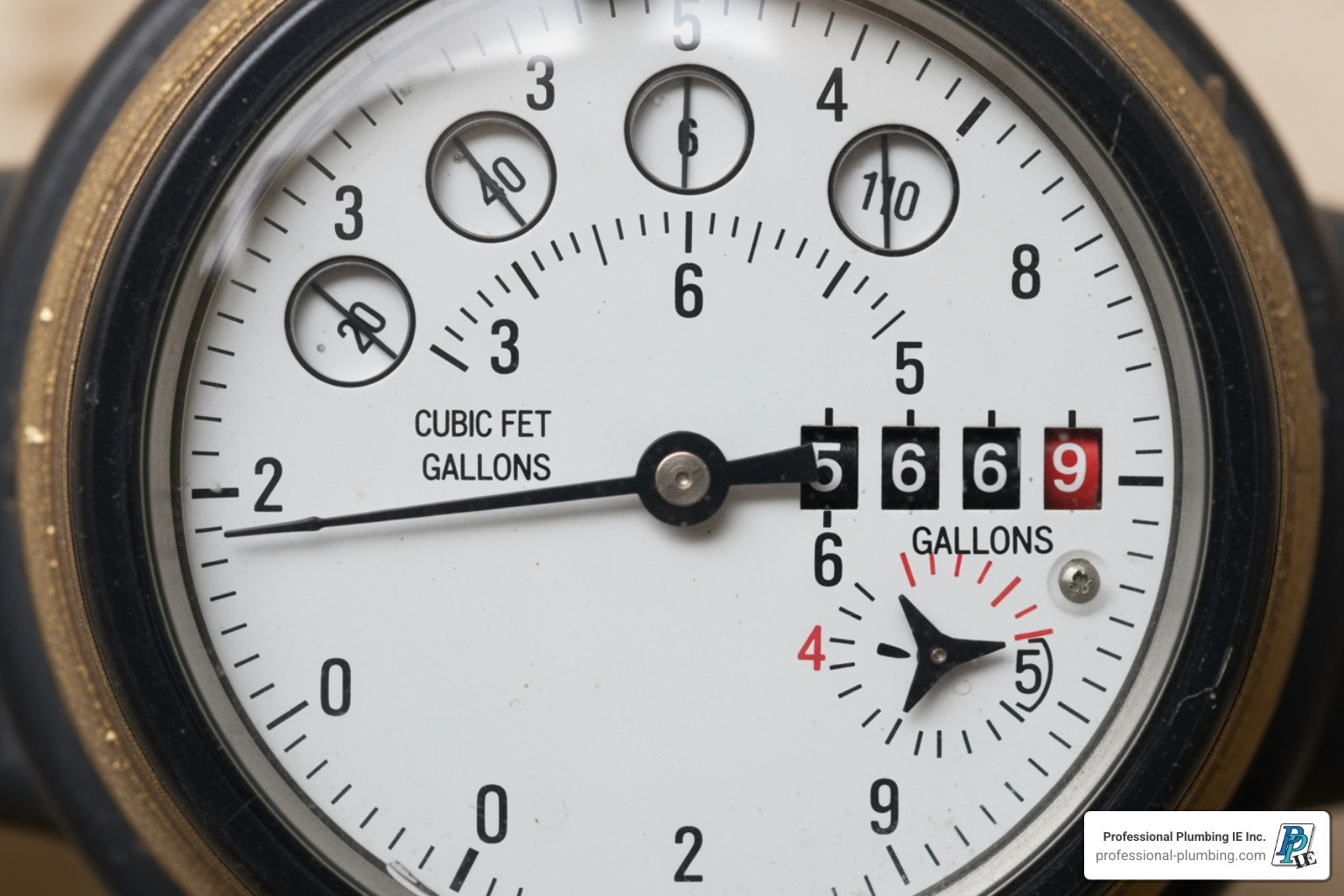
- Checking Your Water Meter: This is one of the easiest and most effective DIY tests. Turn off all water-using appliances and fixtures in your home. Go to your main water meter and note the reading. Wait for about 15-30 minutes without using any water, then check the meter again. If the numbers have changed, you likely have a leak somewhere in your system.
- Monitoring Water Bills: A sudden or unexplained spike in your water bill is a classic indicator. While the average monthly water bill in the United States is around $39.16, a significant increase that doesn’t correspond to higher usage (like filling a pool or extensive gardening) should raise a red flag. Household leaks, including slab leaks, can waste as much as 90 gallons of water per day!
- Faint Water Sounds: In a quiet house, listen for the subtle sound of running water, trickling, or hissing when no faucets, toilets, or appliances are in use. This could indicate water escaping from a pipe beneath the slab.
- Musty Odors: A persistent musty or earthy smell, especially in areas with carpeting or near the foundation, can signal hidden moisture and potential mold growth, often a byproduct of a slow slab leak.
For a more in-depth look at this, our guide on How to Detect a Slab Leak Under a Concrete Floor offers additional tips.
Obvious Red Flags and the Risks of Delay
Sometimes, the signs of a slab leak become much more apparent, and at this stage, immediate action is critical. Ignoring these red flags can lead to devastating consequences for your home in Riverside, Corona, or anywhere in the Inland Empire.
- Wet Carpets or Warped Flooring: Unexplained damp spots on carpets, especially if they reappear after drying, or warped, buckled, or discolored hardwood and laminate flooring, are clear indicators of water intrusion from below.
- Visible Mold or Mildew: The presence of black or green patches on baseboards, walls, or under flooring, accompanied by a damp smell, means moisture has been present for some time, creating a perfect environment for mold growth. This poses significant health risks.
- Cracks in Walls or Foundation: A slab leak can erode the soil beneath your home’s foundation, leading to uneven settling. This stress can manifest as cracks in interior walls (especially near the floor or ceiling), exterior walls, or even the foundation itself. In severe cases, it can cause foundation heaving or even contribute to sinkholes if enough soil erodes.
- Warm Spots on the Floor: If you notice a specific area of your floor that feels unusually warm, it’s a strong sign of a leak in a hot water line beneath the slab.
- Low Water Pressure: A sudden and significant drop in water pressure throughout your home can indicate a substantial leak that’s diverting water before it reaches your faucets.
The risks of delaying action are immense. Slab leaks can undermine the structural integrity of your home, lead to extensive and costly repairs, cause significant water waste, and introduce health hazards like mold. Don’t wait for these obvious red flags to become a full-blown crisis.
You’ve Found a Leak, Now What? Repair and Prevention
Finding you have a slab leak can be stressful, but the most important thing is to act quickly and calmly. Your immediate response can minimize damage and save you money in the long run.
First, if you suspect a significant leak, shut off your home’s main water supply immediately. This will stop the flow of water and prevent further damage to your foundation and property. If you’re in Riverside, Corona, or surrounding areas, we at Professional Plumbing IE Inc. are ready to help. Don’t hesitate to call us for Leak Detection Riverside. Prompt, professional intervention is key.
Professional Repair Methods
Repairing a slab leak is not a DIY job. It requires specialized equipment and expertise to accurately locate the leak and repair it without causing further damage to your home. We offer several repair options, custom to the specific nature and location of your leak:
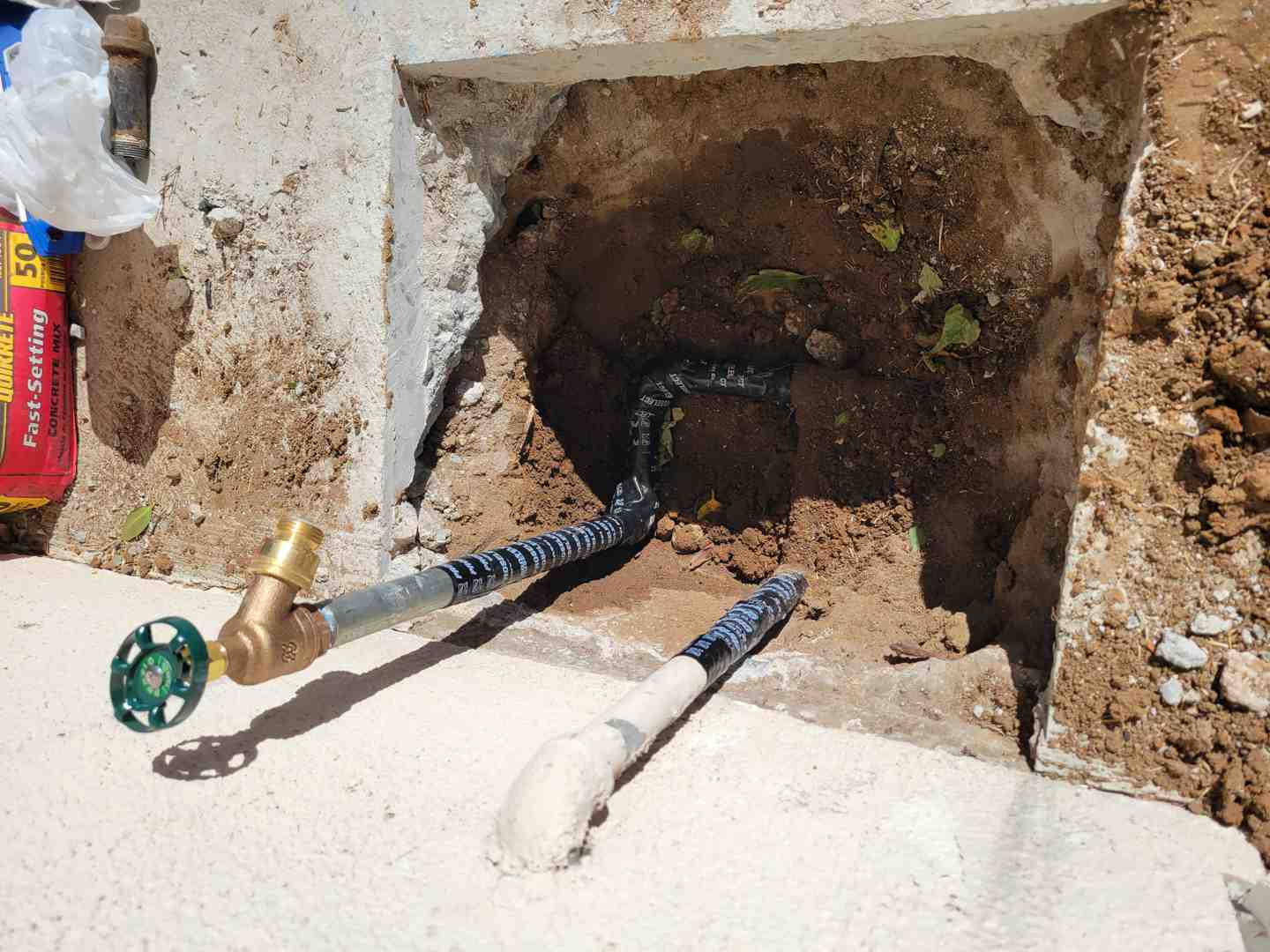
- Spot Repair: If the leak is small and precisely located, we can access the damaged pipe by carefully cutting through a small section of the concrete slab or tunneling underneath the foundation. The damaged section is then repaired or replaced.
- Pipe Rerouting (or Re-piping): For more extensive damage, or if the pipe material is generally old and prone to future leaks, we might recommend rerouting the pipe. This involves abandoning the leaking pipe segment under the slab and installing a new water line through the walls or attic, bypassing the foundation entirely.
- Trenchless Pipe Lining: In some cases, for certain types of pipes, a trenchless method like pipe lining can be used. This involves inserting an epoxy-coated liner into the existing pipe, which then hardens to create a new, durable pipe within the old one, without extensive excavation.
- Epoxy Coating: Similar to pipe lining, this method involves coating the interior of the pipe with epoxy to seal small pinhole leaks. This is typically used for less severe leaks.
- Foundation Access (Tunneling or Breaking Through Slab): Depending on the leak’s location and severity, we may need to tunnel underneath your home (common in areas with accessible soil) or carefully break through a section of the concrete slab from above. Our goal is always to use the least invasive method possible.
For a comprehensive understanding of all repair options, refer to our Slab Leak Repair Complete Guide.
Proactive Prevention to Protect Your Home
While we can’t eliminate all risks, we can certainly take steps to significantly reduce the likelihood of a slab leak. As your local plumbing experts in the Inland Empire, we believe in empowering homeowners with knowledge and tools for prevention.
- Annual Plumbing Inspections: Regular check-ups are your best defense. We recommend scheduling annual plumbing inspections, especially for older homes in Riverside, Corona, and Eastvale. Our team can identify early signs of wear, corrosion, or potential issues before they escalate into costly slab leaks.
- Water Pressure Regulation: High water pressure is a major culprit. Install a pressure regulator on your main water line to keep pressure below 80 PSI. If you already have one, ensure it’s functioning correctly. This simple step can prevent immense strain on your pipes.
- Improving Foundation Drainage: Proper drainage around your home’s foundation is crucial. Ensure gutters and downspouts direct water away from the foundation. In areas with expansive clay soil, like much of Riverside County, maintaining consistent soil moisture levels (e.g., with soaker hoses during dry periods) can prevent the extreme swelling and shrinking that stresses pipes.
- Water Softeners: If you have hard water, installing a water softener can reduce mineral buildup and corrosion within your pipes, extending their lifespan.
- Mindful Landscaping: Plant trees and large shrubs a safe distance from your home’s foundation. Their roots are powerful and will seek out water, potentially crushing or growing into underground pipes.
Frequently Asked Questions about Slab Leaks
We often get asked similar questions from concerned homeowners in Jurupa Valley, Norco, and Mira Loma. Here are some of the most common ones:
How much does slab leak repair cost?
The cost of slab leak repair can vary significantly, typically ranging from $630 to $4,400, but can reach as high as $6,750 or more for complex cases. The exact cost depends on several factors:
- Leak Severity: A small, easily accessible pinhole leak will be less expensive than a major pipe burst requiring extensive excavation.
- Location of the Leak: Leaks in readily accessible areas are cheaper to fix than those deep under the center of your home.
- Repair Method: Spot repairs are generally the least expensive, while rerouting or trenchless solutions can cost more upfront but may offer better long-term protection.
- Extent of Damage: The cost will also include any necessary repairs to your foundation, flooring, or for mold remediation.
Because of these variables, get a professional, on-site quote. For accurate pricing and expert service in our area, please visit our Slab Leak Repair Riverside page.
Does homeowners insurance cover slab leaks?
Homeowners insurance coverage for slab leaks is often a complex issue, and it varies significantly depending on your specific policy.
- Sudden vs. Gradual Damage: Most policies differentiate between “sudden and accidental” damage (which may be covered) and “gradual” damage (which is often excluded). For example, a pipe that suddenly bursts might be covered, but a slow leak caused by years of corrosion (considered a maintenance issue) typically is not.
- Coverage for Access and Water Damage: Even if the pipe repair itself isn’t covered, your policy might cover the cost of “access and repair” (the expense of tearing out and replacing the slab or flooring to reach the leak) and the resulting water damage (e.g., to flooring, drywall, or for mold remediation).
- Contact Your Insurer: It’s crucial to contact your insurer early in the process to understand your specific coverage. They can clarify what aspects of the leak and its associated damage are covered under your policy.
How long can a slab leak go undetected?
A slab leak can go undetected for a surprisingly long time—days, weeks, or even months. The duration depends heavily on the size of the leak and its location.
- Slow Drips: A small, slow drip might only cause a gradual increase in your water bill or a faint musty smell, allowing it to persist for months before becoming obvious.
- Major Breaks: A larger leak or a ruptured pipe can cause immediate and significant water damage, making it much harder to overlook. However, even these can go unnoticed for a short period if they occur in an unoccupied part of the house or during times when water usage is high (masking the leak’s sound or bill impact).
The key takeaway here is the importance of vigilance. Regular monitoring of your water bill, keeping an eye out for the subtle signs we discussed earlier, and scheduling professional inspections are your best bets to catch these hidden issues before they cause extensive damage.
Your Local Experts for Slab Leak Solutions in the Inland Empire
Slab leaks are more than just a nuisance; they’re a serious threat to the integrity and value of your home. From the corrosive effects of water chemistry to the shifting soils unique to our region in Riverside, Corona, Eastvale, Norco, Jurupa Valley, and Mira Loma, understanding what causes slab leaks is the first step in protecting your biggest investment.
At Professional Plumbing IE Inc., we’ve been helping Inland Empire homeowners steer these challenges for nearly 40 years. Our highly trained team brings decades of experience and state-of-the-art leak detection technology to every job, ensuring we pinpoint the problem accurately and provide durable, long-lasting solutions. We understand the unique conditions of our local area and are committed to delivering professional, guaranteed quality service.
Don’t let a hidden leak compromise your home’s foundation. If you suspect you have a slab leak, don’t delay. Contact us for expert Service on Slab Leaks. We’re here to help keep your home safe and dry.