Backflow testing Corona: Crucial Compliance 2025
Why Backflow Testing Corona Matters for Your Property
Backflow testing Corona is a mandatory annual requirement for property owners to prevent contaminated water from flowing back into the city’s public drinking water supply. Here’s what you need to know:
Quick Facts:
- Who Needs It: Properties with irrigation systems, fire sprinklers, pools, wells, or commercial facilities
- Frequency: Once per year, plus after any installation or repair
- Who Tests: Only certified backflow prevention testers approved by the city
- Cost Range: Typically $50-$150 for testing; repairs and installations vary
- Consequences: Late fees, fines, and potential water service shut-off for non-compliance
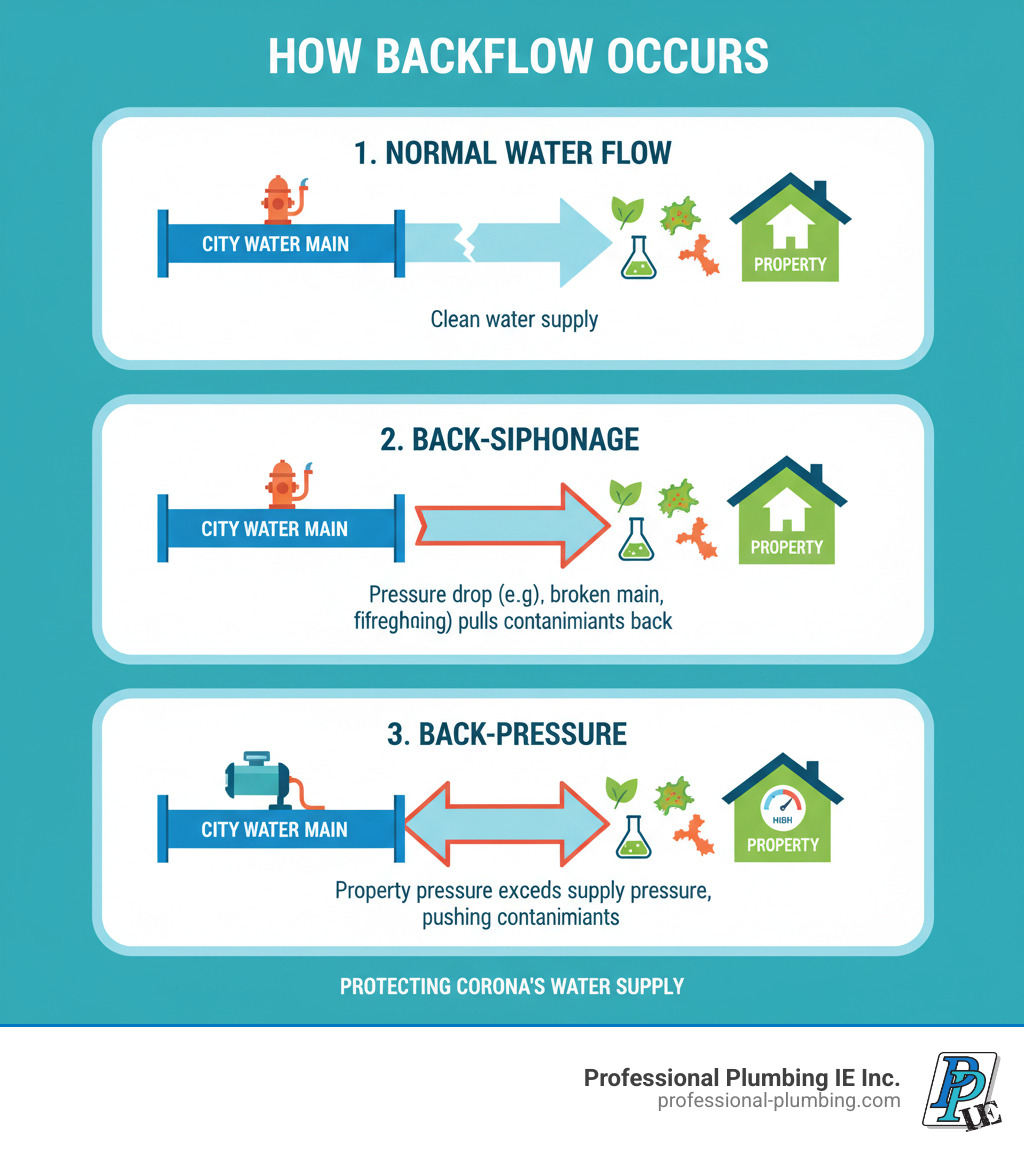
Backflow testing Corona protects your family, your neighbors, and your business from serious health risks. Backflow occurs when water flows in the wrong direction—reversing from your property back into Corona’s public water system. This can happen through back-siphonage (when pressure drops suddenly) or back-pressure (when your system’s pressure exceeds the main supply).
The City of Corona enforces a Cross-Connection Control Program under California’s Title 17 regulations. As a property owner, you’re responsible for installing the right backflow prevention device, having it tested annually by a certified professional, and maintaining it in working order.
Without proper backflow prevention, contaminants like fertilizers, chemicals, bacteria, or even sewage could enter the drinking water supply. The Corona Utilities Department performs continuous water quality testing, but your backflow device is the first line of defense at your property.
This guide walks you through the entire process—from understanding Corona’s requirements to finding certified testers, completing your annual test, and handling repairs if your device fails inspection.
Understanding Corona’s Backflow Prevention Regulations
The City of Corona doesn’t mess around when it comes to protecting your drinking water. The City of Corona Utilities Department runs a comprehensive Cross-Connection Control Program that follows California Title 17 regulations to the letter. This isn’t just bureaucratic red tape—it’s a carefully designed system to keep contaminants out of the water supply that serves Corona, Eastvale, Riverside, Norco, Jurupa Valley, and Mira Loma.
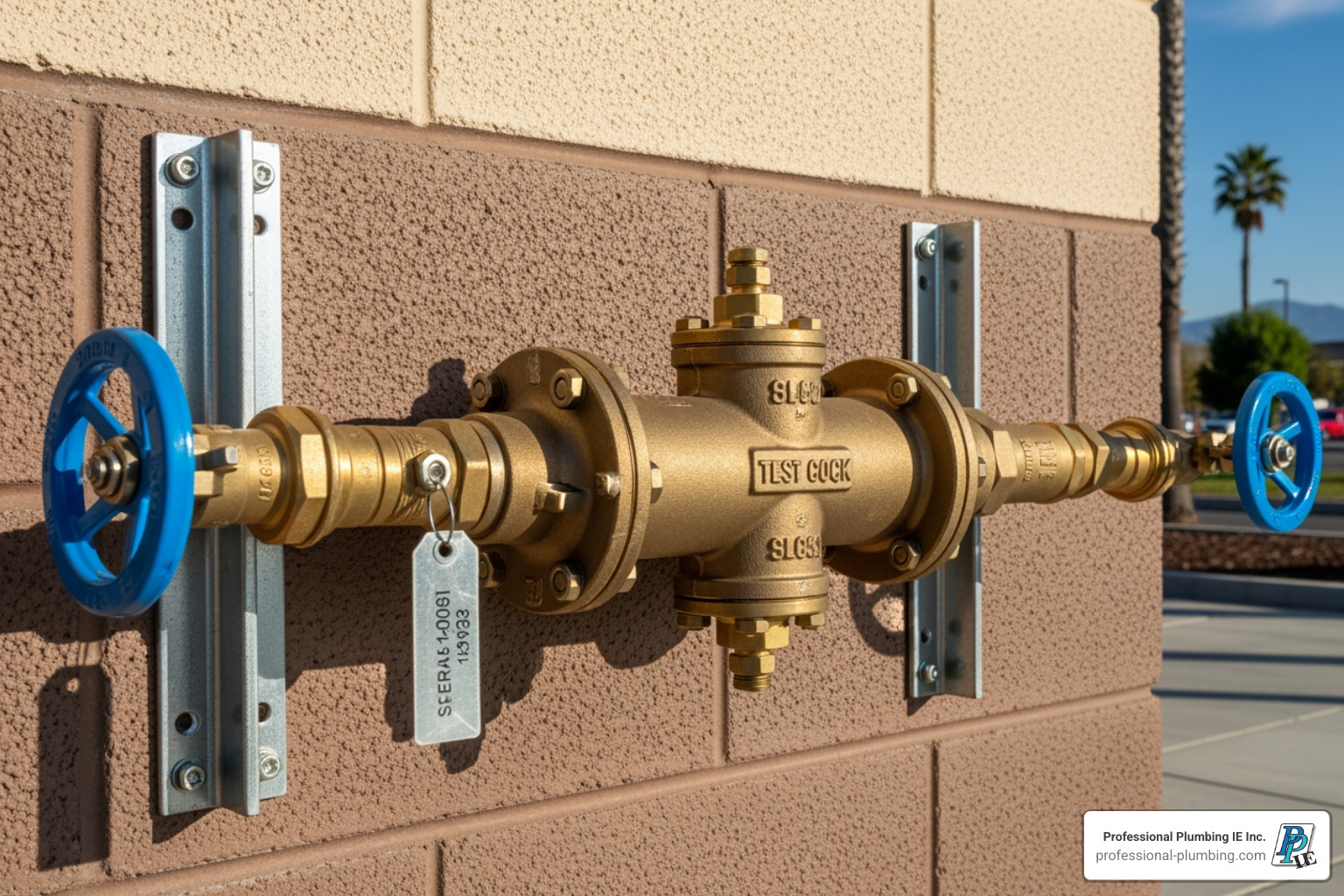
Here’s the bottom line: as a property owner, you’re responsible for installing, testing, and maintaining any backflow prevention devices on your property. This isn’t optional. The City can require these devices as a condition of providing water service, and they have the authority to enforce compliance. Think of it as your part in keeping the community’s water safe.
If you need help with installation or maintenance beyond backflow devices, our team handles all types of preventative plumbing work. Check out our general plumbing services for more information.
Why Backflow Prevention is Crucial
Picture this: you turn on your kitchen tap for a glass of water, and instead of clean drinking water, you get something contaminated with fertilizer from a neighbor’s lawn or chemicals from a nearby business. Sounds like a nightmare, right? That’s exactly what backflow prevention stops from happening.
Backflow is when water flows backward—from your property back into the public water supply. It happens in two main ways:
Back-siphonage occurs when pressure suddenly drops in the main water line. This can happen during a water main break or when firefighters use massive amounts of water to fight a fire. The pressure drop creates a vacuum effect that literally sucks contaminated water from your property back into the public system.
Back-pressure is the opposite problem. It happens when the pressure in your property’s plumbing exceeds the pressure in the public water supply. This is common in commercial buildings with booster pumps, tall buildings with rooftop tanks, or properties with fire sprinkler systems. When your system’s pressure is higher, it pushes water backward into the city’s lines.
The contaminants that can enter the water supply through backflow are genuinely dangerous. We’re talking about chemicals from industrial processes, fertilizers and pesticides from irrigation systems, bacteria from sewage connections, and even stagnant water from heating systems. The Corona Utilities Department works hard to maintain water quality, but your backflow device is the critical barrier that protects the public water supply at your property’s connection point.
Properties Requiring Backflow Devices in Corona
Not every property needs a backflow prevention device, but if your property has certain features, you’re almost certainly on the list for annual backflow testing Corona.
Irrigation systems are probably the most common reason for requiring a backflow device. If you have automatic sprinklers, especially if you use fertilizers or chemicals on your lawn, the City requires protection to prevent those substances from contaminating the water supply.
Fire sprinkler systems contain water that sits stagnant for long periods, and some systems even use antifreeze. That water needs to stay completely separate from the drinking water supply.
Commercial buildings and industrial facilities typically need robust backflow prevention, especially if they use chemicals, operate large boilers, or handle any hazardous materials. The risk is simply too high without proper protection.
If your property has a well, cistern, or uses any auxiliary water supply alongside city water, a backflow device is essential. You never want well water or reclaimed water mixing with the potable water system.
Swimming pools and spas contain chlorine, other treatment chemicals, and bacteria that absolutely cannot enter the drinking water supply. Medical facilities like hospitals, clinics, and dental offices often have equipment that creates cross-connection risks as well.
The type of device you need depends on the level of hazard. High-risk situations—like properties with toxic chemicals—usually require Reduced Pressure (RP) backflow prevention devices. Lower-risk scenarios might only need Double Check (DC) devices. The City determines the appropriate level of protection based on your specific property conditions and state health code requirements.
For commercial property owners dealing with more complex plumbing systems, we offer specialized expertise. Learn more about our commercial services and how we can help keep your business compliant.
The Step-by-Step Process for Compliance
Once you understand why backflow testing Corona matters, the next question is: how do you actually get it done? The good news is that staying compliant is more straightforward than you might think. At Professional Plumbing IE Inc., we’ve guided hundreds of property owners through this process, and we’re here to make it as smooth as possible for you.
The compliance journey follows a predictable pattern each year. You’ll receive an annual testing notice from the city, schedule your test with a certified tester, and receive your results. If everything checks out, you’re done until next year. If repairs are needed, we’ll take care of those and retest your device to ensure it passes. Let’s walk through each step together.
Step 1: Receiving a Notice and Finding a Certified Tester
Your annual backflow testing Corona adventure typically begins when you find an official notification letter from the City of Corona Utilities Department in your mailbox. This isn’t a bill or a warning—it’s simply a friendly reminder that your backflow prevention device is due for its yearly checkup. The letter will include your annual due date, giving you plenty of time to schedule the test without any last-minute scrambling.
Here’s something crucial to understand: not just anyone can test your backflow device. The City of Corona requires that only certified testers perform these inspections. These professionals have undergone specialized training and hold current certifications from organizations recognized by the state and city. This ensures that your test is conducted properly and that the results are reliable.
When you’re ready to schedule, it’s smart to ask a few important questions to verify certification and understand what you’re paying for. You’ll want to know the testing fee upfront, whether there are additional charges if the device needs cleaning, what repair costs might look like if something’s wrong, and whether the work comes with any guarantee. Professional Plumbing IE Inc. employs certified backflow testers who know Corona’s requirements inside and out, and we’re always happy to answer your questions before scheduling the test.
Don’t wait until the last minute to call. Many property owners receive their notices around the same time, and certified testers’ schedules can fill up quickly, especially during peak testing season. Scheduling the test early gives you peace of mind and avoids any potential late fees from the city.
Step 2: The Annual Backflow Testing Corona Procedure
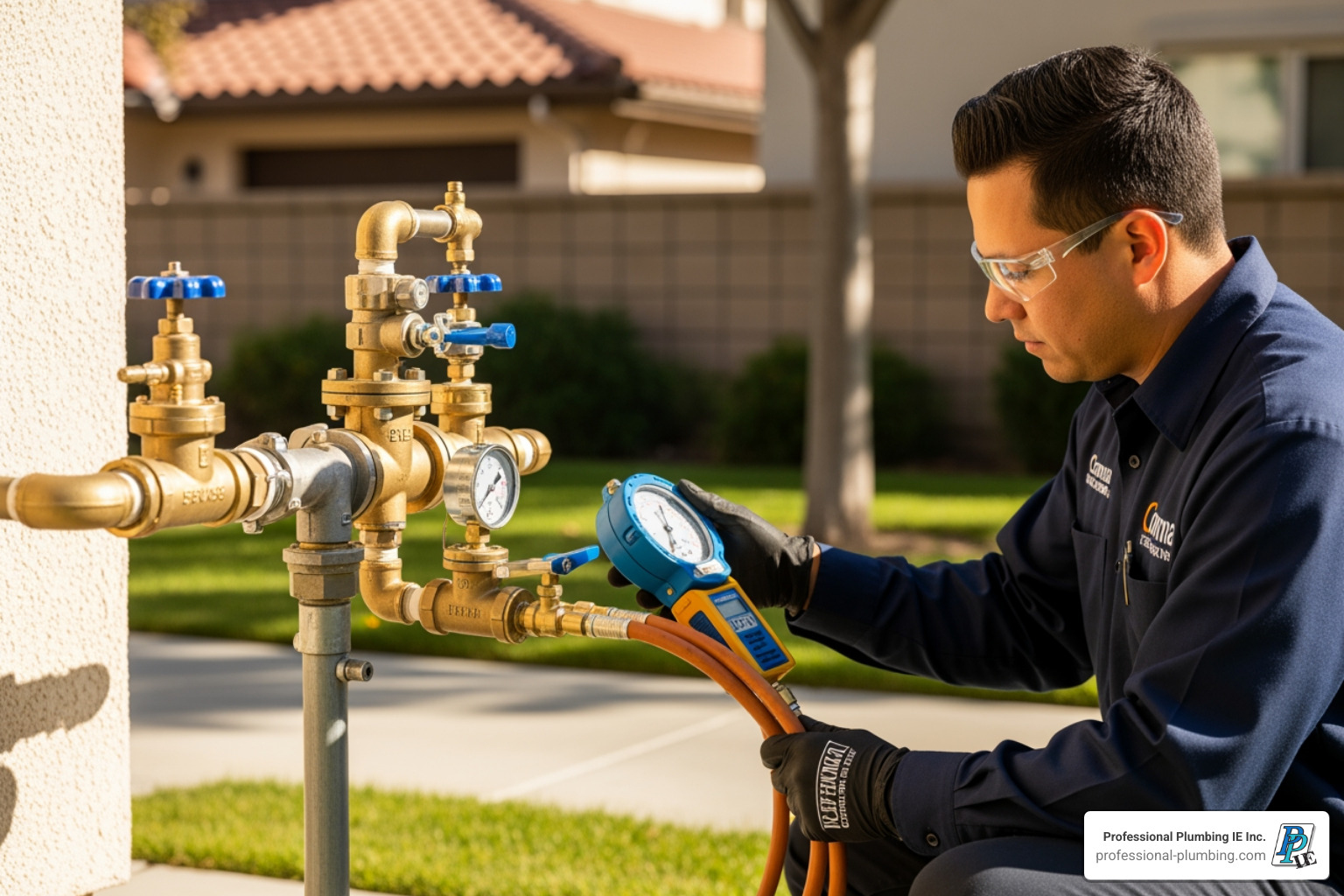
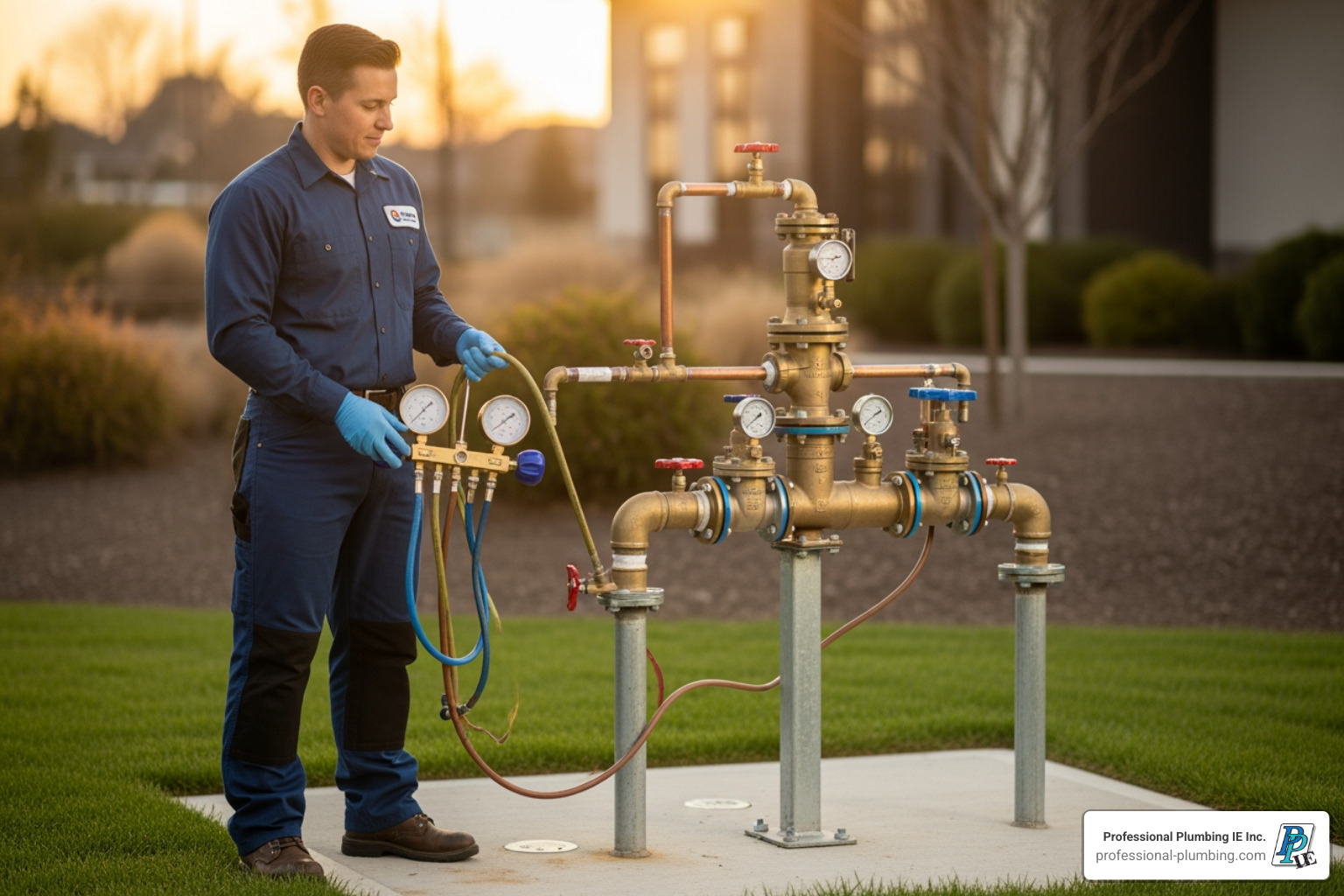
When your scheduled test day arrives, our certified technician will show up with a calibrated test kit and get to work. The testing procedure itself is thorough but typically doesn’t take very long—usually about 30 to 45 minutes, depending on your device’s location and accessibility.
The technician will perform an on-site inspection, carefully examining your backflow prevention device and running it through a series of checks. Using specialized, calibrated equipment, they’ll conduct pressure differential checks to ensure the internal components—like the check valves and relief valves—are maintaining the proper pressure differences needed to prevent backflow. They’ll also verify that the shut-off valve function is working correctly on both sides of the device.
During the inspection, the technician is also looking for any signs of wear, leaks, or damage that might compromise the device’s effectiveness. Everything is recorded on the official City of Corona Backflow Test Form, which documents the device’s condition and test results in detail.
Once the test is complete, we handle all the paperwork for you. We’ll submit the completed test reports directly to the Utilities Department, ensuring your compliance is documented in their system. The city retains these records for at least three years, so you’ll have proof of your testing history should you ever need it. This seamless process means you don’t have to worry about tracking down forms or making trips to city offices—we take care of it all.
Step 3: Handling a Failed Test and Necessary Repairs
Sometimes a backflow device doesn’t pass its test. This can happen for various reasons—internal seals wear out, springs weaken, or debris gets lodged in the valves. If your device fails, you’ll receive a failed test notification explaining what went wrong.
Here’s what’s important: a failed test means your device isn’t fully protecting the water supply, and it needs immediate attention. The City of Corona requires that property owners promptly repair or replacement the device and have it retested before it can be returned to service. This isn’t optional—it’s a critical step in maintaining public health.
At Professional Plumbing IE Inc., we make the repair process as painless as possible. Our technicians carry common backflow parts on their trucks, which means we can often complete repairs on the spot during the same visit. We’ll explain exactly what needs fixing, provide you with a clear estimate, and with your approval, get the work done quickly.
After the repair or replacement is complete, we’ll immediately conduct the retesting to verify that your device now meets all requirements. Once it passes, you’ll receive your passing certification, and we’ll submit the updated documentation to the city. Your water service remains uninterrupted, your property stays compliant, and you can rest easy knowing your backflow device is protecting Corona’s water supply. For all your commercial plumbing needs, including expert backflow services, visit our Commercial Services page.
Compliance, Costs, and Consequences
Let’s talk about the practical side of backflow testing Corona—what it costs, what happens if you don’t comply, and how to properly install and protect your device. Understanding these details helps you budget appropriately and avoid unnecessary headaches down the road.
Typical Costs for Backflow Services
The good news is that backflow testing Corona is generally quite affordable, especially when you consider the alternative consequences of non-compliance. The annual certification test typically ranges from $50 to $150 per device. This covers your certified tester’s expertise, the calibrated equipment they use, and the submission of your test report to the City of Corona Utilities Department.
If your device fails the test, repair costs depend on what needs fixing. Sometimes it’s a simple seal or gasket replacement, which is relatively inexpensive. Other times, internal components like check valves need attention, which costs more. Our technicians will always give you a clear, upfront estimate before starting any repair work—no surprises, no hidden fees.
For new installations or complete device replacements, you’re looking at a bigger investment. A 1-inch Reduced Pressure Principle (RPP) installation might run around $999, while a 2-inch RPP installation could be closer to $1,950. The final cost depends on several factors: the device size and type your property requires, how accessible the installation location is, and any site-specific challenges. Device costs themselves vary based on the manufacturer and model, and accessibility factors—like whether we need to dig through concrete or steer tight spaces—can affect labor costs.
When you’re getting quotes, don’t hesitate to ask about the complete picture. Will there be additional charges if the device needs cleaning? Is the work guaranteed for a year? These questions help you understand the true cost of service.
Consequences of Non-Compliance in Corona
We understand that life gets busy and paperwork sometimes slips through the cracks. But when it comes to backflow testing Corona, staying on top of your compliance is genuinely important—and not just because it’s the law.
The City of Corona takes water safety seriously, and their enforcement reflects that commitment. Initially, you’ll receive written notices reminding you about your overdue test or failed device. These are your friendly nudges to get things sorted out. If those notices go unanswered, the situation escalates quickly.
Fines and penalties start accumulating for continued non-compliance. Late submissions, ignoring notices, tampering with your device, or repeat infractions can all trigger financial penalties that add up fast. But here’s the consequence that really gets property owners’ attention: the City has the authority to shut off your water service until you meet all backflow prevention requirements. Imagine running a restaurant, medical office, or even your home without running water. It’s not just inconvenient—it can be financially devastating for businesses and disruptive for families.
Beyond immediate penalties, there are civil liabilities to consider. If contaminated water from your property somehow enters the public water supply and causes harm, you could face serious legal and financial consequences. For commercial properties or anyone planning new construction, the City may refuse new service connections or building approvals until you’re fully compliant with backflow regulations.
The bottom line? Timely testing and prompt repairs are always cheaper and easier than dealing with the consequences of non-compliance. We’re here to help you stay on track and avoid these headaches entirely.
Device Installation and Approved Assemblies
Not just any backflow device will do in Corona. The City maintains strict standards about which devices can be installed and how they must be set up.
Every backflow prevention device installed in Corona must come from the approved device list maintained by the City. These devices have passed rigorous testing and certification processes to ensure they actually protect the water supply. The USC Foundation for Cross-Connection Control and Hydraulic Research maintains comprehensive lists of approved backflow prevention assemblies that meet California’s standards.
Most new installations or significant replacements require going through the permit process. This isn’t bureaucratic red tape—it ensures your device is properly sized for your property’s needs, installed in an accessible location for future testing, and meets all local codes. Our team at Professional Plumbing Inc. knows Corona’s requirements inside and out, and we can guide you through the permit process smoothly.
Here’s something many property owners don’t think about until it happens: device theft. Backflow prevention devices contain copper and brass components, and with metal prices rising, they’ve become attractive targets for thieves. This is a real problem in Corona and surrounding areas. Waking up to find your backflow device stolen means not just the cost of replacement, but potential water service disruption and compliance issues.
That’s why we strongly recommend installing anti-theft cages or protective enclosures around your device. These metal cages allow your device to function normally and be accessed for testing, while making it much harder for thieves to quickly remove the unit. It’s a small investment that protects a larger one and prevents the headache of dealing with theft.
Whether you’re installing a new device, replacing an old one, or protecting your current investment, Professional Plumbing Inc. can help ensure everything is done right the first time.
Frequently Asked Questions about Backflow Testing Corona
We’ve been serving Corona property owners for decades, and over that time, we’ve noticed the same questions coming up again and again about backflow testing Corona. Let’s address the most common concerns we hear from our customers.
I’m a tenant. Is my landlord responsible for the backflow test?
This question comes up all the time, and honestly, it can be a bit of a gray area depending on your situation. Here’s the straightforward answer: the property owner is legally responsible for maintaining and testing backflow assemblies according to City of Corona regulations. That’s the official stance.
However, your lease agreement might say something different about who actually arranges and pays for the annual test. Some landlords include this responsibility in the tenant’s obligations, while others handle it themselves as part of property maintenance.
If you’re renting and you receive a notice from the City about backflow testing Corona, don’t ignore it. Reach out to your landlord or property manager right away. Most of the time, they’ll appreciate the heads-up and will take care of scheduling the test. Clear communication prevents confusion and ensures the test gets done on time—because regardless of who’s paying, that test needs to happen to keep everyone’s water safe.
How can I protect my backflow device from freezing or damage?
Your backflow prevention device is typically installed outdoors, which means it’s exposed to whatever weather Corona throws at it. During the winter months, freeze damage becomes a real concern. When water freezes inside the device, it expands and can crack valves and fittings—leading to expensive repairs and compliance headaches.
There’s also the unfortunate reality of theft to consider. Backflow devices contain valuable copper and brass components, and thieves have caught on to this. We’ve seen too many customers deal with the frustration and cost of stolen devices.
The good news is that protecting your device isn’t complicated. Insulation bags or blankets designed specifically for backflow devices are available at most hardware stores and provide excellent freeze protection. They’re easy to install and remove, and they work remarkably well for Corona’s occasional cold snaps.
For more permanent protection, consider installing a protective enclosure around your device. These sturdy metal or composite boxes provide both insulation and physical security against vandalism and theft. Yes, there’s an upfront cost, but it’s far less than replacing a stolen or freeze-damaged device—not to mention the hassle of being out of compliance until repairs are completed.
If your backflow device serves an irrigation system that shuts down for winter, proper winterization by a professional can also prevent freeze damage by draining the lines and preparing the device for cold weather.
How often do I need to complete backflow testing Corona?
This one has a simple, clear-cut answer: at least once per year. There’s no wiggle room here—it’s required by California Code of Regulation, Title 17, and the City of Corona takes this requirement seriously.
Your annual test must be performed by a certified backflow prevention tester who knows exactly what they’re doing. This isn’t a DIY project or something you can skip when life gets busy.
Beyond the annual requirement, testing is also mandatory after installation of a new device, immediately after any repairs or relocation of your existing device. These additional tests ensure that the device is functioning correctly right from the start or after any work has been done.
Think of it this way: your annual backflow testing Corona is like an annual physical for your property’s connection to the public water supply. It’s preventative care that protects everyone in our community. Missing your test doesn’t just put you at risk for fines or water shut-off—it potentially compromises the safety of Corona’s drinking water for all of us.
At Professional Plumbing Inc., we keep track of our customers’ testing schedules and send friendly reminders when it’s time for your annual test. Maintaining compliance is much easier when you have a trusted partner helping you stay on top of it.
Your Partner for Backflow Compliance in Corona
We’ve covered a lot of ground together in this guide—from understanding what backflow is and why it matters, to navigating Corona’s specific regulations, to the step-by-step testing process and what happens if things don’t go as planned. The truth is, managing your backflow testing Corona requirements doesn’t have to be overwhelming. It’s really about understanding your responsibility as a property owner, staying on top of that annual test, and addressing any issues quickly when they arise.
Your backflow prevention device is more than just a piece of plumbing equipment—it’s a critical safeguard protecting our entire community’s drinking water. When you keep your device compliant and functioning properly, you’re not just avoiding penalties and potential water service disruptions. You’re actively contributing to the health and safety of your neighbors, your family, and every business in Corona, Eastvale, Riverside, Norco, Jurupa Valley, and Mira Loma.
At Professional Plumbing Inc., we understand that navigating city regulations and scheduling annual tests might not be at the top of your priority list. That’s exactly why we’re here. As a family-owned and operated plumbing company with nearly 40 years of experience right here in the Inland Empire, we’ve helped thousands of property owners just like you maintain compliance year after year. Our certified technicians know Corona’s requirements inside and out, and we make the entire process—from testing to repairs to installation—as smooth and stress-free as possible.
We pride ourselves on being more than just a service provider. We’re your partner in protecting your property and our community’s water supply. Our team brings professional expertise, guaranteed quality work, and affordable rates to every job, whether it’s a routine annual test or a complex commercial installation. We’re committed to your complete satisfaction, and we stand behind our work.
For all your commercial plumbing needs, including certified backflow testing Corona, professional repairs, and expert installation services, explore our Commercial Plumbing Services. Let us take the worry out of compliance so you can focus on what matters most to you.