Gas leak in house repair: Essential Safety 2025
Your Guide to Gas Leak in House Repair in Riverside & Corona
Gas leak in house repair is not a task you can postpone or tackle yourself. It’s a critical safety emergency that requires immediate action and professional expertise. Here’s what you need to know right now:
Immediate Steps if You Suspect a Gas Leak:
- Evacuate everyone from your home immediately, including pets
- Do not touch light switches, electronics, or create any spark
- Leave doors and windows open as you exit
- Call your gas utility company and 911 from a safe distance (at least 100 feet away)
- Do not re-enter until professionals declare it safe
Professional Repair Requirements:
- Only licensed, certified technicians should repair gas lines
- Repairs must meet California Public Utilities Commission (CPUC) standards
- Proper leak detection equipment and pressure testing are mandatory
- System verification is required before restoring service
Here in the Inland Empire, from the historic homes near Mount Rubidoux in Riverside to the growing family communities in Eastvale and Corona, natural gas is part of daily life. It heats our water, cooks our meals, and keeps our homes warm. But this convenient energy source carries serious risks when gas lines fail.
The danger is real. Gas leaks have caused devastating explosions in neighborhoods from New Jersey to Indianapolis, obliterating homes and injuring dozens. In one Ewing, New Jersey incident, a single explosion damaged over 60 homes. These aren’t just statistics—they’re families whose lives changed in an instant because of an undetected or improperly repaired gas leak.
The challenge? Natural gas is naturally colorless and odorless. While utility companies add a distinctive “rotten egg” smell (mercaptan) for detection, a phenomenon called odor fade can occur in certain conditions, making leaks harder to detect by smell alone. This means you can’t always trust your nose to keep you safe.
Unlike a dripping faucet or a slow drain, a gas leak poses immediate life-threatening danger. It can cause explosions, fires, and serious health problems from carbon monoxide poisoning to long-term respiratory issues. It’s why gas leaks are classified as “Life-Threatening” deficiencies in real estate inspections, requiring correction within 24 hours.
This is where professional expertise becomes non-negotiable. DIY gas line repair isn’t just discouraged—in most jurisdictions, it’s illegal. The stakes are simply too high.
I’m Chris Kirsten, and in my 40 years with Professional Plumbing Inc., I’ve responded to countless gas leak emergencies across the Inland Empire, from routine appliance connections gone wrong to complex underground line failures. My team and I understand that gas leak in house repair isn’t just about fixing pipes—it’s about protecting families and restoring peace of mind in communities like Riverside, Corona, and Eastvale.
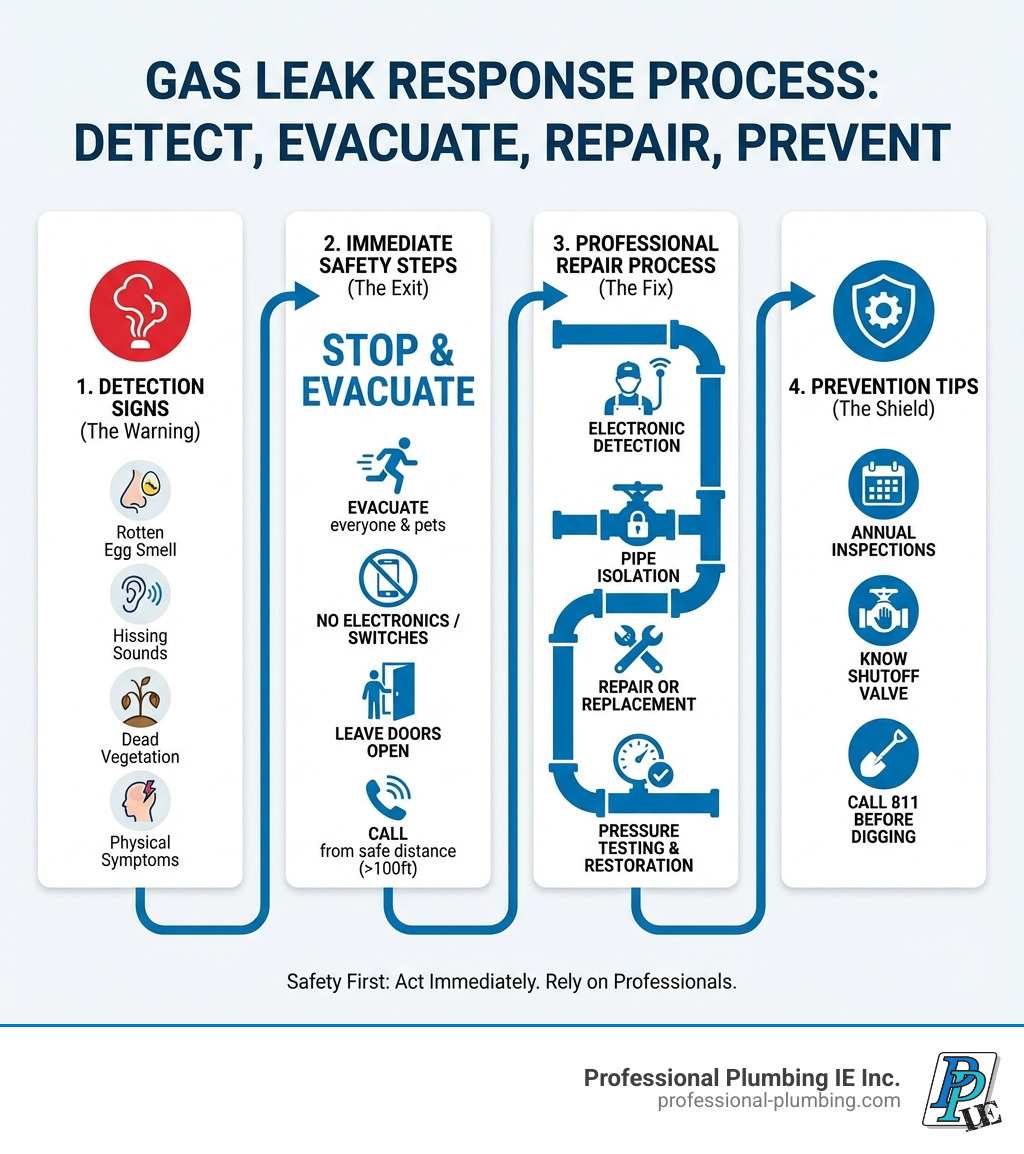
Gas leak in house repair terms to know:
Smell Gas? Your Immediate Safety Checklist
This is not a DIY situation. Your top priority is safety. If you suspect a gas leak in your Riverside, Corona, Eastvale, or Norco home, follow these steps without delay. Your swift action can prevent a dangerous situation from becoming a catastrophe.
-
Evacuate Immediately; Don’t Delay; Leave Doors Open; Gather Family and Pets
The moment you suspect a gas leak, your primary concern is to get everyone, including your beloved pets, out of the house as quickly and calmly as possible. Do not waste time gathering belongings. As you exit, open windows and doors. This helps to ventilate the area and allows some of the gas to escape, potentially reducing explosive concentrations. Once outside, ensure everyone is at a safe distance—at least 100 feet away from the building. For more detailed guidance, refer to our guide on What to Do If You Suspect a Gas Leak. -
No Flames or Sparks; Don’t Use Light Switches; Avoid Electronics; Don’t Start Your Car
Natural gas is highly flammable. Any spark can ignite it, leading to an explosion. This means:- Do not light matches, lighters, or any open flame.
- Do not turn on or off light switches, appliances, or any electrical devices. Even a small electrical arc can be enough to trigger an ignition.
- Avoid using cell phones or landlines inside the house. Make all calls from a safe distance outside.
- If your car is parked in a garage or close to the house, do not start it. The ignition spark could be dangerous.
-
Call from a Safe Distance; Your Gas Utility Company; 911 for Emergencies
Once you and your family are safely away from the property, the next crucial step is to call for help.- Contact your local gas utility company immediately. They have emergency response teams trained to handle gas leaks.
- Call 911 if you detect a strong odor, hear a loud hissing sound, or if anyone is experiencing severe physical symptoms. Emergency services can secure the area and provide medical attention if needed.
-
Shutting Off Gas
Knowing how to shut off your main gas supply can be critical in an emergency, but only attempt this if it is safe to do so and you know exactly what you’re doing. If you have to reach into a gas-filled area or feel unsafe, prioritize evacuation and call for help. If you do turn off the gas, never turn it back on yourself. Only a qualified professional from the gas company or a licensed plumber can safely restore service after a leak has been repaired. We have a detailed guide on How to Locate and Shut Off Your Natural Gas Line that can help you prepare before an emergency.
Identifying the Invisible Threat: Signs of a Gas Leak
Natural gas is naturally odorless; utility companies add a substance called mercaptan to give it a distinct smell for safety. However, you can’t always rely on your nose. Here are the key signs to watch for.
-
The “Rotten Egg” Smell; Sulfur Odor; Mercaptan Additive
This is often the most recognizable sign of a gas leak. Utility companies deliberately add a harmless chemical called mercaptan to natural gas, which gives it a strong, unpleasant smell similar to rotten eggs or sulfur. This additive is your first line of defense, designed to alert you to a potential leak. If you catch a whiff of this distinct odor anywhere in your home—whether you’re near the Hidden Valley Wildlife Area in Norco or downtown Riverside—take it seriously. -
Hissing or Whistling Sounds; Near Gas Lines; Near Appliances
Sometimes, a gas leak can create an audible sound. If you hear an unexplained hissing, whistling, or roaring sound coming from your gas lines, appliances (like your water heater, furnace, or stove), or even from outside near your gas meter, it could indicate gas escaping under pressure. This is a clear warning sign that demands immediate attention. -
Visual Clues; Bubbles in Water; Dead or Dying Vegetation; Blowing Dust
While natural gas is invisible, its effects can sometimes be seen:- Bubbles in Standing Water: If you notice bubbles consistently rising through puddles, ponds, or even wet soil near your gas line, it could be gas bubbling up from an underground leak.
- Dead or Dying Vegetation: Gas leaks can starve plants of oxygen, causing them to turn brown or die in an unusual pattern. If you see patches of discolored or dead grass or plants near your gas line in your yard, it might be an indicator of a subsurface leak.
- Blowing Dust or Debris: A strong gas leak can stir up dust or debris around the leak site. If you see dirt or insulation being blown around without an obvious cause, it’s worth investigating.
-
Physical Symptoms; Dizziness; Headaches; Nausea
Exposure to natural gas can cause a reduction in oxygen, leading to various physical symptoms. If you or members of your family, including pets, experience any of the following without a clear explanation, especially when inside the home, it could be a sign of a gas leak:- Dizziness or lightheadedness
- Headaches
- Nausea or vomiting
- Fatigue or drowsiness
- Breathing difficulties or chest pain
- Ringing in the ears
- Blistering or pale skin (in severe cases)
Pets might show signs like lethargy, loss of appetite, or vomiting. If you’re experiencing natural gas poisoning, you might experience several of these symptoms.
-
Odor Fade Phenomenon
Here’s a crucial point: you can’t always rely on your nose. The “rotten egg” smell added to natural gas, mercaptan, can sometimes diminish or disappear, a phenomenon known as odor fade. This can happen due to various factors like absorption into new pipes, chemical reactions with rust or moisture, or even intermittent gas flow. This means a dangerous leak could be present without the telltale smell. For more in-depth information, you can read More on Odor Fade. This is why it’s so important to be aware of all the signs.
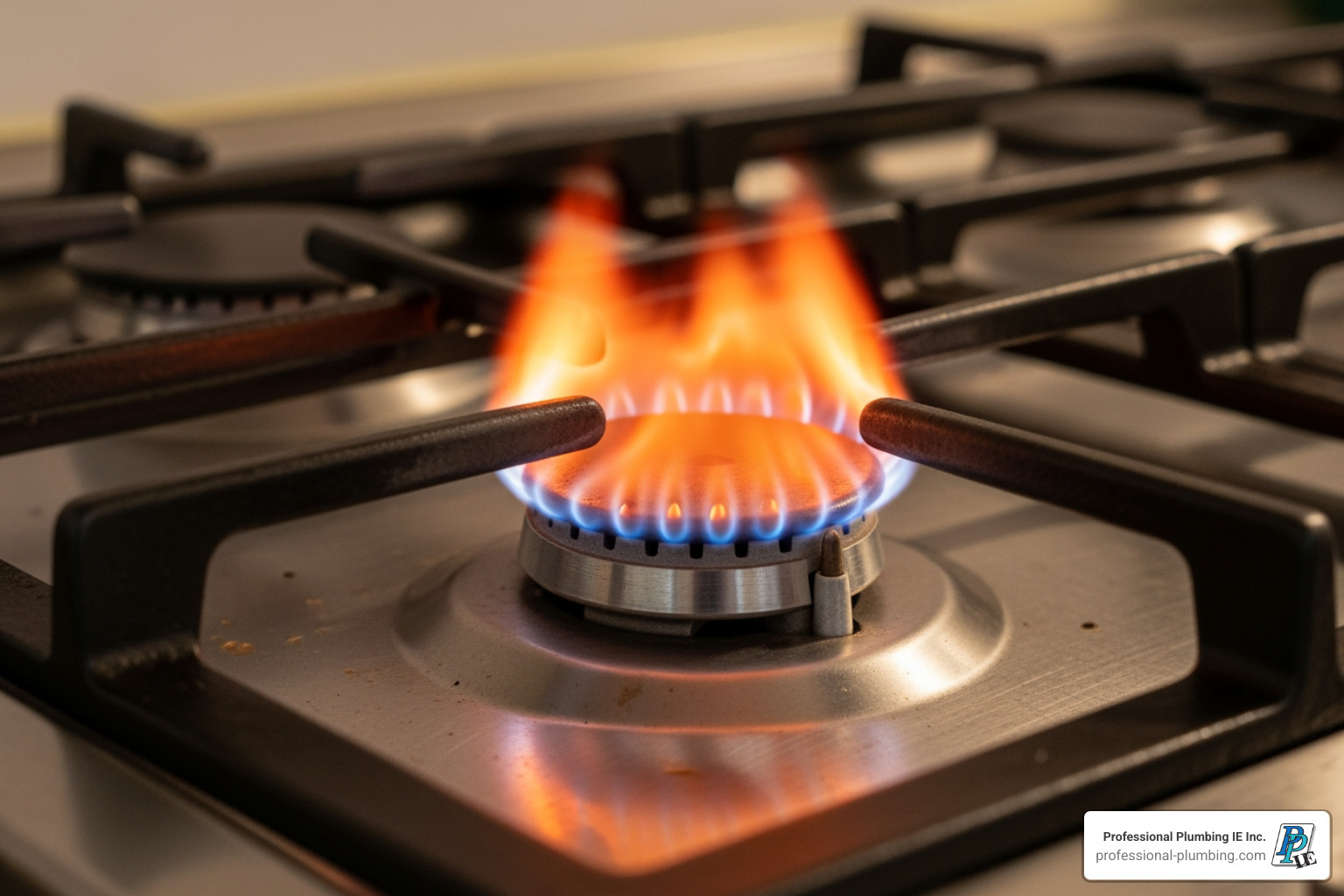
Can a carbon monoxide detector find a gas leak?
No, a carbon monoxide (CO) detector cannot detect a natural gas leak. This is a common and potentially dangerous misconception. Here’s why:
- Methane vs. Carbon Monoxide: Natural gas is primarily methane, a hydrocarbon. Carbon monoxide is a completely different gas formed by the incomplete combustion of fuels like natural gas, wood, or propane.
- CO Detectors for Incomplete Combustion: Carbon monoxide detectors are specifically designed to alert you to the presence of CO, an odorless, colorless, and highly toxic gas that can result from faulty furnaces, water heaters, or other fuel-burning appliances. They detect a byproduct of combustion, not the unburnt fuel itself.
- You Need a Natural Gas Detector for Leaks: To detect a natural gas leak, you need a specialized natural gas detector, which senses methane. While both are dangerous, they are different threats and require different detection technologies. If you think you or your loved one are experiencing carbon monoxide poisoning, seek emergency medical treatment immediately, as symptoms can be similar to a gas leak. For more on CO detection, see this article about gas leak and CO detectors.
What are the long-term health effects?
While immediate exposure to high concentrations of natural gas can be fatal due to oxygen displacement, even chronic, low-level exposure from an unaddressed leak can have serious health consequences. Gas leaks cause a reduction in oxygen, which can lead to certain physical symptoms. We’ve seen homeowners in Riverside and Corona experience:
- Respiratory issues: Persistent coughing, shortness of breath, or exacerbation of asthma.
- Mood changes: Irritability, anxiety, or depression.
- Neurological symptoms: Chronic headaches, memory problems, or difficulty concentrating.
- Drowsiness: Persistent fatigue or lethargy.
You can experience some or all of these symptoms. These long-term effects underscore the importance of prompt gas leak in house repair and ensuring your home is safe and properly ventilated.
The Professional Gas Leak in House Repair Process
Once your family is safe and the utility company has been notified, the next step is professional repair. Attempting a DIY gas leak in house repair is extremely dangerous and often illegal. Here’s what a certified technician does when you call Professional Plumbing Inc. for help in your Riverside, Corona, Eastvale, or Norco home.
We understand the urgency and the potential dangers involved. That’s why our highly trained and experienced professionals handle your gas line repairs with the utmost care and precision.
-
Leak Detection
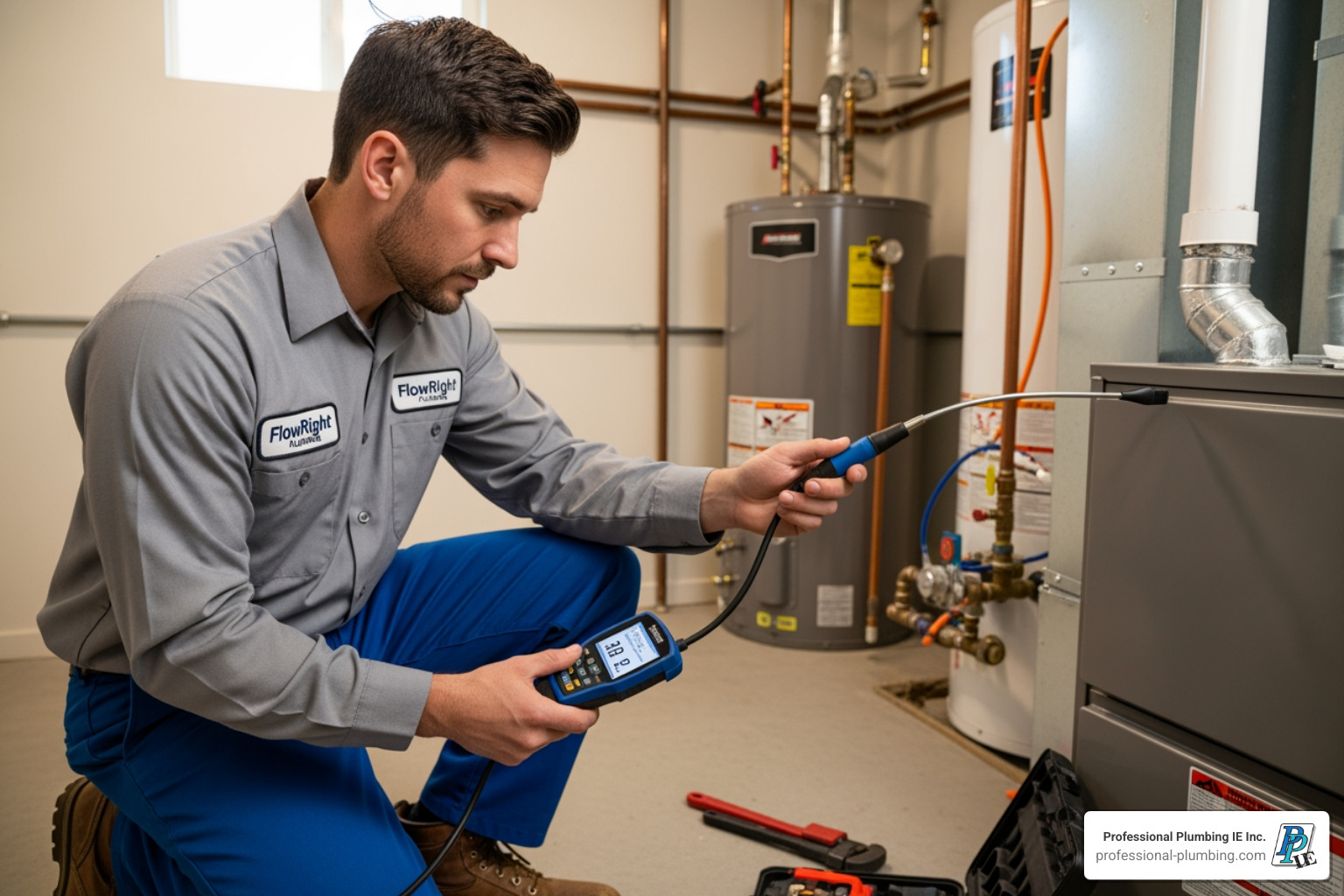
Our first priority is to accurately pinpoint the source of the leak. We use a combination of advanced techniques:- Electronic Sniffers: These sensitive devices can detect even minute traces of natural gas in the air, allowing us to trace the plume back to its origin.
- Pressure Testing: If the leak isn’t immediately obvious, we can perform a pressure test. This involves isolating sections of your gas line and monitoring for pressure drops, which indicate a leak. The mandated test is 15 PSI for 15 minutes, performed at approximately 60 times more pressure than what the gas meter releases to ensure thoroughness.
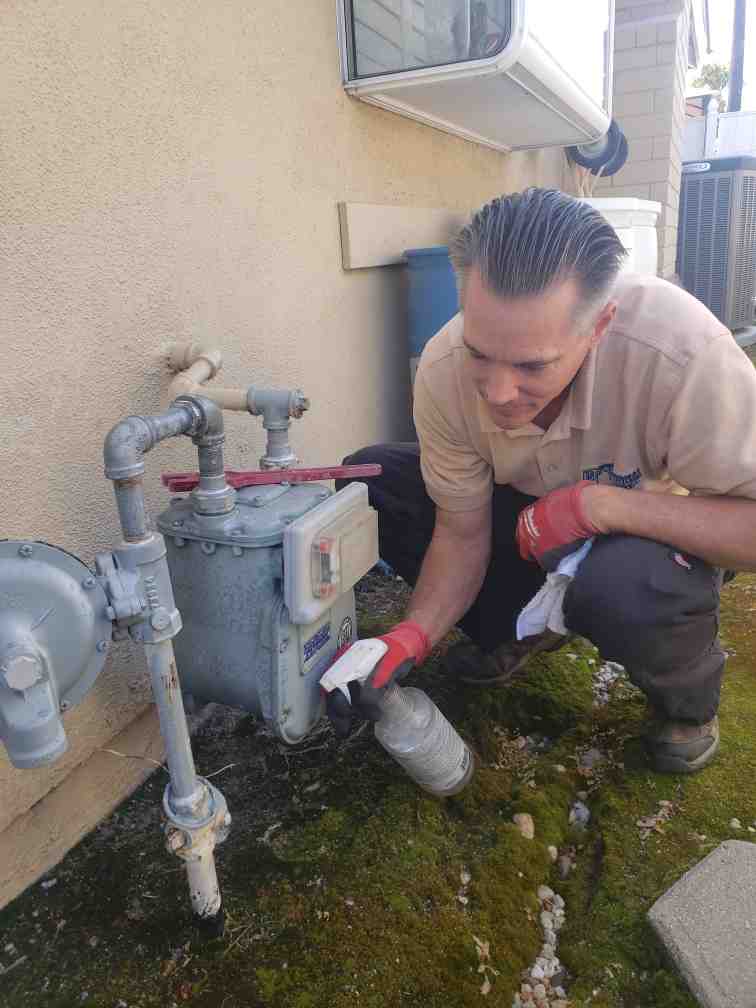
- Soapy Water Test: For smaller, visible leaks, a simple solution of soapy water applied to fittings and pipes will bubble up where gas is escaping. This is often used to confirm a suspected leak location.
-
Isolation and Repair
Once the leak is located, the next step is to isolate and repair it.- Shutting Off Sections: If the main gas supply to the house is still on, we will shut off the gas to the affected section of the line or appliance to ensure safety during the repair.
- Pipe Replacement or Repair: Depending on the nature and severity of the leak, we may need to replace a section of corroded or damaged pipe, repair a faulty fitting, or tighten a loose connection. Our team comes equipped with fully stocked service vehicles to handle these repairs efficiently. Sometimes, locating a leak may require us to carefully access lines behind walls or ceilings, but we always strive to minimize disruption.
- Fitting Tightening: Often, a leak can be as simple as a loose connection that needs to be properly tightened and sealed.
-
System Verification; Post-repair pressure test; Safety checks
After the repair is complete, our work isn’t done until we’ve verified the entire system is safe.- Post-Repair Pressure Test: We perform another rigorous pressure test on the repaired section and potentially the entire system to confirm that the leak has been completely eliminated and no new leaks have been introduced. This ensures the piping or tubing system is gas-tight.
- Safety Checks: We conduct thorough safety checks on all connected gas appliances to ensure they are operating correctly and safely. We stay informed about the latest regulations and incorporate them into our practices, including compliance with California Public Utilities Commission (CPUC) directives and local building codes.
-
Restoring Service; Relighting pilot lights; Appliance testing
Once we’ve confirmed the system is leak-free and safe, we can proceed with restoring your gas service.- Relighting Pilot Lights: We will safely relight pilot lights on your gas appliances (water heater, furnace, stove, etc.).
- Appliance Testing: We test each appliance to ensure it’s functioning properly and safely. Our comprehensive Service: Natural Gas ensures every component is checked. We won’t leave until we’re confident your home’s gas system is operating perfectly and your family is safe.
Understanding the ‘Why’: Causes, Costs, and Prevention
Knowing what causes leaks and how to prevent them can save you stress and money. From older homes in Norco to new builds, all gas lines require attention.
-
Common Causes
Gas leaks don’t just happen out of the blue; they often stem from identifiable issues:- Aging Pipes: Over time, gas lines, especially older metal pipes, can corrode, rust, or simply wear out, leading to small cracks or holes. This is a common issue in older homes across Riverside County.
- Faulty Appliance Installation: Incorrect installation of gas appliances like stoves, dryers, water heaters, or furnaces can lead to loose connections or improperly sealed lines, creating leak points.
- Accidental Damage: This can occur during home renovations, digging in the yard (hitting an underground line), or even from natural disasters like earthquakes, which can shift foundations and stress gas pipes. This is why it’s critical to call 811 before any digging project in areas like Mira Loma.
- Worn Seals and Connections: Seals and connectors on gas meters, regulators, or appliance hookups can degrade over time, leading to slow leaks.
-
Prevention Tips
An ounce of prevention is worth a pound of cure, especially when it comes to gas safety. Here are our top tips:- Annual Appliance and Gas Line Inspection: We recommend having your gas lines and appliances professionally inspected at least once a year. This allows us to catch minor issues before they become major problems.
- Know Your Shutoff Valve Location: Familiarize yourself with the location of your home’s main gas shutoff valve and how to operate it. This knowledge can be critical in an emergency.
- Keep Area Clear: Ensure areas around gas meters and appliances are clear of clutter, debris, and flammable materials to allow for proper ventilation and easy access in an emergency.
- Call 811 Before Digging: Always call 811 a few days before any digging project, no matter how small. This free service helps you identify the location of underground utility lines, including gas lines, preventing accidental strikes and dangerous leaks.
- Install Carbon Monoxide Detectors: While they don’t detect natural gas, CO detectors are essential for detecting carbon monoxide, a deadly gas that can result from faulty gas appliances. Install them on every floor and near sleeping areas.
- Professional Installation: Always use licensed professionals for the installation or repair of any gas appliance or gas line work.
-
The Role of Insurance
Understanding how your home insurance covers gas leaks is important, but it’s complex.- Sudden & Accidental Damage: Generally, home insurance policies may cover damage caused by a gas leak, such as fire, explosion, or resulting property damage, if the leak was sudden and accidental. For example, if a cracked pipe from a sudden event leads to an explosion, the structural damage and appliance replacement might be covered.
- Exclusions for Negligence: However, insurance typically will not cover damages if the leak was caused by homeowner negligence, lack of maintenance, or gradual wear and tear. This means if you ignore a known problem or fail to maintain your gas lines, your claim could be denied.
- Policy Review: We always advise homeowners in Riverside and surrounding areas to review their specific policy with their insurance provider to understand their coverage limits and exclusions related to gas leaks. Insurance usually won’t cover the repair or replacement of the faulty gas line or appliance itself, only the resulting damage.
-
Gas Line Repair Cost; Factors Affecting Price
The cost for gas leak in house repair can vary significantly. There’s no one-size-fits-all answer, as the price depends on several factors, which is why we always provide transparent, upfront quotes. For a general understanding, you can check our Gas Line Repair Cost page.- Leak Location: A leak on an exposed pipe section is usually quicker and cheaper to fix than one buried underground or hidden within walls or under foundations.
- Repair Complexity: A simple tightening of a fitting is less costly than replacing a long section of corroded pipe or rerouting an entire line. The average process can take 4-7 hours, but complex situations might extend to 8-12 hours.
- Extent of Damage: If the leak has caused secondary damage that needs remediation, that will add to the overall cost.
- Permits and Inspections: Depending on the scope of the repair, permits and follow-up inspections from local authorities (like those in Corona or Norco) may be required, adding to the cost.
For information on new installations, our Cost of Adding a Gas Line provides further details.
Frequently Asked Questions about Gas Leaks in Riverside County
Why is professional gas leak in house repair essential?
Safety is paramount. When it comes to gas leak in house repair, licensed professionals have the training, specialized tools, and in-depth knowledge of local Riverside and California Public Utilities Commission codes to perform repairs safely and correctly. As we’ve seen in tragic incidents, an improper repair can lead to catastrophic explosions or fires, like those seen in news reports from Philadelphia to Indianapolis. These aren’t just distant headlines; they’re stark reminders of the potential devastation. Our team at Professional Plumbing Inc. has nearly 40 years of experience, ensuring every repair meets the highest safety standards. We guarantee our parts and workmanship because your family’s safety is our highest priority.
What does a typical gas leak in house repair cost?
Costs can vary widely, from a few hundred dollars for a simple fix on an exposed pipe to several thousand for complex jobs requiring excavation or wall access. The final price depends on the leak’s location, accessibility, and the extent of the pipe damage. For instance, a leak in an easily accessible appliance connection in Eastvale might be a quick fix, while a corroded underground line in Jurupa Valley would require more extensive work. We pride ourselves on offering flat rates and transparent pricing, so you’ll know the cost upfront, without any surprises or overtime charges, even for emergency services on nights and weekends. Always get a clear, upfront quote.
How often should I have my gas lines inspected?
It’s a best practice to have your gas lines and appliances professionally inspected annually. This is especially important in older homes, if you’re planning renovations, or after any seismic activity, which is common in the Inland Empire. Regular inspections can identify early signs of wear, corrosion, or improper connections before they escalate into dangerous leaks. This proactive approach helps prevent hazardous situations, ensures efficient system operation, and can extend the lifespan of your gas system, providing peace of mind for your family in Riverside, Corona, Norco, and beyond.
Your Safety Is Our Priority
A suspected gas leak is one of the most serious emergencies a homeowner can face. By knowing the signs, acting quickly, and leaving the repairs to certified experts, you ensure the safety of your home and family. For guaranteed, professional Gas Leak Riverside services you can trust, the team at Professional Plumbing Inc. is here to help. With our nearly 40 years of experience serving our neighbors in Riverside, Corona, Eastvale, Norco, and the surrounding Inland Empire communities, we bring unparalleled expertise and dedication to every job. Contact us today for peace of mind and expert natural gas services.