Unvented Hot Water Tank: Best Choice 2025
Understanding Your Hot Water Options
An unvented hot water tank is a sealed cylinder that heats and stores water directly from your mains supply, delivering hot water at high pressure to all your taps and showers without needing a cold water storage tank in the loft.
Quick Comparison: Unvented vs. Vented Hot Water Systems
| Feature | Unvented System | Vented System |
|---|---|---|
| Water Source | Direct from mains | Gravity-fed from loft tank |
| Water Pressure | High (mains pressure) | Lower (depends on tank height) |
| Space Required | Less (no loft tank needed) | More (requires loft tank) |
| Installation Cost | Higher (requires G3 certified installer) | Lower (simpler installation) |
| Best For | Modern homes, multiple bathrooms | Older properties, budget installations |
Your hot water system is crucial for daily comfort. If you’re experiencing weak water pressure upstairs or running out of hot water, your current system may not meet your household’s demands.
The choice between vented and unvented systems is key for homeowners. Unvented hot water tanks, now standard in most new-builds, have grown in popularity due to their high performance. Understanding how they differ from traditional systems will help you make the right choice for your Riverside property.
This guide covers how unvented tanks work, sizing, installation costs, and whether one is right for your home.
How an Unvented Hot Water Tank Works
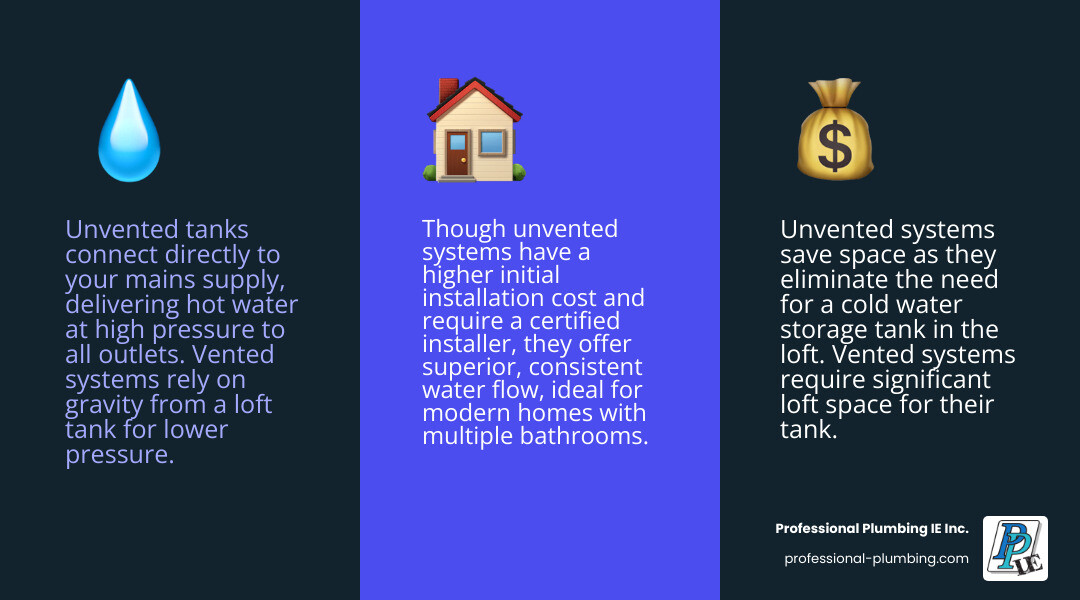
An unvented hot water tank delivers consistent, powerful water pressure throughout your home. Unlike traditional systems, it’s a completely sealed unit connected directly to your mains water supply, eliminating the need for a cold water storage tank in the loft. Everything happens within one streamlined cylinder.
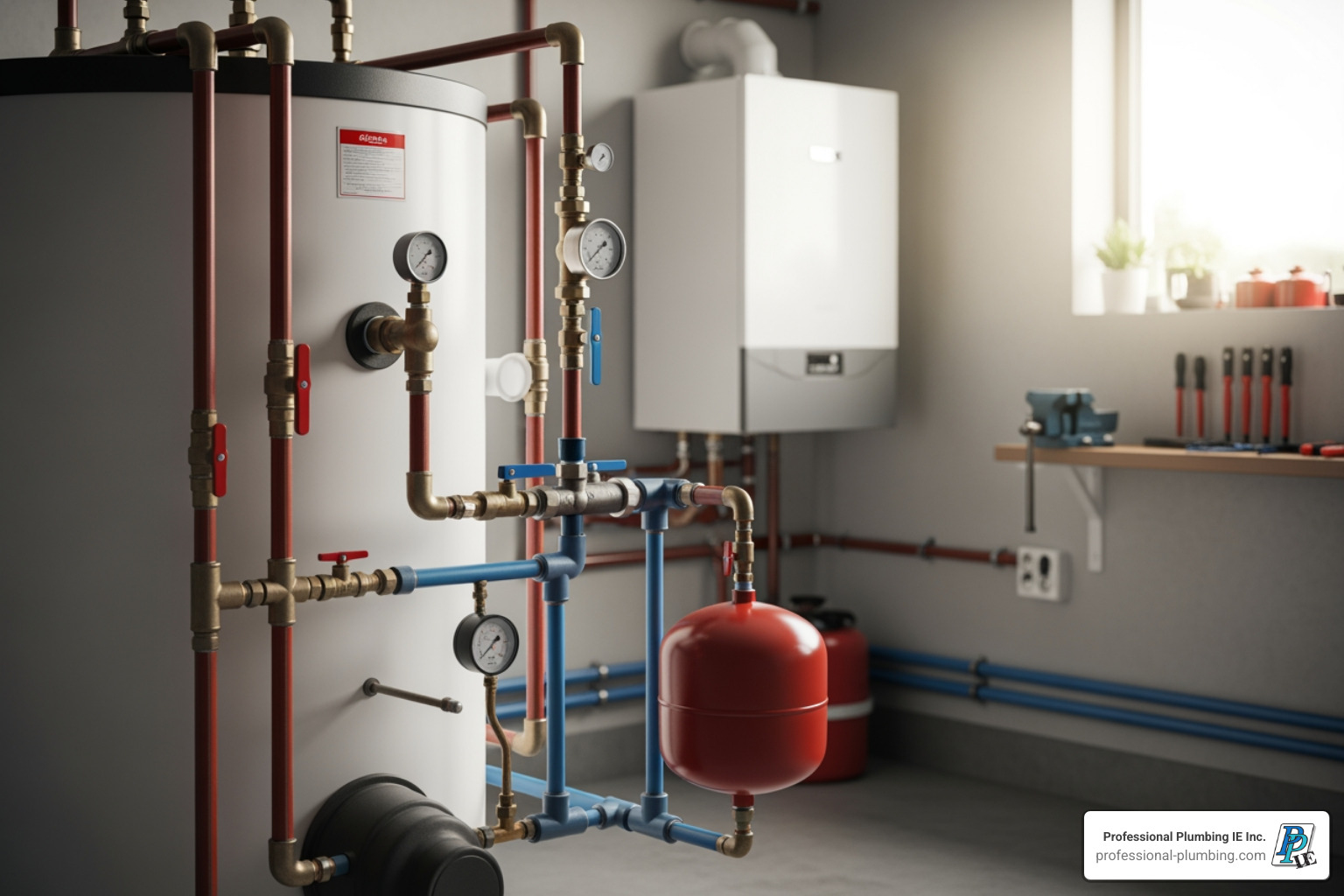
Cold water enters the cylinder at mains pressure. As the water is heated, it expands. In the sealed system, this expansion is safely absorbed by an external component called an expansion vessel, which acts as a pressure cushion. When you turn on a hot tap, the incoming mains pressure pushes the stored hot water out of the cylinder to your taps and showers. This direct connection ensures a strong, steady flow everywhere in your home, even when multiple outlets are in use.
This design also saves significant space in your loft, a real advantage for homeowners in Riverside, Corona, or Fountain Valley. With less pipework, there are also fewer potential leak points and a cleaner installation.
Direct vs. Indirect Heating Methods
Unvented tanks heat water in one of two ways, depending on your home’s energy sources.
Direct heating systems use electric immersion heaters built into the cylinder to warm the water. This is ideal for homes without a central heating boiler, though electricity is often more expensive to run than gas.
Indirect heating systems use an external heat source, like your home’s boiler. The boiler sends hot water through a coil inside the tank, which heats your domestic hot water without the two supplies mixing. Indirect systems are highly flexible and compatible with gas boilers, oil boilers, and renewable sources like heat pumps or solar thermal panels. For most Riverside homeowners, an indirect system paired with a gas boiler offers a great balance of performance and running costs.
For other modern options, you might explore The Benefits of Tankless Water Heaters, which provide hot water on demand.
Vented vs. Unvented: Which System is Right for You?
Choosing between a vented and an unvented hot water tank means finding the right fit for your home’s needs and budget. As experienced plumbers in Riverside, Orange County, Corona, and Fountain Valley, we can help you steer this choice. A vented system is a traditional, lower-cost option, while an unvented system offers higher performance and better space efficiency, but at a higher price.
| Feature | Unvented System | Vented System |
|---|---|---|
| Water Pressure | High (mains pressure). Delivers consistent, strong flow to all outlets. | Lower (gravity-fed from a loft tank). Pressure can be weaker on upper floors. |
| Installation Space | More flexible placement, no cold water storage tank needed. Can be installed almost anywhere. | Requires a cold water storage tank, typically in the loft, taking up significant space. |
| Cost | Generally more expensive to purchase and install due to specialized components and certified installers. | Typically cheaper to install and maintain as a like-for-like replacement. |
| Maintenance | Requires annual checks by a qualified plumber to ensure safety devices are functioning correctly. | Less stringent maintenance requirements, though the loft tank needs occasional cleaning. |
| System Hygiene | Sealed system, reduced risk of contamination. Considered more hygienic. | Open to the atmosphere via the vent pipe, potential for dust or debris to enter the cold water storage tank. |
Your home’s age and hot water demands are key factors. For new builds or major renovations, an unvented system is often the standard. For older homes, a like-for-like vented replacement may be more practical. If you have multiple bathrooms or struggle with weak water pressure, an unvented hot water tank could be a major upgrade.
The Benefits of an Unvented System
Homeowners often tell us they wish they’d upgraded sooner. The benefits are significant:
- High Water Pressure: The direct mains connection delivers strong, consistent pressure to every tap. You can run multiple appliances and showers without the frustrating pressure drops common with vented systems.
- Space-Saving: By eliminating the need for a cold water tank in the loft, you free up valuable storage or living space.
- Installation Flexibility: Since it doesn’t rely on gravity, an unvented hot water tank can be installed almost anywhere—a utility room, basement, or cupboard.
- Quieter Operation: These systems operate silently, without the noise of a loft tank refilling.
- Improved Hygiene: The sealed system prevents dust or debris from contaminating your water supply, which can be a risk with open tanks.
- Fast Recovery: Many modern tanks can reheat a full cylinder of water in 15-20 minutes, reducing the chance of running out of hot water during peak usage times.
Potential Drawbacks to Consider
While unvented systems offer many advantages, it’s important to consider the potential drawbacks for your Riverside home.
- Higher Cost: The equipment and installation are more expensive than for vented systems. The cylinders are built to withstand high pressure and require specialized safety components, adding to the price.
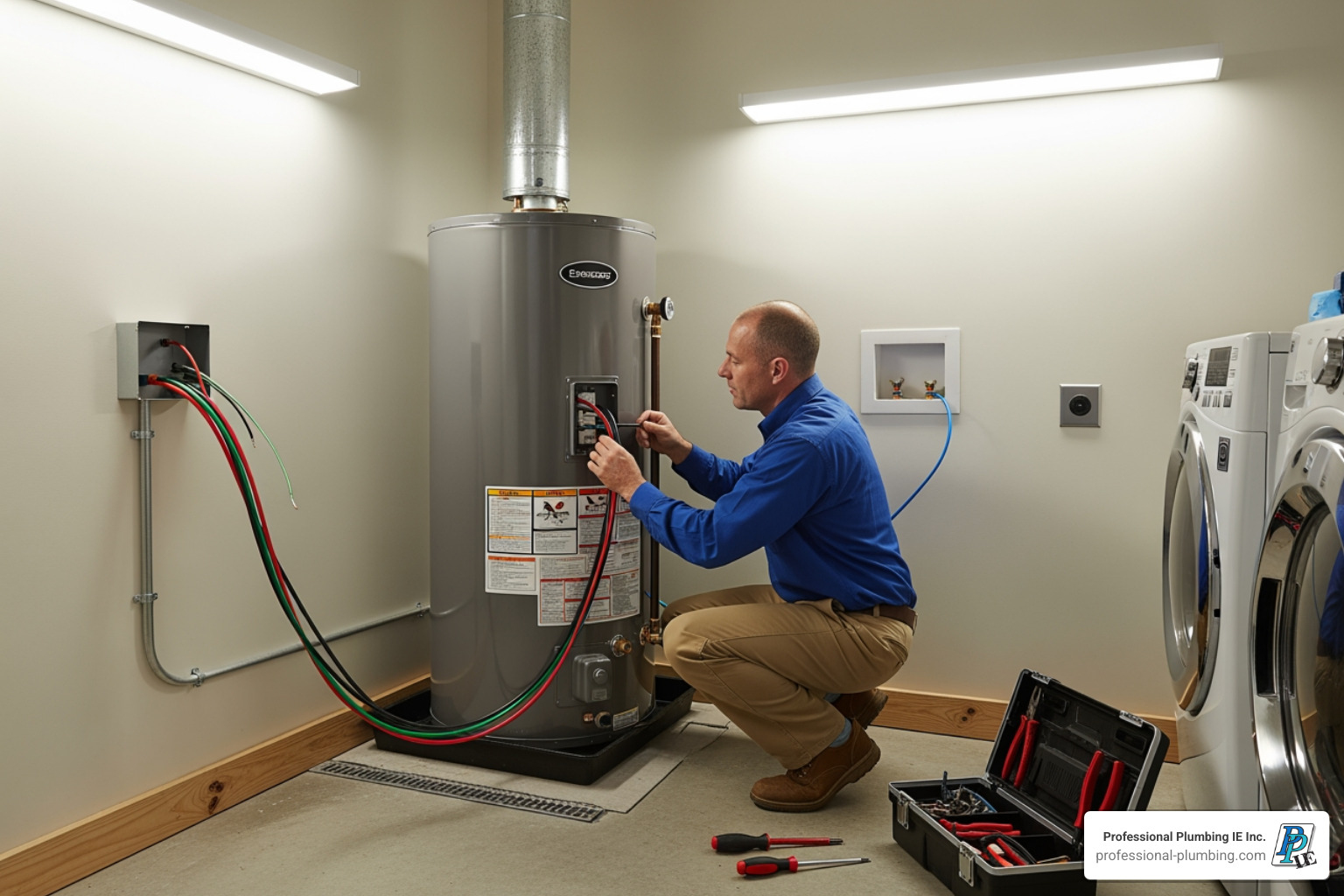
- Specialized Installation: Unvented hot water tanks must be installed by a certified professional. Improper installation is dangerous due to the high pressures involved. Our technicians at Professional Plumbing Inc. are fully certified for this work.
- Dependent on Mains Pressure: An unvented system’s performance is tied to your home’s incoming water pressure. If your mains pressure is already low, this system won’t improve it.
- Incompatible with Some Older Pipework: Pipes in homes over 30 years old may not be able to handle the high pressure, potentially leading to leaks. We always assess existing plumbing and may recommend upgrades, which adds to the cost.
- Annual Maintenance: The system’s safety devices require an annual check by a qualified plumber. This is an ongoing cost that vented systems don’t have.
These factors should be weighed against the benefits. For some, the improved performance is worth the cost, while for others on a tight budget or with older plumbing, a vented system may be a better choice. If you’re unsure, we can assess your situation. Learn more at our water heater services page.
Key Factors for Your New Unvented Hot Water Tank Installation
If you’re considering an unvented hot water tank for your Riverside, Corona, or Fountain Valley home, proper planning is essential for a successful installation. Key considerations include correctly sizing your tank, ensuring your plumbing meets installation requirements, adhering to safety regulations, and understanding the cost factors. Getting these details right ensures years of reliable, high-pressure hot water.
Choosing the Right Size Unvented Hot Water Tank
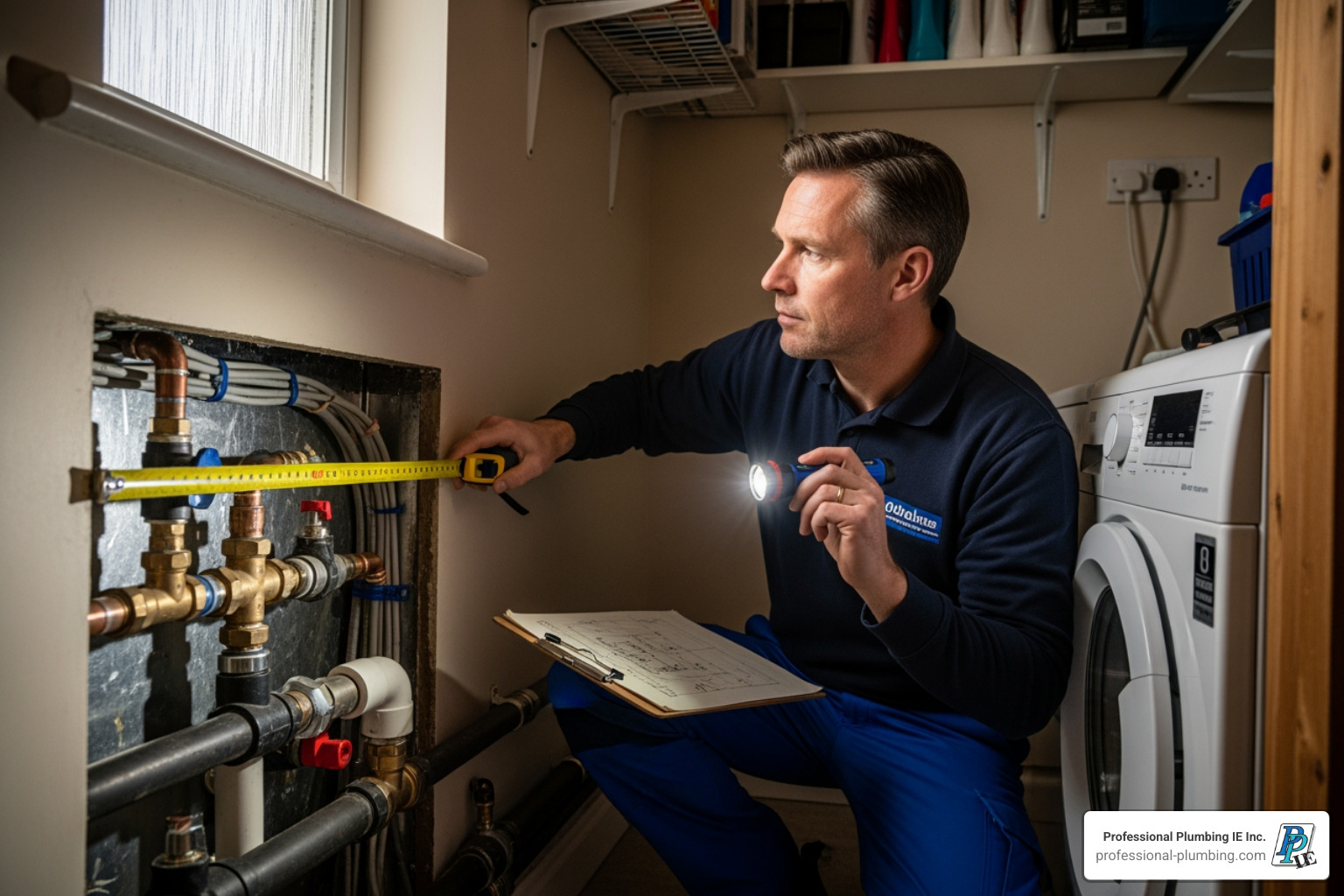
Choosing the right size for your unvented hot water tank is crucial. A tank that’s too small will leave you with cold showers, while one that’s too large wastes energy and money. To determine the correct size, we consider your household size, the number of bathrooms, and your family’s peak water usage. Factors like simultaneous showers and high-volume tubs influence the required capacity.
As a general guideline:
- 1-2 bedroom, 1 bathroom: 120-150 liters (30-40 gallons)
- 2-3 bedroom, 1 bathroom: 150-180 liters (40-48 gallons)
- 3-4 bedroom, 1-2 bathrooms: 180-210 liters (48-55 gallons)
- 4-5 bedroom, 2+ bathrooms: 210-300+ liters (55-80+ gallons)
These are just starting points. A professional assessment is recommended to account for your specific usage patterns and the tank’s recovery rate. See examples of our work in our Water Heating Project gallery.
Safety Features and Regulations
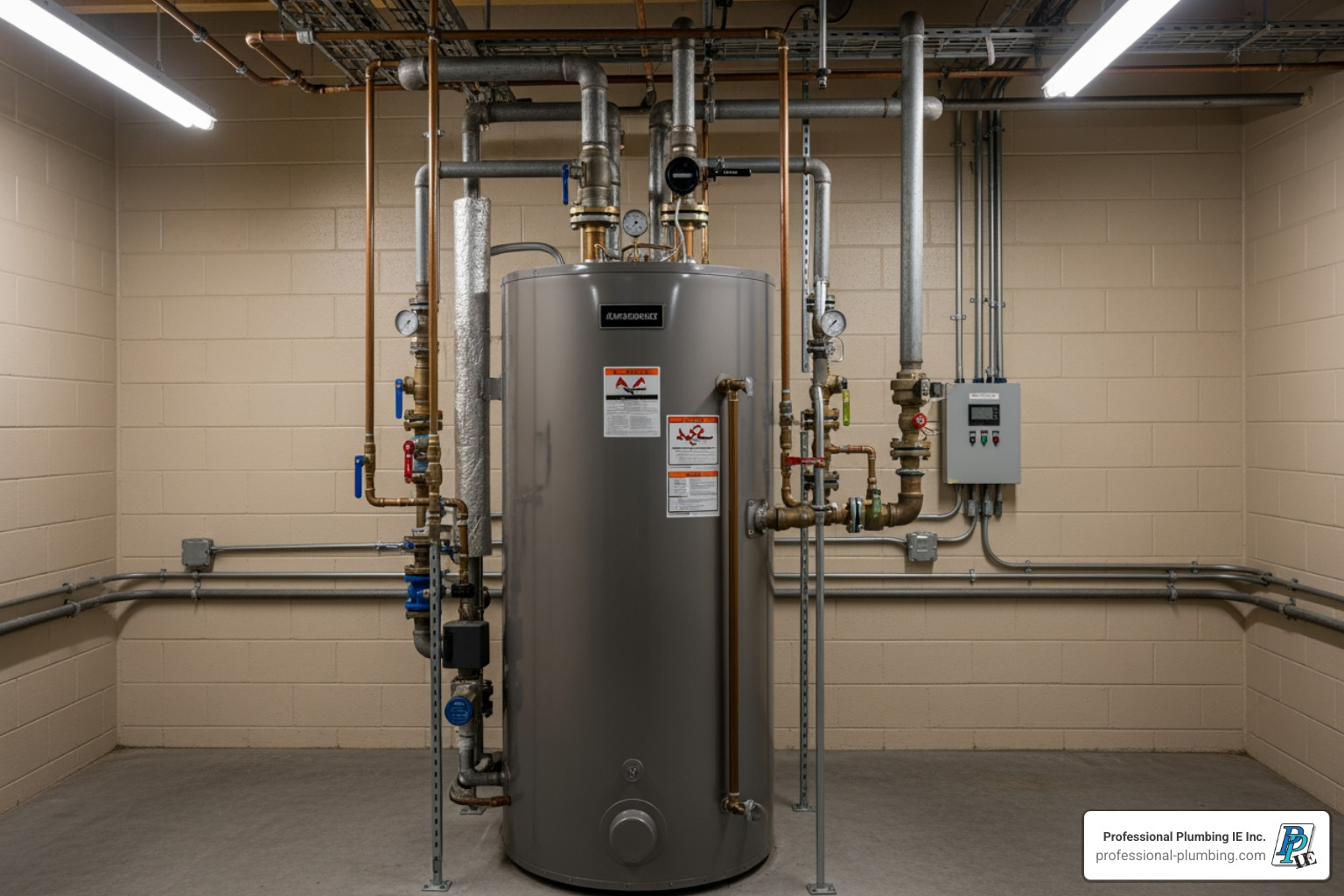
Safety is paramount with high-pressure unvented hot water tanks. Multiple safety features work together to protect your home and family.
- The pressure reducing valve controls the incoming water pressure to a safe level (usually 3 bar).
- The temperature and pressure relief valve (T&P valve) is a critical fail-safe that automatically releases water and steam if the temperature or pressure becomes dangerously high.
- The expansion vessel safely accommodates the expansion of water as it heats, preventing pressure buildup.
- A primary thermostat controls the water temperature, backed up by a thermal cut-out that shuts the system down in case of thermostat failure.
- A tundish provides a visible air gap in the discharge pipe, allowing you to see if the T&P valve is releasing water, which indicates a problem.
Due to these components and the risks of high pressure, unvented hot water tanks must be installed by a licensed, certified professional. This is not a DIY project. Our team is certified to install these systems according to all local California building codes, ensuring every safety device is fitted correctly. These strict standards, similar to global guidelines like the Building standards technical handbook 2022: domestic, are in place to prevent scalding and system failure.
Common Problems and When to Replace Your Cylinder
Even the best unvented hot water tank will eventually need repair or replacement. Recognizing the warning signs can help you decide the most cost-effective course of action and avoid emergency plumbing calls.
Most unvented cylinders have a lifespan of 10 to 15 years. This can be extended with regular maintenance but may be shortened by factors like hard water.
Troubleshooting Common Cylinder Issues
Your unvented hot water tank will show clear signs when it needs attention. Here are common issues and their likely causes:
- No hot water: Check for a tripped circuit breaker first. Other causes include a faulty heating element (direct systems), boiler issue (indirect systems), or a failed thermostat.
- Running out of hot water quickly: The tank may be too small for your needs, a heating element could be failing, or the thermostat setting is too low.
- Water is too hot: This is a safety risk, often caused by a faulty thermostat or thermal cut-out. It requires immediate professional service.
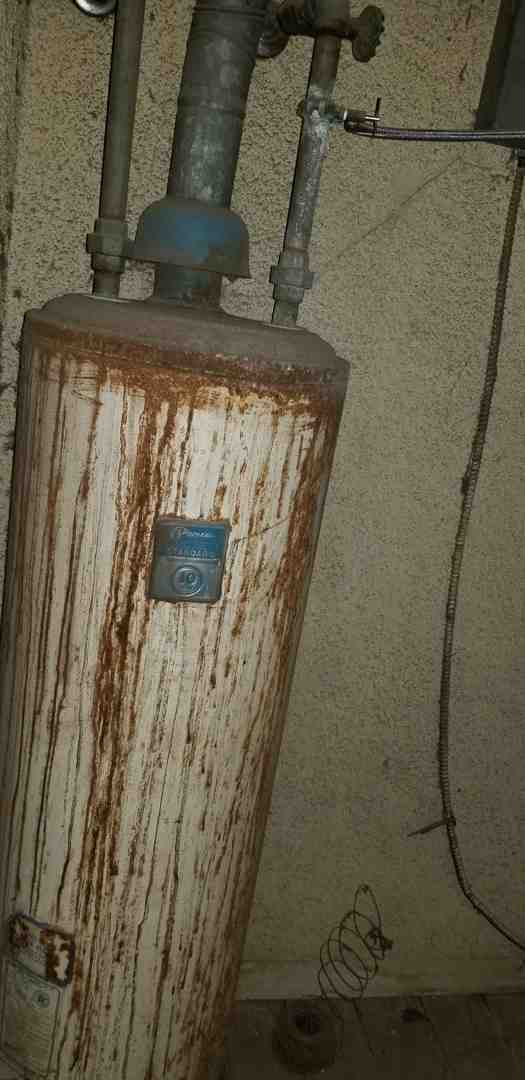
- Discolored water: Rusty or brown water usually indicates internal tank corrosion.
- Strange smells: A “rotten egg” smell is often caused by a reaction with the anode rod inside the tank and is typically fixable.
- Unusual noises: Banging or rumbling sounds suggest sediment buildup, which reduces efficiency. Hissing may indicate a leak.
- Loss of water pressure: This could be a mains supply issue, a closed valve, or a blockage.
Given the high-pressure nature of these systems, troubleshooting and repairs should be left to a professional. For more details, see Signs that your Water Heater Needs Repair Pt. 1.
Signs It’s Time for a Replacement
Knowing when to replace versus repair can save you significant money. Here are key signs that it’s time for a replacement:
- Age: If your unvented hot water tank is over 10-15 years old, it’s likely losing efficiency and nearing the end of its service life.
- Frequent Repairs: If you’re constantly calling for repairs, the cumulative cost can quickly exceed the price of a new, reliable unit.
- Rusty Water: Brown or rusty water is a clear sign of internal tank corrosion, which cannot be repaired.
- Tank Leaks: Water leaking from the body of the tank itself indicates a structural failure. This requires immediate replacement to prevent water damage.
- Rising Energy Bills: An unexplained increase in your energy costs often means your tank is working inefficiently due to age or sediment buildup.
Replacing an old unit is an investment in your home’s safety, efficiency, and protection from water damage. If you’re in Riverside and considering a new system, learn about our services at Water Heater Replacement Riverside.
Conclusion: Is an Unvented Hot Water Tank the Best Choice?
So, is an unvented hot water tank the right choice for your home? For many homeowners in Orange County, Riverside, Corona, and Fountain Valley, the answer is yes. The benefits of high-pressure hot water, space-saving design, and installation flexibility make them a superior choice for modern living. They deliver powerful showers, free up loft space, and can be installed almost anywhere.
While the upfront investment is higher and they require annual maintenance from a certified installer, many find the long-term gains in comfort, efficiency, and property value are well worth it.
However, an unvented system isn’t for everyone. If your home has low mains pressure, incompatible older pipework, or if you’re on a tight budget, a vented system might be a more practical choice.
Making an informed decision is key. With nearly 40 years of experience, the team at Professional Plumbing Inc. provides expert guidance. We assess your home’s plumbing and usage patterns to recommend a solution that fits your needs and budget.
If you’re tired of weak water pressure and are ready to upgrade, we can help you find the perfect hot water solution. Contact us for expert water heater services in Riverside to discuss what makes sense for your home.