
Hot Water Tank Service: 5 Worry-Free Tips
Why Your Hot Water Tank Deserves More Attention Than It Gets
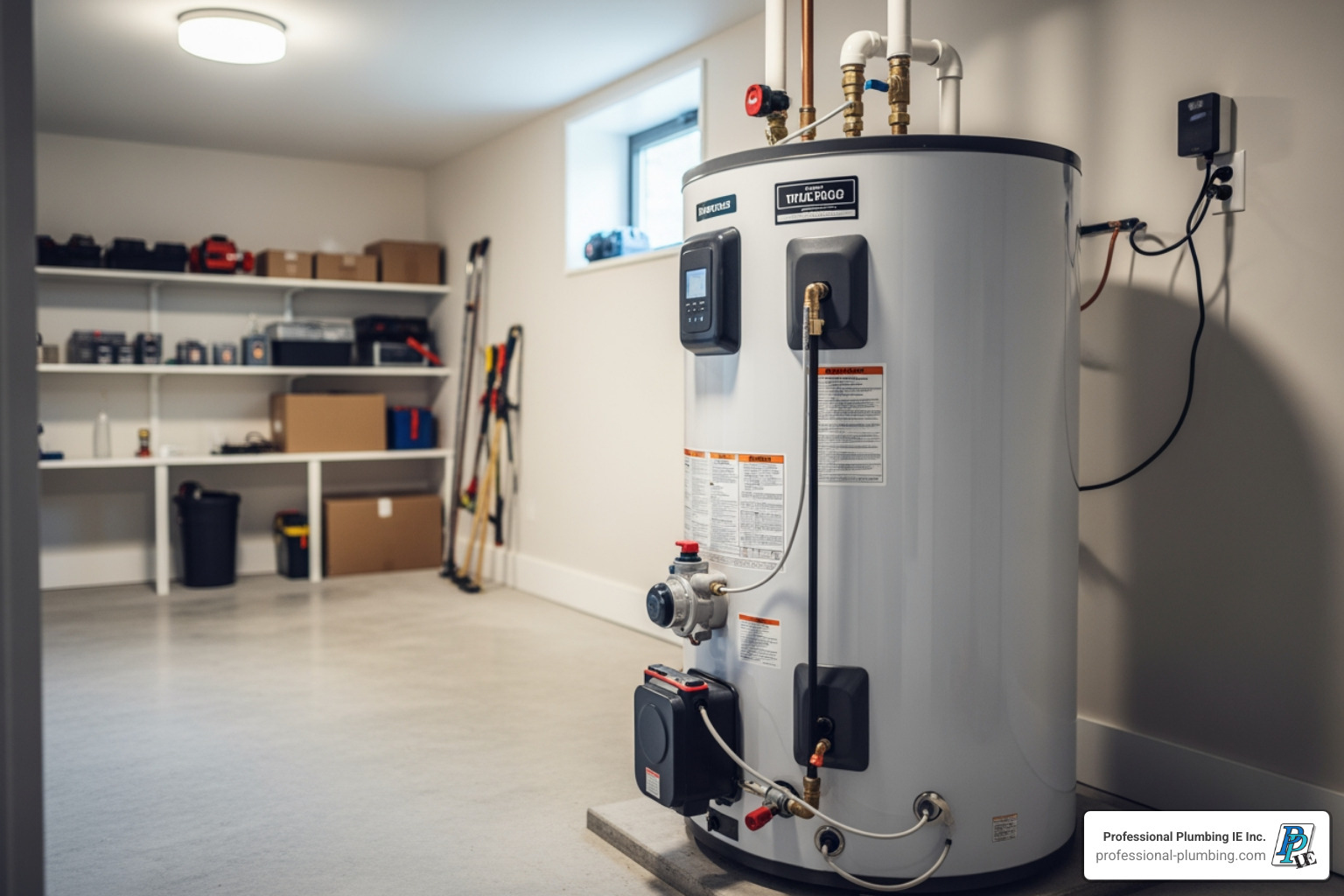
Hot water tank service is the routine maintenance that keeps your water heater running efficiently and safely. While most homeowners ignore their water heater until it fails, regular service prevents costly breakdowns, reduces energy bills, and can significantly extend your unit’s lifespan.
Quick Answer: What Hot Water Tank Service Includes
- Annual flushing to remove sediment buildup
- Testing the temperature and pressure relief valve
- Inspecting the anode rod to prevent tank corrosion
- Checking for leaks and testing heating elements
- Adjusting thermostat settings for optimal efficiency
Your water heater accounts for roughly 20% of your home’s energy consumption, second only to your HVAC system. Yet, it’s often forgotten until you’re facing a cold shower or a flooded utility room.
Most tank water heaters last 8 to 12 years, while tankless models can reach 20 years or more. These lifespans depend heavily on maintenance; a neglected tank might fail in 7 years, while a well-maintained one could surpass 15. Understanding what service entails helps you make informed decisions, whether you’re hearing strange noises or just want to ensure your aging tank is safe. Some tasks are DIY-friendly, but others require a licensed professional.
Warning Signs: How to Tell Your Water Heater Needs Help
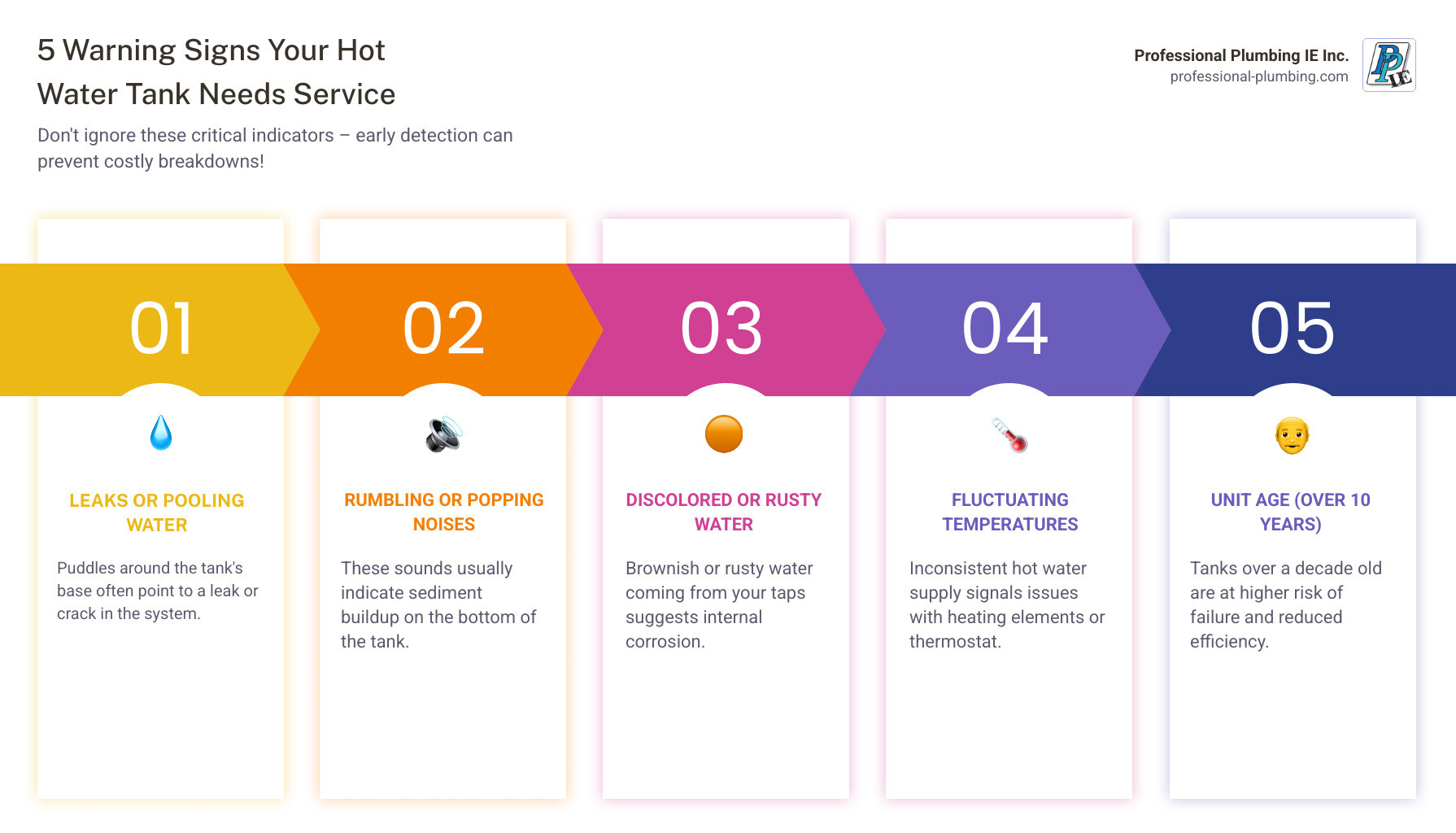
Most water heaters show signs of trouble before they fail completely. Recognizing these warnings early can save you from emergency repairs and water damage.
- Water pooling around the base: This is an urgent sign. While it could be a loose valve, a leak from the tank itself indicates internal corrosion and means a replacement is necessary.
- Rumbling or popping noises: These sounds are caused by sediment buildup at the bottom of the tank. The sediment forces your heater to work harder, wastes energy, and can damage the tank over time.
- Rusty or discolored water: Brown or cloudy water often means the inside of the tank is corroding or the anode rod is depleted. This compromises the tank’s integrity and usually signals that a replacement is needed soon.
- Inconsistent water temperature: Fluctuating temperatures often point to a failing heating element or thermostat.
- No hot water (or it runs out fast): For gas models, check the pilot light. For electric heaters, it could be a failed heating element or thermostat. A broken dip tube can also be the culprit.
- Reduced hot water pressure: If you only notice low pressure with hot water, sediment buildup in the tank or pipes could be restricting flow.
- Age of the unit: A tank water heater over 10 years old needs close monitoring. As units age, their efficiency declines and the risk of failure increases.
For more details, see our guides: Signs that your water heater needs repair – Pt. 1 and Signs that your water heater needs repair – Pt. 2.
Basic Troubleshooting Before You Call
Before calling for hot water tank service, try these quick checks:
- Check the breaker box (Electric): A tripped breaker can cut power. If it trips again after resetting, you have an electrical issue that requires a professional.
- Check the pilot light (Gas): Follow the instructions on your tank to relight it. If you smell gas, leave the area immediately and call for help.
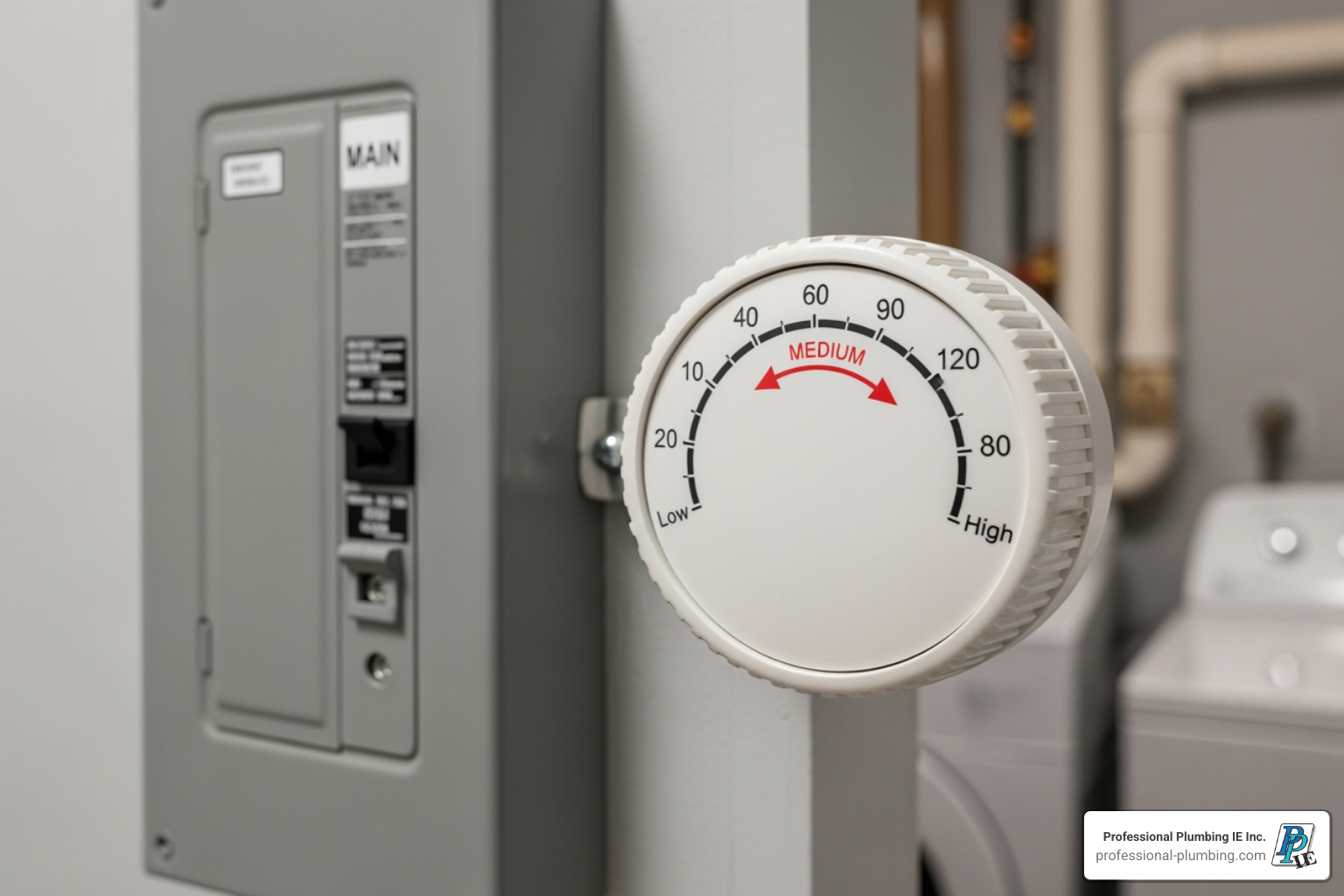
- Verify thermostat settings: Ensure the thermostat hasn’t been accidentally changed. The recommended setting is 120°F for a balance of safety and efficiency.
What to Do in an Emergency Leak
If your water heater is leaking, act fast to minimize damage:
- Turn off the water supply: Locate the cold water shut-off valve on the pipe leading into the tank (usually near the top) and turn it clockwise.
- Shut off the power source: For a gas heater, turn the gas control knob to “Off.” For an electric model, flip the corresponding breaker in your electrical panel.
- Call for professional help: Once the water and power are off, call us immediately. A leaking tank requires urgent attention.
Be prepared by learning where your shut-offs are located: Learn how to find and turn off your water and gas supply.
Your Guide to Professional Hot Water Tank Service and DIY Maintenance
Regular maintenance is key to a long-lasting, efficient water heater. Just like a car needs oil changes, your water heater needs periodic care to avoid breakdowns.
In areas like Riverside, Eastvale, and Corona, hard water is a major factor. Minerals settle as sediment at the bottom of your tank, insulating the water from the heat source. This forces the unit to work harder, wastes energy, and can cause damage. Adjusting your maintenance schedule for hard water is crucial.
DIY Hot Water Tank Service: What You Can Do
Several key tasks are simple enough for most homeowners:
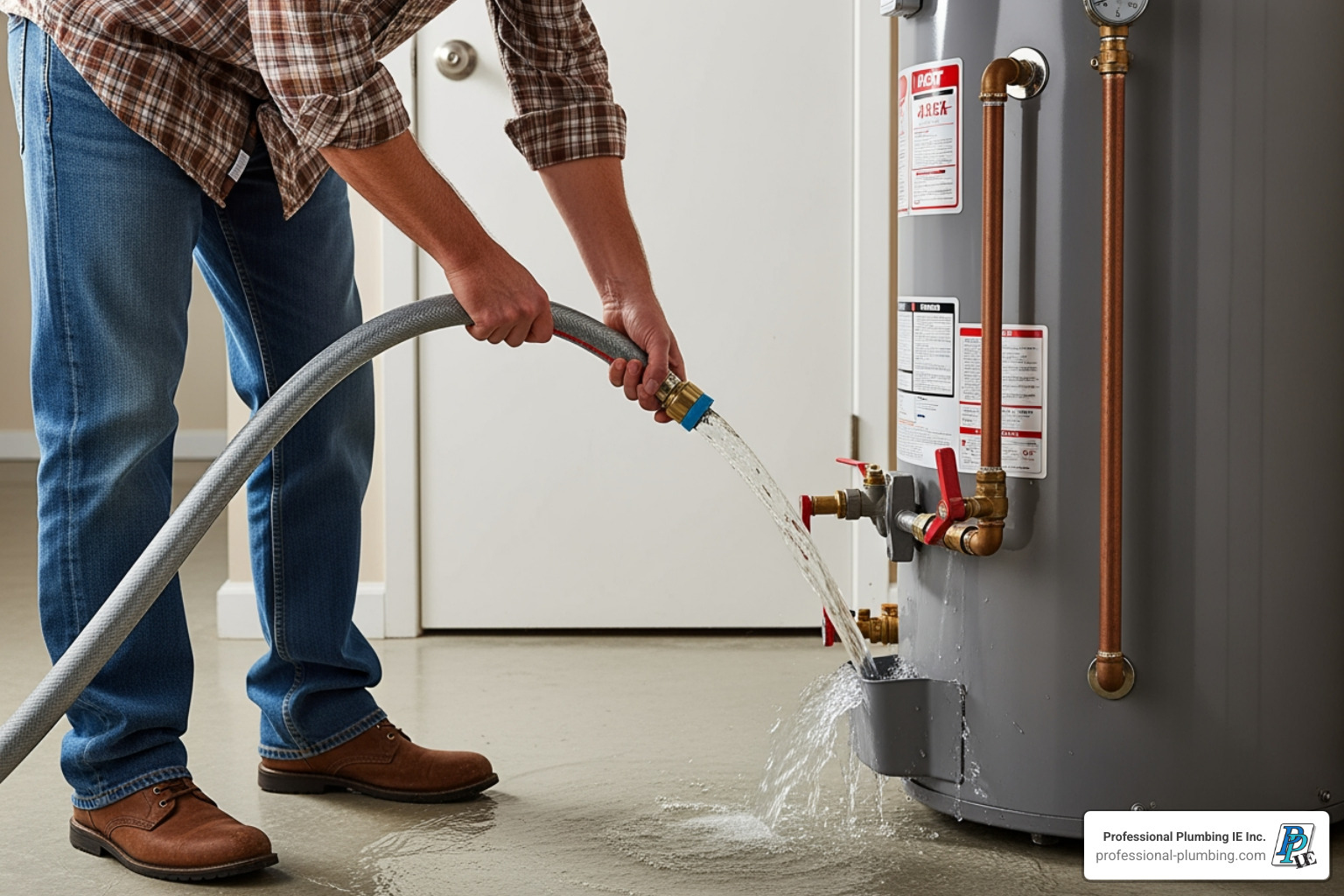
- Flush your tank: This is the most important DIY task. It removes sediment buildup. In the Inland Empire, plan to do this twice a year; otherwise, annually is fine. To flush, turn off the power/gas and water supply, attach a hose to the drain valve, and let it run until the water is clear. If the valve is blocked, call a professional.
- Test the T&P valve: The temperature and pressure relief valve is a critical safety feature. Annually, place a bucket under the discharge pipe and lift the test lever. Water should flow out and stop when you release it. If it doesn’t, the valve needs replacement.
- Check the anode rod: This “sacrificial” rod corrodes to protect your tank. Every five years, shut off the water, drain a few gallons, and unscrew the rod. If it’s less than half an inch thick or heavily corroded, replace it.
- Adjust your thermostat: Set it to 120°F to balance safety and efficiency.
The Value of Professional Hot Water Tank Service
Some jobs are best left to licensed technicians. At Professional Plumbing Inc., we handle the complex and dangerous aspects of hot water tank service to ensure your safety and your unit’s longevity.
Leave these tasks to the pros:
- Electrical repairs: Working with high-voltage components like heating elements and thermostats is dangerous without proper training.
- Gas line work: Gas leaks can lead to explosions or carbon monoxide poisoning. Any work on gas lines, burners, or thermocouples requires a professional.
- Major leaks or clogged valves: A leak from the tank itself means it’s time for a replacement. A severely clogged drain valve can break if forced, causing a flood. We can assess the situation and handle it safely.
- Comprehensive diagnostics: Our technicians inspect the entire system, including the dip tube, ventilation, and safety mechanisms, catching problems before they become emergencies.
Professional service also protects your warranty and ensures compliance with local codes. A smart approach combines your DIY efforts with our expert service for a water heater that lasts.
Tank vs. Tankless & Gas vs. Electric: A Maintenance Comparison
The type of water heater you own—tank or tankless, gas or electric—dictates its maintenance needs, lifespan, and efficiency. Understanding these differences is key to proper hot water tank service.
| Feature | Tank Water Heater (Conventional) | Tankless Water Heater (On-Demand) |
|---|---|---|
| Maintenance | DIY: Annual flushing (semi-annual for hard water), T&P valve test. Pro: Anode rod check/replacement, complex repairs. | DIY: Cleaning air intake filter. Pro: Annual descaling/flushing (more for hard water), specialized component checks. |
| Lifespan | 8-12 years | 15-20+ years |
| Efficiency | Suffers from standby heat loss by constantly heating stored water. | Heats water on demand, reducing energy use by up to 30%. |
| Space | Requires significant floor space for the tank. | Compact and wall-mounted, saving space. |
| Hot Water Supply | Limited by tank capacity. | Provides an endless supply of hot water. |
Traditional tank heaters store and constantly heat 30-80 gallons of water. Their main maintenance needs are regular flushing to remove sediment (especially with hard water) and periodic anode rod replacement to prevent corrosion.
Tankless heaters heat water on demand, saving energy and space. Their primary maintenance is professional descaling to remove mineral buildup from the heat exchanger, which is crucial in hard water areas. Learn more about the benefits of tankless water heaters.
Gas vs. Electric Water Heater Issues
Your fuel source also determines common problems:
- Gas Water Heaters: Common issues include a pilot light that won’t stay lit (often a faulty thermocouple), a malfunctioning gas valve, or blocked ventilation (a safety hazard). Air filters may also need cleaning.
- Electric Water Heaters: These are mechanically simpler but prone to different issues. A burned-out heating element is a frequent problem, leading to lukewarm water. Faulty thermostats can cause temperature fluctuations, and tripped circuit breakers often signal an electrical fault within the unit.
Key Components of a Water Heater
Understanding the parts of your water heater helps with troubleshooting:
- Anode Rod: A “sacrificial” rod that corrodes to protect the steel tank from rust.
- Dip Tube: Directs incoming cold water to the bottom of the tank for heating. A broken tube results in lukewarm water.
- T&P Relief Valve: A critical safety device that releases excess temperature and pressure.
- Drain Valve: Used to flush sediment from the tank.
- Heating Element/Burner: The component that heats the water (immersion elements for electric, a burner for gas).
- Thermostat: Regulates water temperature.
Repair or Replace? Making the Right Financial Decision
Deciding whether to repair or replace a failing water heater is a major financial decision. Sometimes, investing in a new unit is more cost-effective than continuing to fix an old one.
Consider the Age and Lifespan
A key factor is your unit’s age. Traditional tank water heaters last 8 to 12 years, while tankless models can last 15 to 20 years or more. If your tank heater is over 10 years old, replacement is often the smarter choice, as it’s nearing the end of its expected service life.
The 50% Rule
A good guideline is the 50% rule: if a repair costs 50% or more of a new unit’s price, replacement is usually the better investment. Pouring money into an aging system often leads to more breakdowns and higher costs down the road.
Clear Signs It’s Time to Replace
Certain red flags strongly indicate that replacement is necessary:
- Frequent Repairs: Needing service multiple times in a year suggests the unit is failing.
- Declining Efficiency: Rising energy bills or an inability to meet your hot water needs are signs of a worn-out heater.
- Tank Corrosion or Leaks: A tank that is leaking due to rust cannot be repaired. Rusty water is another sign of irreversible internal corrosion. For tankless units, a cracked heat exchanger also typically requires replacement.
Our team at Professional Plumbing Inc. provides honest assessments to help customers in Riverside, Eastvale, and surrounding areas make the best decision. We’ll explain your options clearly, whether it’s a simple repair or a high-efficiency upgrade. For more on our replacement services, visit our page on Water heater replacement in Riverside.
Frequently Asked Questions about Water Heater Maintenance
Here are answers to the most common questions we hear from homeowners in Riverside, Corona, and our other service areas.
How often should I have my hot water tank serviced?
We recommend a two-part approach. Schedule professional hot water tank service for an annual inspection. A licensed technician will check all safety devices, electrical components, and look for signs of corrosion. Between professional visits, you should flush your tank every six months to combat hard water sediment buildup. Tankless heaters require professional descaling at least annually.
How does maintenance impact my water heater’s lifespan and energy use?
The impact is significant. Regular maintenance directly extends your unit’s lifespan by preventing corrosion and damage from sediment. A well-maintained tank heater can last 12-15 years, while a tankless unit can exceed 20 years. It also improves energy efficiency by ensuring heat transfers effectively, which can reduce your water heating costs by up to 20%.
What are the biggest benefits of regular maintenance?
The top benefits make the effort worthwhile:
- Prevents costly breakdowns: Catching small issues early avoids expensive emergency repairs and potential water damage.
- Ensures safety: Regular checks of the T&P valve and gas unit venting prevent dangerous failures.
- Lowers energy bills: An efficient water heater uses less energy, saving you money every month.
- Extends equipment life: Proper care delays the need for a costly replacement.
- Provides peace of mind: Knowing your system is safe and reliable eliminates worry about sudden failures.
Conclusion: Ensure Your Home’s Comfort and Efficiency
Your water heater is essential to your home’s comfort and accounts for about 20% of your energy use. A commitment to regular hot water tank service is the best way to ensure it runs safely and efficiently.
As we’ve covered, recognizing warning signs, performing simple DIY tasks like flushing, and knowing when to call a professional for complex repairs are all part of smart ownership. The benefits are clear:
- Extended lifespan for your unit
- Improved energy efficiency and lower utility bills
- Prevention of costly breakdowns and water damage
- Improved safety for your family
- Peace of mind knowing your hot water is reliable
Investing in routine care saves thousands of dollars in the long run by delaying premature replacement.
For nearly 40 years, Professional Plumbing Inc. has provided families in Riverside, Eastvale, Corona, Norco, Jurupa Valley, and Mira Loma with guaranteed quality service at affordable rates. As a family-owned business, we’re committed to keeping your home running smoothly.
Don’t wait for an emergency. For expert assistance with any water heater issue, from routine checks to emergency repairs, explore our Water Heater Service. Let us help you keep the hot water flowing.


Pingback: Temporary Water Heater: Top Portable Power
[…] immediate hot water, preventing a complete disruption to your routine while you arrange for hot water tank service or a water heater replacement in Riverside. This is particularly vital in colder months or for […]