
Commercial Leak Repair: 3 Critical Steps
The Silent Threat: Why Even Small Leaks Demand Immediate Attention
Commercial leak repair is the process of identifying, diagnosing, and fixing water or gas leaks in business properties—from retail spaces and office buildings to restaurants and warehouses. It requires specialized detection equipment, rapid response, and expertise in large-scale plumbing systems to minimize business disruption and prevent costly property damage.
Quick Commercial Leak Repair Overview:
- Common Types: Plumbing leaks, roof leaks, slab leaks, underground pipe leaks, and gas leaks
- Warning Signs: Unexplained water bills, musty odors, water stains, wet floors, foundation cracks, or hissing sounds
- Immediate Actions: Shut off water supply, document damage, isolate affected areas, and call a professional immediately
- Detection Methods: Acoustic sensors, thermal imaging, video pipe inspection, and pressure testing
- Typical Repairs: Pipe replacement, epoxy lining, crack injection, flashing repair, and water extraction
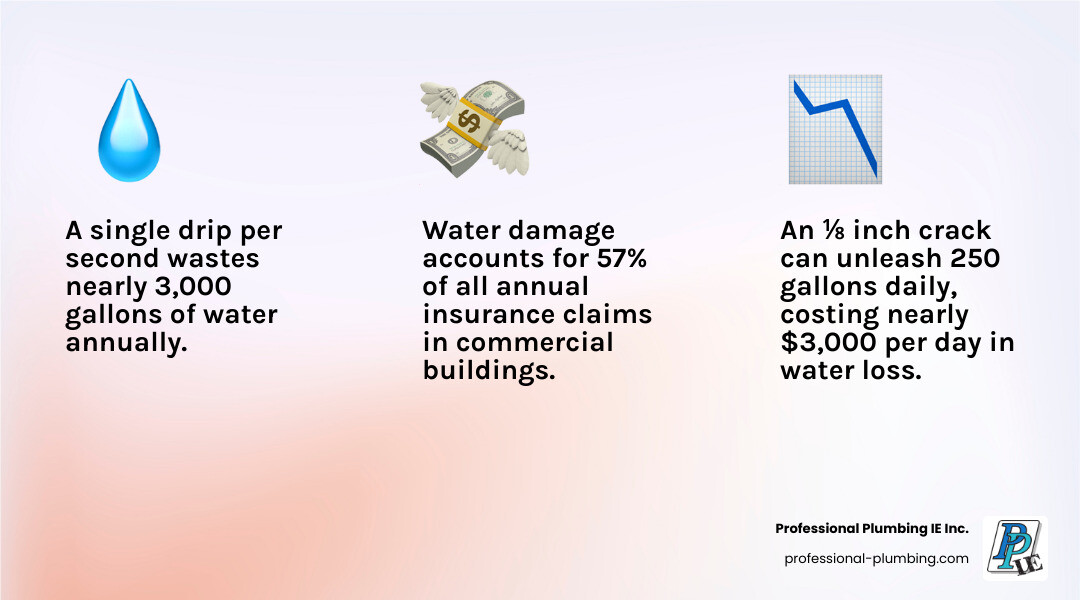
- Average Cost Impact: A minor ⅛ inch crack can release 250 gallons daily, costing nearly $3,000 per day in water loss alone
Managing a commercial building comes with countless responsibilities, but few threats are as insidious as water leaks. A single drip per second might seem harmless—maybe even ignorable when you’re juggling tenant complaints, maintenance schedules, and budget constraints. Yet that innocent drip adds up to nearly 3,000 gallons of water annually. That’s over 12 tons of water slowly undermining your building’s structural integrity, inflating your utility bills, and creating the perfect breeding ground for mold.
The stakes are even higher when you consider that water damage accounts for 57% of all annual insurance claims in offices and commercial buildings. Unlike residential properties, commercial spaces face unique challenges: complex plumbing networks spanning multiple floors, heavy daily usage from dozens or hundreds of occupants, and the constant pressure to keep business operations running without interruption.
Small leaks don’t stay small. In the semi-arid climate of the Inland Empire—where rapid temperature changes cause pipes to expand and contract—what starts as a minor seep can quickly escalate into burst pipes, foundation damage, or complete system failure. A ⅛ inch crack in commercial plumbing can release 250 gallons of water per day, translating to nearly $3,000 in daily losses before you even factor in repair costs, business interruption, or structural damage.
The good news? Early detection and professional repair can prevent these catastrophic scenarios. Modern leak detection technology allows specialists to pinpoint problems before they destroy drywall, compromise electrical systems, or force you to close your doors to customers.
I’m Chris Kirsten. With 40 years of plumbing experience serving the Inland Empire through Professional Plumbing IE Inc., I’ve seen how devastating ignored commercial leaks can become—and how quickly proper commercial leak repair restores peace of mind. This guide will walk you through protecting your investment.
Identifying the Source: Common Leaks and Their Telltale Signs
The first step in effective commercial leak repair is understanding where leaks commonly occur and recognizing their early warning signs. Commercial buildings, with their intricate systems and constant activity, are prone to various types of leaks. We’ve seen it all, from obvious drips to sneaky, hidden seeps that cause damage over time.
Plumbing System Leaks
The plumbing network in a commercial building is often extensive and under significant pressure, making it a prime candidate for leaks.
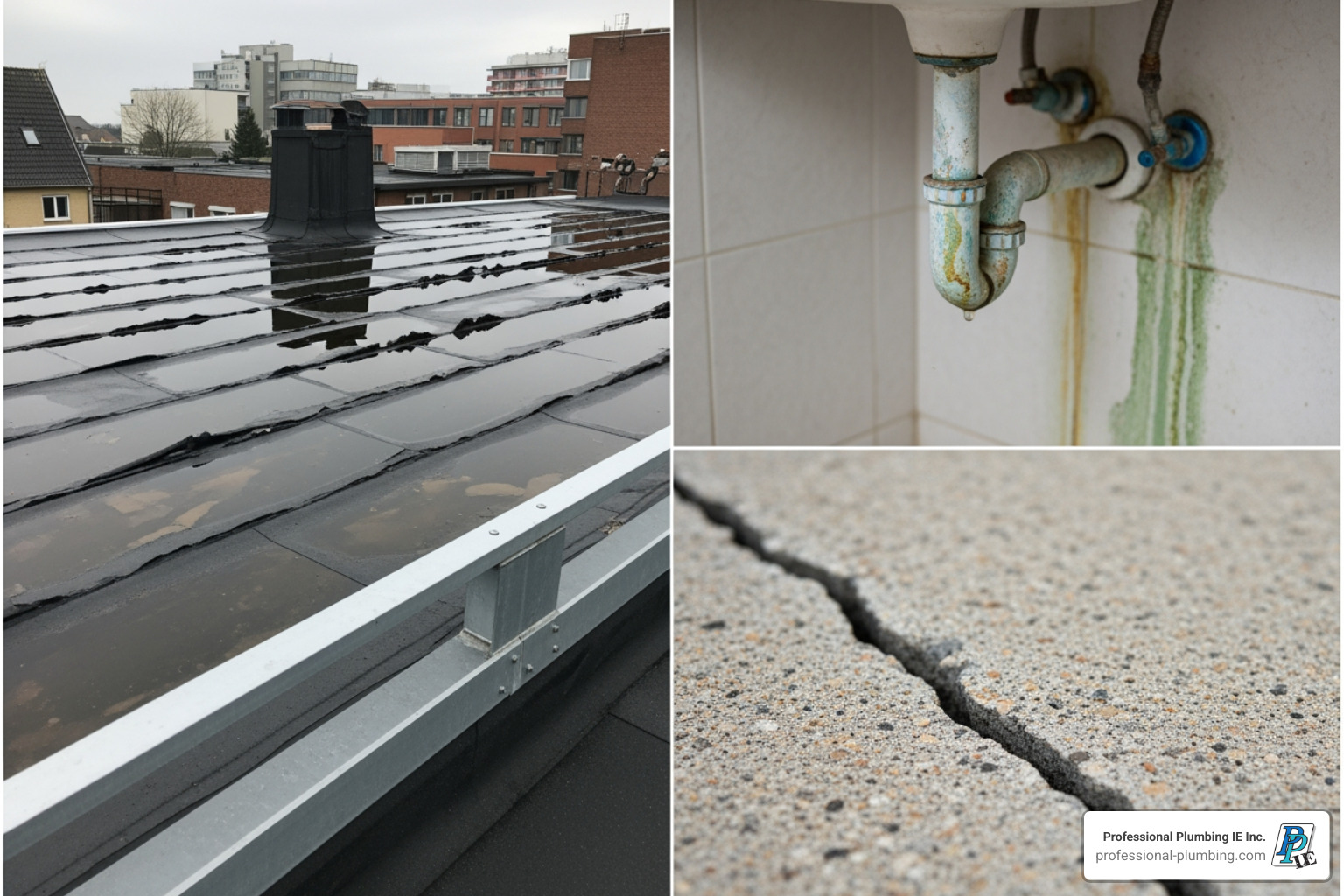
- Pipe Corrosion: Over time, pipes in older buildings can corrode and weaken, leading to pinhole leaks or bursts. This is a significant source of water damage and insurance claims in commercial buildings.
- Fixture Failure: Faucets, toilets, and other fixtures get heavy use in commercial settings. A worn-out faucet washer can cause a constant drip, wasting thousands of gallons annually. A faulty toilet flapper can silently send hundreds of gallons down the drain daily, increasing water bills and causing damage.
- High Water Pressure: While necessary for multi-story buildings, excessively high water pressure can strain pipes and connections, leading to leaks.
- Commercial Kitchens: These are high-stress areas with numerous connections, grease traps, and drains, all susceptible to blockages and leaks.
- Restroom Leaks: Beyond faucets and toilets, urinal pipes, supply lines, and drain connections can fail, often going unnoticed until significant damage has occurred.
If you’re noticing unexplained puddles, water stains, or a sudden spike in your water bill, your plumbing system might be crying out for help. For a deeper dive into what to look for, check out our guide on Signs That Your Plumbing is Failing.
Roof and Building Envelope Leaks
Commercial roofs, especially flat or low-sloped ones common in the Inland Empire, are constantly exposed to the elements and are a frequent source of leaks.
- Ponding Water: Standing water on a flat roof, often due to poor drainage, accelerates material degradation and can find its way through even tiny cracks.
- Damaged Flashing: The seals around vents, skylights, and HVAC units are common weak points. Damaged flashing allows water to seep into the building.
- Aged Roofing Materials: UV exposure and weather wear down roofing materials over time, making them brittle and prone to cracking.
- Clogged Drains: Gutters and downspouts blocked by debris can cause water to back up and overflow, leading to leaks along the roofline or walls.
- Telltale Signs: Look for water stains on ceilings or walls, musty odors, and active drips during or after rain. Water can travel, meaning a leak’s source may not be directly above the visible damage.
Underground and Slab Leaks
These are among the trickiest leaks to detect because they’re out of sight, often beneath concrete foundations or buried in the ground.
- Sudden Bill Spikes: An unexplained, significant increase in your water bill is a strong indicator of an underground or slab leak. A leak just 1/32nd of an inch in diameter can waste about 6,300 gallons of water per month!
- Hot Spots on Floor: A warm spot on the floor can indicate a hot water line leak beneath a slab.
- Sound of Running Water: Hearing the persistent sound of running water when all fixtures are off is a classic sign.
- Foundation Cracks or Heaving: Water pooling under a slab can compromise the foundation, leading to cracks in walls or floors.
- Wet Soil Patches: Outside, unusually wet soil or extra-lush vegetation can point to a leaking underground water line.
- How They Differ: Underground and slab leaks are particularly challenging in commercial properties. Their hidden nature means symptoms might go unnoticed for longer, leading to severe structural damage and substantial water waste.
For more information on these elusive leaks, visit our page on How to Detect a Slab Leak Under a Concrete Floor and learn about our Slab Leaks services.
Gas Leaks
While not a water leak, gas leaks are an equally critical issue in commercial settings, posing immediate safety risks.
- Rotten Egg Smell: Natural gas is odorless, but utility companies add mercaptan, a chemical that gives it a distinctive rotten egg smell to make leaks detectable.
- Hissing Sounds: A hissing or whistling sound near a gas line or appliance indicates gas is escaping.
- Dead Vegetation: Patches of dead vegetation near an underground gas line could be due to a leak poisoning the soil.
- Immediate Action Required: Gas leaks are extremely dangerous. If you suspect one, evacuate the building immediately, call 911, and then contact a professional gas leak service. Do not use electrical switches, phones, or anything that could create a spark.
For crucial safety information, please read our guide on What to Do If You Suspect a Gas Leak or learn about our Gas Leak Riverside services.
The High Cost of Delay: Consequences of Unaddressed Commercial Leaks
Ignoring a leak in your commercial property is like ignoring a slow-burning fuse. It will eventually lead to an explosion of problems, far more costly and disruptive than the initial repair. We’ve seen how a small, manageable issue can spiral into a crisis when left unattended.
Financial Implications
- Skyrocketing Water Bills: Even a small, continuous drip wastes thousands of gallons annually. An ⅛ inch crack can waste 250 gallons daily, leading to an extra $3,000 on your water bill each day. These costs add up quickly, directly impacting your bottom line.
- Exorbitant Repair Costs: The longer a leak goes unnoticed, the more extensive the damage. What might have been a simple pipe patch can escalate to replacing drywall, flooring, structural elements, or even entire sections of your plumbing system.
- Insurance Claims and Premiums: Water damage is the predominant cause of property loss in offices and other commercial buildings, accounting for 57% of all annual insurance claims. Frequent claims can lead to increased insurance premiums, further straining your budget.
- Business Interruption: Depending on the severity and location of the leak, you might have to close down parts of your business, or even the entire facility, for repairs. This means lost revenue, disrupted operations, and potential damage to your business’s reputation.
Structural Damage
Water leaks gradually undermine the structural soundness of your building. Persistent moisture can:
- Weaken Building Materials: Wood, drywall, and insulation can rot, swell, or disintegrate.
- Corrode Metal Components: Steel beams and other metal structures can rust, compromising their integrity.
- Damage Foundations: Water accumulating under a slab can cause shifting, cracking, and long-term foundational issues, potentially leading to costly structural repairs.
- Compromise Electrical Systems: Water and electricity are a dangerous combination. Leaks near electrical wiring can lead to shorts, power outages, and fire hazards.
Tenant Dissatisfaction
In multi-tenant commercial properties, leaks can directly impact your tenants:
- Property Damage: Tenants’ inventory, equipment, or personal belongings can be damaged.
- Disruption: Repairs can be noisy and intrusive, affecting their business operations or comfort.
- Health Concerns: Mold growth from leaks can pose severe health risks, leading to tenant complaints and potential legal issues.
Health Hazards
One of the most insidious consequences of water leaks is the growth of mold and mildew.
- Mold Growth: Mold thrives in damp, dark environments. It can begin to grow within 24-48 hours of water exposure. Mold not only causes unpleasant musty odors but also poses severe health risks such as respiratory symptoms, asthma, and allergic reactions.
- Pest Infestation: Damp environments also attract unwanted pests like roaches and rodents, creating additional health and sanitation problems for your commercial property.
Ignoring commercial leaks isn’t just about a little extra water; it’s a gamble with your finances, your building’s integrity, and the health and satisfaction of everyone within its walls.
The Professional Commercial Leak Repair Process: From Detection to Resolution
When a leak strikes, rapid response and expert intervention are crucial. Our approach to commercial leak repair is systematic, leveraging advanced technology and decades of experience to minimize disruption and provide lasting solutions.
Step 1: Immediate Actions for Building Managers
Finding a leak can be stressful, but knowing what to do immediately can significantly mitigate damage and costs.
- Shut Off Water Main: Your absolute first step. Locate your building’s main water shut-off valve and turn it clockwise until the water flow stops. This prevents further water from entering the system.
- Isolate Electricity: If the leak is near electrical components, turn off power to the affected area at the main breaker to prevent electrical hazards. Safety first!
- Contain the Damage: Use buckets, towels, or wet/dry vacuums to collect pooling water. Move valuable equipment, furniture, and inventory away from the affected area.
- Document Everything: Take photos and videos of the leak and any resulting damage. This will be invaluable for insurance claims and for our technicians to assess the situation.
- Notify Tenants/Occupants: Inform anyone in the affected area about the leak and any necessary temporary closures or safety precautions.
- Call a Professional Immediately: Even if you’ve stopped the water, the source needs to be accurately identified and permanently repaired. The faster we get there, the less damage and disruption your business will face.
For more detailed guidance on emergency situations, consult our Emergency Plumbing Repair Riverside Guide.
Step 2: Advanced Leak Detection Technology
Gone are the days of tearing open walls and floors on a hunch. Modern commercial leak repair relies on non-invasive, specialized equipment to pinpoint the exact source of a leak, saving you time, money, and unnecessary structural damage.
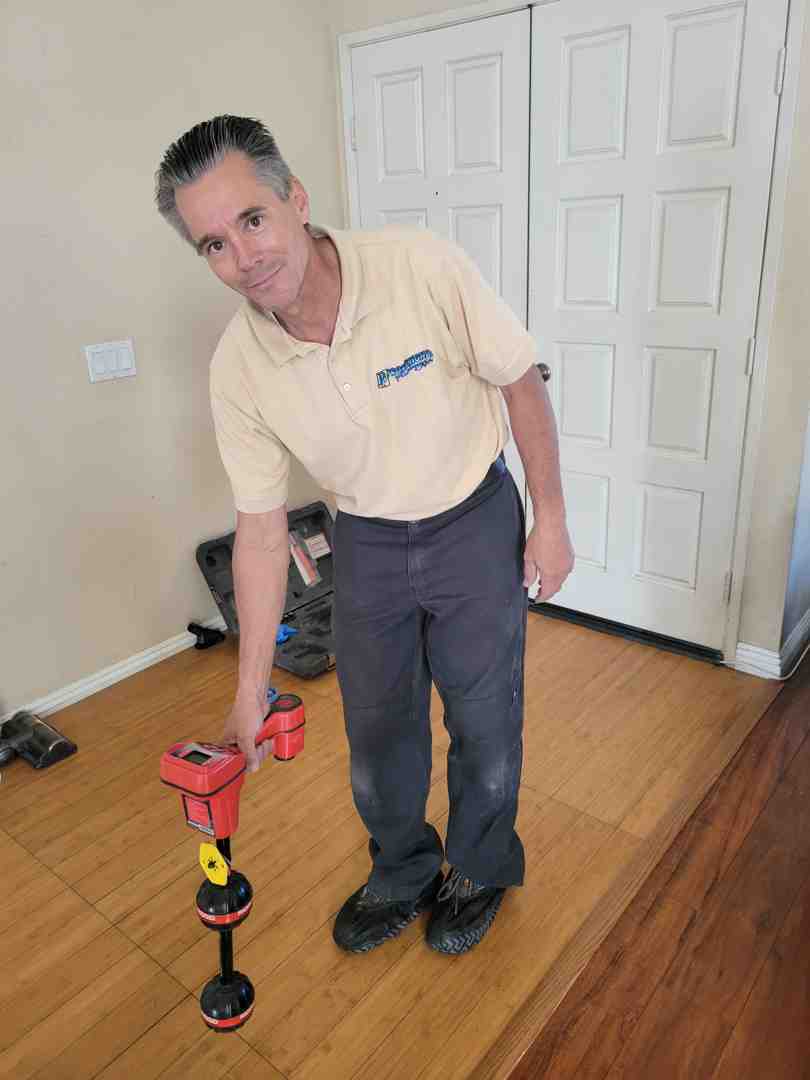
- Acoustic Sensors: These highly sensitive listening devices can detect the faint sound of water escaping from pipes, even those buried underground or behind walls. Our technicians can follow the sound to narrow down the leak’s location.
- Thermal Imaging Cameras: These cameras detect minute temperature differences. Water escaping from a hot water pipe, for instance, will create a distinct thermal signature on a wall or floor, even if it’s not visible to the naked eye.
- Infrared Cameras: Similar to thermal imaging, infrared technology helps us “see” moisture in areas where it shouldn’t be, without intrusive demolition.
- Video Pipe Inspection: For drain and sewer lines, we use small, high-resolution cameras that snake through pipes, allowing us to visually inspect their interior for cracks, blockages, or breaks.
- Smoke Testing: In some cases, non-toxic smoke is introduced into the plumbing system. Where smoke escapes, a leak is present, often used for sewer lines or roof systems to detect breaches.
- Non-Invasive Methods: Our commitment is to minimize intrusion to your property. These technologies allow us to accurately diagnose leaks with minimal, if any, demolition, preserving your building’s integrity and reducing repair time.
Technology plays a pivotal role in modern commercial leak repair. These tools, combined with our technicians’ expertise, allow us to precisely locate leaks that might otherwise remain hidden, preventing them from causing further damage or escalating into larger, more expensive problems.
Step 3: Key Strategies for Rapid Commercial Leak Repair
Once the leak is detected, our focus shifts to rapid, effective, and lasting commercial leak repair. Our strategies are custom to the specific type and location of the leak.
- Accurate Diagnosis: The first step in any repair is understanding the root cause of the leak, not just patching the symptom. This ensures the repair is permanent.
- Trenchless Pipe Repair: For underground or slab leaks, trenchless methods like pipe lining or pipe bursting can often repair or replace damaged pipes without extensive excavation, preserving your landscaping and property structure.
- Epoxy Lining: This technique involves applying an epoxy resin coating to the inside of pipes, sealing small leaks and reinforcing the pipe from within, often extending its lifespan.
- Pipe Replacement: For severely damaged or corroded sections, targeted pipe replacement ensures a durable solution. We use materials appropriate for commercial applications and local building codes.
- Crack Injection: For foundation cracks or concrete slabs, specialized sealants can be injected to stop water intrusion and restore structural integrity.
- Water Extraction and Dehumidification: After the leak is fixed, thorough water extraction and professional-grade dehumidification are essential to prevent secondary damage like mold growth and structural weakening. This comprehensive remediation is part of our service, ensuring your property is returned to a safe and dry condition.
Our goal is always to provide efficient timelines and comprehensive remediation, using specialized skills and equipment to deliver long-lasting solutions that protect your commercial investment.
Proactive Protection: Preventing Future Leaks in Your Commercial Property
An ounce of prevention is worth a pound of cure, especially when it comes to commercial leaks. Proactive measures can save your business from the significant financial and operational headaches caused by unexpected water damage.
Developing a Preventative Maintenance Plan
A robust preventative maintenance plan is your best defense against future leaks.
- Regular Inspections: Schedule professional plumbing inspections at least once a year, or twice a year (spring and fall) for roof systems. Our technicians can identify aging pipes, corroded fittings, and potential weak spots before they become full-blown leaks. This includes checking high-stress areas like commercial kitchens and restrooms.
- Drain Maintenance: Regularly clear debris from roof drains, gutters, and downspouts. For internal plumbing, consider routine drain cleaning to prevent blockages that can lead to overflows and leaks. More info about Drain Services can help keep your systems flowing freely.
- Water Pressure Monitoring: Ensure your building’s water pressure is within safe limits. Excessively high pressure can prematurely wear out pipes and fixtures.
- Staff Training: Educate your maintenance staff or key personnel on the early signs of leaks and the immediate steps to take (like shutting off the main water supply).
- Seasonal Preparation: In the Inland Empire, rapid temperature changes can stress pipes. Ensure exposed pipes are adequately insulated, especially before colder months, to prevent freezing and bursting.
- Understanding Your Building’s History: Insights into your building’s age, construction, and previous repair history can reveal vulnerabilities. Older buildings, for instance, might be more prone to certain types of leaks due to aging materials or outdated construction methods. This kind of knowledge can reveal insights into potential future issues.
Why Choose a Specialist for Commercial Leak Repair?
When it comes to commercial leak repair, not all plumbers are created equal. While a general plumber might handle basic residential issues, commercial properties demand a higher level of expertise, specialized equipment, and a deep understanding of complex systems.
| Feature | Specialized Commercial Plumber (e.g., Professional Plumbing IE Inc.) | General Plumber |
|---|---|---|
| Equipment | Advanced acoustic, thermal, video inspection tools, trenchless tech | Basic tools, may lack specialized detection |
| Experience | Decades with large-scale, complex commercial plumbing and roofs | Primarily residential, smaller systems |
| System Knowledge | HVAC lines, industrial kitchens, multi-story drainage, fire lines | Standard residential fixtures and pipes |
| 24/7 Availability | Often provides emergency services for minimal business disruption | Standard business hours, limited emergency |
| Commercial Codes | Up-to-date on local commercial building and safety regulations | Primarily residential codes |
| Problem Solving | Focus on root cause, comprehensive remediation, long-term solutions | May offer temporary fixes, less comprehensive |
| Efficiency | Faster diagnosis, non-invasive methods, quicker resolution | Potentially slower, more invasive methods |
Choosing the right commercial leak repair contractor is critical. Look for a company with a proven track record, experience in commercial settings (like our 40 years of service in the Inland Empire), proper licensing and insurance, and a commitment to guaranteed quality service. We pride ourselves on being that specialized partner for businesses in Eastvale, Riverside, Corona, Norco, Jurupa Valley, and Mira Loma.
Frequently Asked Questions about Commercial Leak Repair
We understand that commercial property owners and managers have specific concerns when facing a leak. Here are some of the most common questions we receive:
How much does commercial leak detection cost?
The cost of commercial leak detection varies depending on several factors:
- Type and Location of Leak: A simple faucet leak is cheaper to locate than a hidden slab or underground main line leak.
- Complexity of the Building: Larger, older, or more complex properties require more time and specialized equipment for accurate detection.
- Technology Used: Advanced non-invasive technologies like acoustic sensors or thermal imaging have an initial diagnostic fee but save significantly on demolition and repair costs.
- Extent of Damage: If the leak caused secondary damage (e.g., mold), the overall cost will include remediation beyond the leak repair.
At Professional Plumbing IE Inc., we believe in transparency. We offer complimentary plumbing diagnostics. If we find an issue, our professional will explain it, review your best repair options, and provide an upfront price before any work begins. This ensures you understand the investment and value of a proper repair.
How do you find a leak in a large commercial building?
Finding a leak in a large commercial building requires a systematic approach and specialized expertise:
- Initial Assessment: We start by gathering information – where are the signs of water? Have water bills spiked?
- Systematic Zone Isolation: In large buildings, we can isolate sections of the plumbing system to narrow down the leak’s origin by shutting off water to specific zones and monitoring pressure.
- Advanced Technology: We deploy acoustic sensors, thermal imaging, and video pipe inspection to locate hidden leaks non-invasively. These tools are essential for efficiently scanning vast areas.
- Pressure Testing: We can perform pressure tests on isolated pipe sections to confirm a leak’s presence and help pinpoint its location.
- Experienced Technicians: Our trained team has decades of experience with the unique challenges of commercial properties in the Inland Empire. They know how to interpret data from advanced equipment for accurate, efficient detection.
It’s a big job, and the larger the property, the more difficult it is to find the problem without specialized tools and training. This is where our expertise truly shines.
Can I handle a minor commercial leak myself?
While some minor residential leaks might seem like a DIY project, we strongly advise against fixing commercial leaks yourself, even if they appear minor. Here’s why:
- DIY Risks: Without proper training, you might misdiagnose the leak, use incorrect repair methods, or cause further damage to complex commercial systems.
- Temporary Fixes Aren’t Solutions: A quick patch might stop a drip but rarely addresses the underlying cause. The leak will likely return, often worse than before.
- Liability Issues: Improper repairs can lead to structural damage, mold, or safety hazards. As a commercial property owner, you could face significant liability if these issues impact tenants or customers.
- Commercial Codes: Commercial plumbing must adhere to strict building and safety codes. DIY repairs often fail to meet these standards, potentially leading to fines or re-work by a licensed professional.
- When to Call a Professional: Always call a licensed, insured commercial plumbing professional. We have the expertise, tools, and knowledge of local codes to repair commercial leaks correctly and permanently, protecting your investment and ensuring safety.
Secure Your Investment with Expert Leak Solutions
The message is clear: when it comes to commercial leaks, promptness and prevention are paramount. From a single drip to a hidden slab leak, the potential for financial loss, structural damage, and health hazards is too great to ignore. We’ve seen how quickly these issues can escalate, and we’re committed to helping businesses in the Inland Empire avoid such costly disruptions.
At Professional Plumbing IE Inc., we offer comprehensive commercial leak repair services, backed by nearly 40 years of experience and a team dedicated to guaranteed quality service. We understand the unique challenges faced by commercial properties in Eastvale, Riverside, Corona, Norco, Jurupa Valley, and Mira Loma. Our blend of advanced technology, rapid response, and expert craftsmanship ensures that your leak problems are diagnosed accurately and repaired effectively.
Don’t let a small leak turn into a big problem. Secure your investment, protect your tenants and employees, and maintain business continuity.
Contact Us for comprehensive commercial services today, and let us provide the peace of mind that comes with expert leak solutions.



Pingback: Commercial Water Leak Detection Services: Top 5 Hidden Threats
[…] commercial leak repair […]